The Importance of Branding in Christmas Campaigns and How Freelancers Can Help

João Gonçalves
Copywriter

Christmas is one of the most anticipated times of the year for businesses across all sectors. With a significant increase in consumer spending, it is essential for brands to stand out amidst the competition.

João Gonçalves
Copywriter

Christmas is one of the most anticipated times of the year for businesses across all sectors. With a significant increase in consumer spending, it is essential for brands to stand out amidst the competition.

Christmas is one of the most anticipated times of the year for businesses across all sectors. With a significant increase in consumer spending, it is essential for brands to stand out amidst the competition.

The importance of branding during this period cannot be overstated; it plays a crucial role in how consumers perceive and connect with brands. Furthermore, freelancers can be valuable resources to help businesses maximize their branding strategies in Christmas campaigns.

Branding is more than just a logo or a color palette; it is the brand’s identity and how it communicates with its audience. During Christmas, emotions run high, and brands that can create an emotional connection with consumers are more likely to succeed. Well-crafted branding campaigns that incorporate festive elements, such as colors, symbols, and emotional messaging, can
enhance brand recognition and loyalty.

Freelancers, such as graphic designers, copywriters, and digital marketing specialists, can assist businesses in developing standout Christmas campaigns. They bring fresh perspectives and specialized skills that can be crucial in creating engaging and captivating content. With the rise of
social media and digital platforms, online presence becomes even more relevant. Freelancers can help create ads, posts, and content that resonate with the target audience, increasing brand visibility.

Additionally, freelancers offer flexibility and adaptability, allowing businesses to scale their operations as needed during the holiday season. By hiring freelancers, brands can access a range of talents without the need for long-term commitments. This is especially useful during Christmas when demands can increase rapidly.

In summary, branding is crucial for the success of Christmas campaigns, and freelancers can play a vital role in this process. By joining forces with specialized professionals, brands have the opportunity to create memorable and impactful campaigns that resonate with consumers and strengthen brand identity.

Scale your talent

If you’ve made it this far, you’re ready to join the Scallent talent pool.

Freelancing in Digital Marketing: Scallent’s complete guide

ser freelancer em marketing digital

Sandra Caravana
Copywriter

Working as a freelancer in digital marketing is an increasingly popular choice among professionals who want freedom and flexibility. But within an area as diverse as digital marketing, how can you become an independent professional?

Sandra Caravana
Copywriter

Working as a freelancer in digital marketing is an increasingly popular choice among professionals who want freedom and flexibility. But within an area as diverse as digital marketing, how can you become an independent professional?

ser freelancer em marketing digital

Freelance work is here to stay and Portugal is one of the best countries in the world for freelancers. In 2023, the Portuguese government issued 2,600 visas to foreign digital nomads who chose to live in our country thanks to its pleasant climate and tax benefits.

But freelancing in Portugal isn’t just for foreigners. Also known as independent work, freelancing refers to the practice of offering specialized services to clients or companies on a project-by-project basis. Content creation, web development, design, marketing, 3D modeling, or web security are some examples of services commonly offered by independent workers.

Although the concept of freelancing has been around for a long time, the pandemic has helped to popularize the classic image of today’s freelancer: a skilled worker, usually young and working remotely from their computer.

Being a freelancer

The term freelancer refers to an autonomous professional who offers services to various companies or clients, without being tied to a formal employment contract or a specific company. Being a freelancer means having the freedom to choose the projects you want to work on, set your own hours and often work remotely from anywhere in the world.

The main advantages of being a freelancer

  1. Flexibility and autonomy: as a freelancer, you have the freedom to choose your projects and clients, which allows you to work in areas that really interest you and in which you feel most comfortable and have the most skills. You can set your own hours, organizing your schedule according to your personal and professional needs.
  2. Diversity of projects and continuous learning: being a freelancer gives you the opportunity to work on a variety of projects with different clients and people. This diversity keeps the work interesting and offers lifelong learning. Each project is a new opportunity to acquire skills, get to know different industries and expand your portfolio.
  3. Flexible remuneration and financial autonomy: you can set your prices based on the complexity and value of the projects, allowing you to negotiate directly with clients. With good financial management, you can plan and save during busy periods, ensuring stability over time
vantagens de ser freelancer

There are two ways of working as a freelancer:

  1. Completely autonomous: you promote your work, attract clients and manage everything;
  2. Through agencies: you don’t have a contractual commitment to the agency, but you do have to deliver work, production and quality. As in the previous point, you can choose the projects you want to work on.

How to work safely online

  • Check the client’s history on the platform before accepting a job;
  • Be extremely concise when defining deadlines, types of service and payments, documenting everything in writing:
  • Avoid making negotiations or discussing important details outside the platform in order to always keep an official record of all decisions;
  • Use the payment systems offered by the platform to ensure financial security;
  • Be careful when sharing confidential information or intellectual property.

Areas where you can freelance in Digital Marketing

Development

In the field of development, there are a number of opportunities for freelancers who specialize in different aspects of creating software and applications:

  • Web Developers: create and maintain websites that are efficient, responsive and aesthetically pleasing. Your work will help companies to have a solid and functional online presence.
  • Mobile Developers: if you have skills in mobile application development, you can create innovative solutions for iOS and Android devices, responding to clients’ needs in terms of mobility and usability.
  • Software Developers: by specializing in software development, you will create customized programs that meet the specific needs of clients, from management systems to productivity applications.
  • Gaming Developers: you can develop games that entertain and engage the public, from simple mobile games to complex PC and console games.
Gaming Developers em regime freelancer

Design

In design, creativity and attention to detail are key:

  • UX/UI designers: focused on user experience and interface design, you’ll create solutions that are intuitive and enjoyable for end users. Intuitive and responsive websites require the work of a UX/UI Designer.
  • Branding: if you have a talent for creating visual identities, you can develop logos and branding materials that faithfully represent the essence of your clients’ brands.
  • Packaging: working with packaging design, you will create solutions that not only protect products, but also attract consumers and stand out on the shelves.
  • Editorial/Print: you can work on graphic design projects for printed materials such as magazines, books, educational games, brochures and other editorial materials.

Marketing

Marketing is a vast and multifaceted field that offers various specializations for freelancers.

  • Google Ads and/or Meta Ads specialist: as a specialist in the main online advertising platforms, you will manage advertising campaigns on Google, helping clients to reach a wider audience and improve their return on investment. It’s an area that requires constant updating of knowledge and best practices, but it’s also seen as a profession of the future.
  • Social Media Manager: with a specialization in social media, you will create and manage content that increases the engagement and online presence of brands, who are looking for someone to keep their online visibility active, with the brand’s voice always in the spotlight.
  • Marketing professional: as a marketing strategist, you will develop and implement communication and advertising strategies aimed at effectively achieving clients’ business objectives.
  • Copywriter: if you have a talent for writing, you can create persuasive and effective content that resonates with your clients’ target audience, from blogs to advertising campaigns
profissões de marketing digital em regime freelancer

Multimedia

In the field of multimedia, image is queen:

  • Videographer: you’ll produce high-quality videos that meet your clients’ communication and marketing needs.
  • Photographer: you can capture professional images for a variety of purposes, from corporate portraits to product photography.
  • Video Editor: in video editing, you’ll work on post-production, creating videos that are cohesive, interesting and visually appealing. You can also specialize in video motion.
  • Audio Producer: you’ll create and edit audio content for podcasts, videos, commercials and other projects.

How to become a freelancer at Scallent?

With a focus on bringing together the best professionals in various fields, Scallent offers a collaborative environment that facilitates project management, from development to delivery.

What is the Scallent journey like?

Much simpler than the Finance Portal.

  1. Go to our website;
  2. Fill in the form in the talent section;
  3. Submit your portfolio;
  4. Wait and show up for the interview;
  5. Start working.
trabalhar em marketing digital

Scallent offers a hybrid model: you work on a freelance basis, which gives you the chance to choose the jobs where you want to make your mark, but you’re not alone. The right talent is chosen for each project.
Choosing a model like this gives you

  • Conflict resolution: having an intermediary between you (or your work) and the client avoids the creation of small conflicts. And if there are any, you always have support.
  • Less bureaucracy: simplified processes so you can focus on your work.
  • Continuous evaluation and feedback: through satisfaction questionnaires, Scallent constantly evaluates the experience and performance of talents. There are always changes to be made in digital work, but having feedback and follow-up allows you to grow within your niche.
  • Innovation and agility: Scallent combines the intelligence and quality of a traditional agency with the agility and innovation of freelancers.

Scale your talent

If you’ve made it this far, you’re ready to join the Scallent talent pool.

Social Media Manager: responsibilities, tasks and tools

o que faz um social media manager
Sandra Caravana
Copywriter

A Social Media Manager is responsible for developing strategies to increase followers, creating and supervising campaigns, producing content, analyzing data and communicating with the company’s main stakeholders.

Sandra Caravana
Copywriter

A Social Media Manager is responsible for developing strategies to increase followers, creating and supervising campaigns, producing content, analyzing data and communicating with the company’s main stakeholders.

o que faz um social media manager

An SMM is responsible for creating the content strategy and increasing engagement between customers and the company on social networks. It’s essential to have the skills of a good storyteller, a flair for design and the ability to analyze what appeals (and what doesn’t) to the public.

Social media has become essential for the growth of any business. It’s a free shop window, perfect for gaining more visibility and, consequently, customers.

social media manager e as redes sociais

What a Social Media Manager should know before starting work

State of the art
A Social Media Manager must be aware of everything that is happening in the digital and networking world. Not just in terms of content trends, but also in terms of the big picture: being attentive and knowing how to interpret the news, regulations and reports that are published on the subject, as is the case with the DataRePortal.

Getting to know social media
The term social media is an umbrella concept: it encompasses all digital social platforms, even though they are all different. Each social network has its own particularities and different audiences. Knowledge of the usability of each network is necessary to decide which networks a brand will use in its digital communication strategy.
Critical thinking is required in any profession.

Strategic planning
The ability to develop a long-term strategic plan that aligns social media objectives with the company’s business objectives is the long-term goal of a Social Media Manager.

Know your target audience and persona
A Social Media Manager knows that you can’t make content for all people, all interests, all desires and cure all pains in a single space or in a single publication. The same brand can have different target audiences and personas… many!

Market trends
Keep up to date with the latest trends and emerging technologies in the field of social media and digital marketing, in order to apply the best practices and innovations in social media strategies.

ferramentas de um social media manager

What does a Social Media Manager do?

Creating appealing content
Creating an editorial calendar for brands, with content that is visually appealing, informative and engaging. This includes producing (or devising) texts, images, videos and other formats.

Data analysis and interpretation
Be able to analyze metrics and performance data to assess the effectiveness of campaigns (organic and performance) and adjust strategies as necessary.

Community management
Knowing how to interact with the online community effectively, responding to comments, messages and managing feedback in a positive way to strengthen the relationship with followers. Increasingly, social networks are used to engage with potential customers, making them part of the brand’s life. It is thanks to good community management that so many brands use social proof (customer testimonials) as their main selling point.

Crisis management
Prepare to deal with crisis situations on social media, including how to respond to negative criticism, complaints and credibility and reputation crises.
Not all publicity is good publicity. Or is it?

Social Media Manager Skills

Management
A good manager keeps the team aligned with the objectives of the company and/or brand and uses appropriate tools to monitor the strategy and goals.

Knowledge of SEO and ad campaigns
Mastering SEO techniques and managing paid campaigns, such as Google Ads and Meta Ads, is crucial to improving organic and paid results. The SMM must know where to invest, how to set budgets and optimize campaigns to get the best performance and visibility.

Creativity and innovation
Being able to think outside the box and come up with new ideas and approaches to keep content fresh and interesting, differentiating the brand in the digital environment.

o que faz um smm

SMM in action: the essential tools and platforms

SMM is responsible for building the brand’s digital identity. It conveys its vision and values, actively interacts with the public, manages online reputation and adjusts strategies as new trends and technologies emerge. For all this, they need help, also digital help:

Social media management tools

To schedule, publish, manage and monitor content on various social platforms, as well as analyze campaign performance and interact with the public efficiently:

  • Hootsuite: for scheduling and social network analysis.
  • Buffer: for scheduling publications and analyzing performance.
  • Sprout Social: for managing, monitoring and analyzing social networks.
  • Emplifi: analysis and benchmarking of social networks.
  • Later: scheduling and managing content on Instagram.
  • TweetDeck: focused on account management and monitoring at X.
  • Brandwatch: advanced platform for brand analysis and monitoring.
  • HubSpot: integrated tool that includes social media management, marketing and CRM.
  • Loomly: social media management platform with a focus on team collaboration.
  • Zoho Social: for scheduling, monitoring and analyzing social networks.
  • Sendible: platform for scheduling and managing multiple social accounts.
  • AgoraPulse: for scheduling, monitoring and analyzing social networks.
  • SocialBee: for scheduling publications and audience growth.

Content creation tools

They allow you to produce attractive and professional visual and multimedia materials intuitively:

  • Canva: for creating visual content and posts for social networks.
  • Adobe Spark: for creating graphics, web pages and short videos.
  • Piktochart and Visme: for creating infographics, presentations and visual reports.
  • Lumen5 and InVideo: for creating videos from articles and texts.
  • Pablo by Buffer: to quickly create images for social networks.
  • Adobe Creative Cloud: professional tools such as Photoshop, Illustrator and Premiere Pro for designing and editing content.
  • Stencil: to create quick and easy graphics for social networks.
  • Kapwing: online tool for video editing, creating memes and other visual content.

Copywriting tools

Allows you to produce persuasive texts quickly for various platforms:

  • Grammarly: for correcting grammar, style and suggestions for improving text.
  • Hemingway Editor: simplifies and clarifies writing, making it more direct and readable.
  • Copy.ai: artificial intelligence platform for generating copy ideas and creative texts.
  • SurferSEO: combines SEO optimization with data-driven content creation.
  • ChatGPT: uses artificial intelligence to generate and improve texts, providing reative and structured suggestions for a variety of content.

Keyword strategy tools

They allow you to find, analyze and select keywords to optimize content and improve visibility:

  • Google Keyword Planner: free Google Ads tool that helps you discover relevant keywords and analyze search volume and competition.
  • Ahrefs: advanced SEO platform that offers a detailed analysis of keywords, including search volume, difficulty and related suggestions.
  • SEMrush: complete digital marketing tool that provides keyword data, competition, trends and ideas for content.
  • Moz Keyword Explorer: helps discover keywords, analyze difficulty and predict potential impact on search traffic.
  • Ubersuggest: offers keyword suggestions, search volume, competitor analysis and content ideas.

Hashtag strategy tools

They allow you to find, analyze and select the most visible hashtags:

  • Hashtagify: allows you to research and analyze the popularity, trends and connections of hashtags on Twitter and Instagram.
  • RiteTag: real-time hashtag suggestions for images and text, helping to increase the reach of posts.
  • Keyhole: management platform that tracks the performance of hashtags, as well as analyzing trends and influencers.
  • Display Purposes: suggestions of relevant hashtags based on an initial hashtag, helping to improve the reach and discovery of content.

Platforms for finding digital influencers

They allow you to analyze and find digital influencers to collaborate with brands:

  • Brinfer: a Portuguese platform that connects brands with digital influencers, facilitating the creation of influencer marketing campaigns. It offers tools for analyzing influencer profiles, campaign management and performance metrics.
  • SocialPubli: connects brands with micro-influencers and influencers on various social networks. Allows for the creation and management of influencer marketing campaigns, audience segmentation and results analysis.
    Influencity: offers a vast database of influencers, with tools for analyzing audience, engagement and reach.
  • Heepsy: helps you find influencers with advanced filters and detailed metrics, making it easier to choose the most suitable ones for campaigns.

Social networks continue to be a key platform for connecting people and growing businesses. You need to work with them and always have someone who knows them well as a partner.

Responsive design: priority when building a website

Sandra Caravana
Copywriter

With the increase in internet access via mobile devices, it is imperative to make the user experience more dynamic, easy and intuitive. Responsive design creates layouts for different screens, ensuring pleasant aesthetics, easy interaction, excellent readability and intuitive navigation.

Sandra Caravana
Copywriter

With the increase in internet access via mobile devices, it is imperative to make the user experience more dynamic, easy and intuitive. Responsive design creates layouts for different screens, ensuring pleasant aesthetics, easy interaction, excellent readability and intuitive navigation.

Responsive design is the ability to develop web pages whose elements adjust automatically and flawlessly to different screen sizes, constantly guaranteeing pleasant aesthetics, uncomplicated interaction, clear reading and natural navigation.
In other words: if your site isn’t adapted for mobile, the user will give up on the visit, purchase or interaction.

In the last quarter of 2023, mobile devices (excluding tablets) accounted for 58.6% of global website traffic. Since 2017, cell phones and smartphones have maintained a constant presence above 50%, surpassing that mark in 2020, according to available data.

The concept of responsive web design – RWD

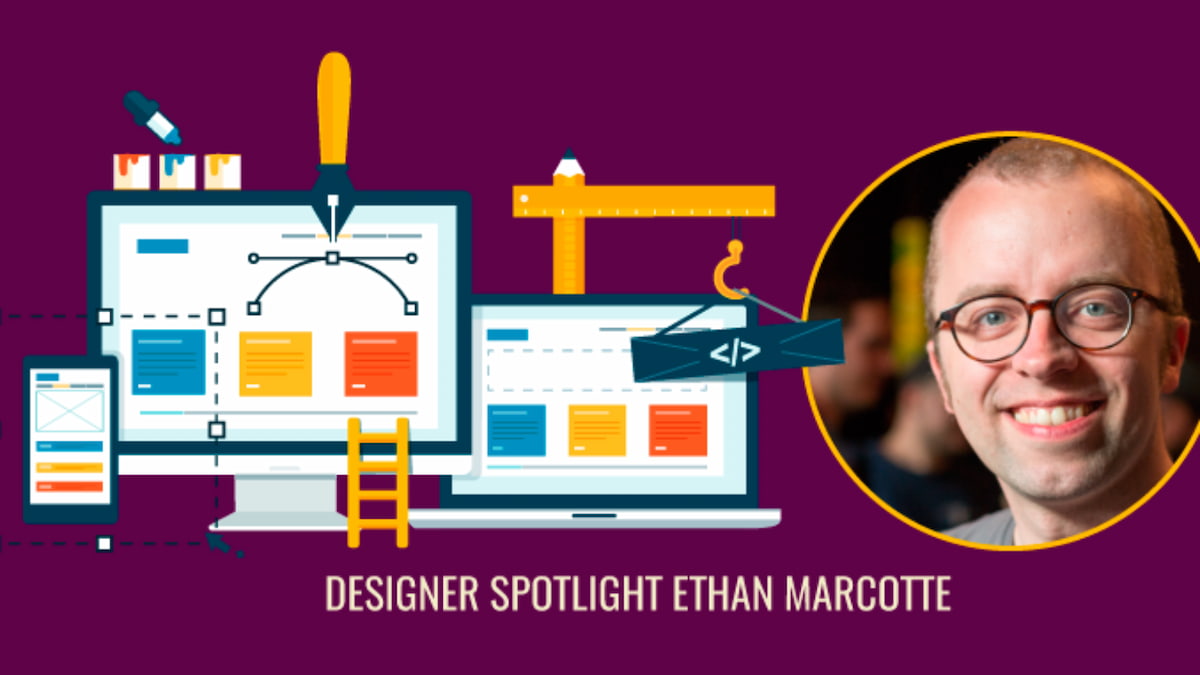
Tim Berners Lee was responsible for creating the World Wide Web in 1989. Responsive Web Design, introduced by Ethan Marcotte in 2010, emerged to meet the demands of the new technologies of the 21st century, such as smartphones and tablets, adapting content to the user, thus being in the same line of thought (and work) as the concept of UX: the user’s perspective.

In times past, when creating a website, the choice was between a liquid design, which adjusted to the browser window, or a fixed-width design, with specific dimensions in pixels.

The liquid design caused compression on smaller screens and excessively long lines on larger screens. Meanwhile, the fixed-width design generated horizontal scroll bars on narrow screens and white space around the edges on wider screens.

You don’t need a degree in design to realize when a website isn’t responsive: you’ve probably come across a website that, when viewed on your smartphone, you have to scroll sideways to read the full sentence.

Responsive design in 3 techniques

Responsive design is not a separate technology, but an approach to web design using practices such as:

  1. Fluid grids: a layout system that uses percentage units to define the width of the grid’s columns and rows.
  2. Fluid images: setting the max-width property to 100% allows images to shrink to fit a narrower column while maintaining their intrinsic size, without enlarging.
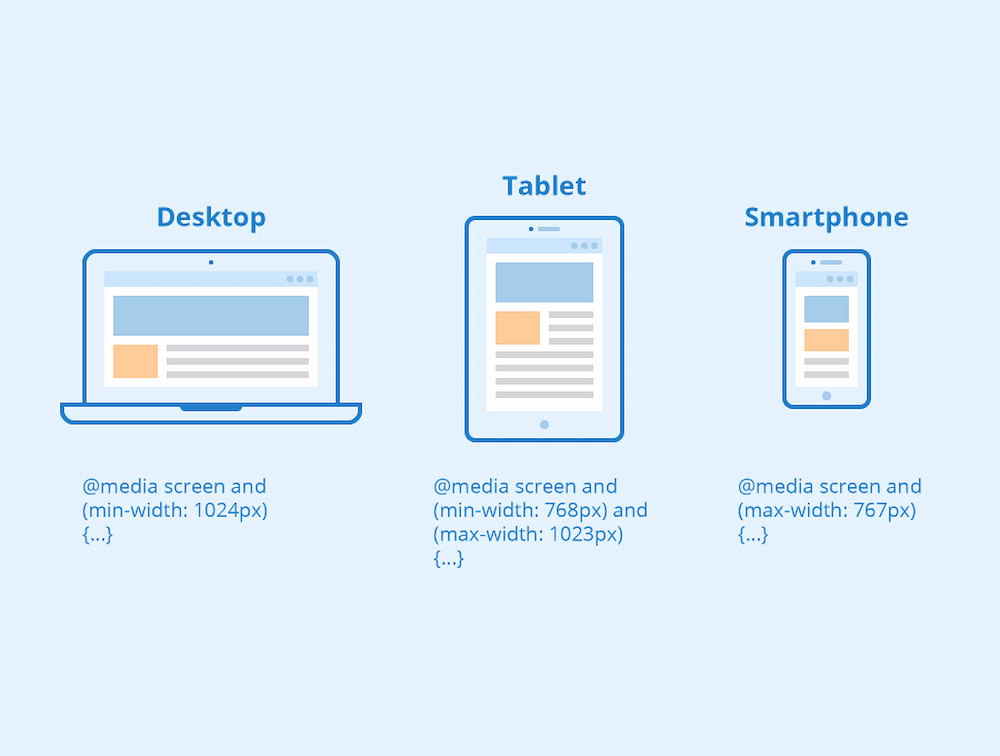
  3. Media Queries: instead of having a single layout for all screen sizes, you can change it. For example, sidebars can be repositioned on smaller screens, or an alternative navigation can be displayed, providing flexible adaptation to different viewing conditions.

Responsive Design VS Adaptive Design

It’s worth clarifying the difference in concepts before moving on to the reasons and benefits that responsive design can bring to your business or your digital marketing work, so that it’s clear that this web design and programming work is much more than adapting the site to screen sizes.

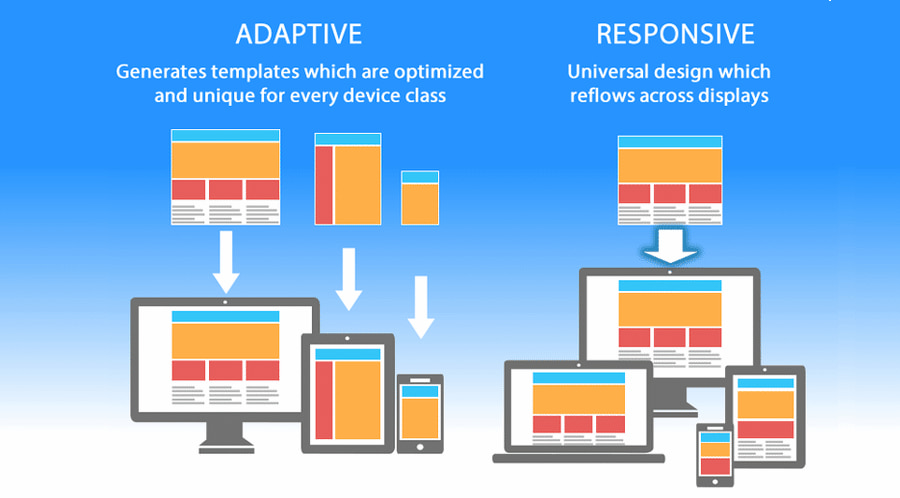
The difference between responsive and adaptive design lies in the fact that responsive design adjusts the rendering of a single page version, while adaptive design offers multiple, completely different versions of the same page.

Responsive design for Marketing

Responsiveness is the main keyword for engagement strategies.
Being responsive is no longer about being able to reply to a customer’s email in less than 24 hours. It’s now about the customer getting a response while visiting your business website.

Investing in responsive design, investing in responsive human resources, will result in faster conversions. It will have an impact on three fronts: technical, experience and objectives.

Technical: eliminates the need to create specific layouts for each type of computer, smartphone or tablet.

Experience: UX/UI Designer seeks to improve the user experience in every aspect. Responsive design ensures consistency and avoids frustration.

Objectives: As well as avoiding problems such as missing buttons in broken layouts, it reinforces the fundamental concept of balance between form and function, ensuring the success of the user experience on different devices.

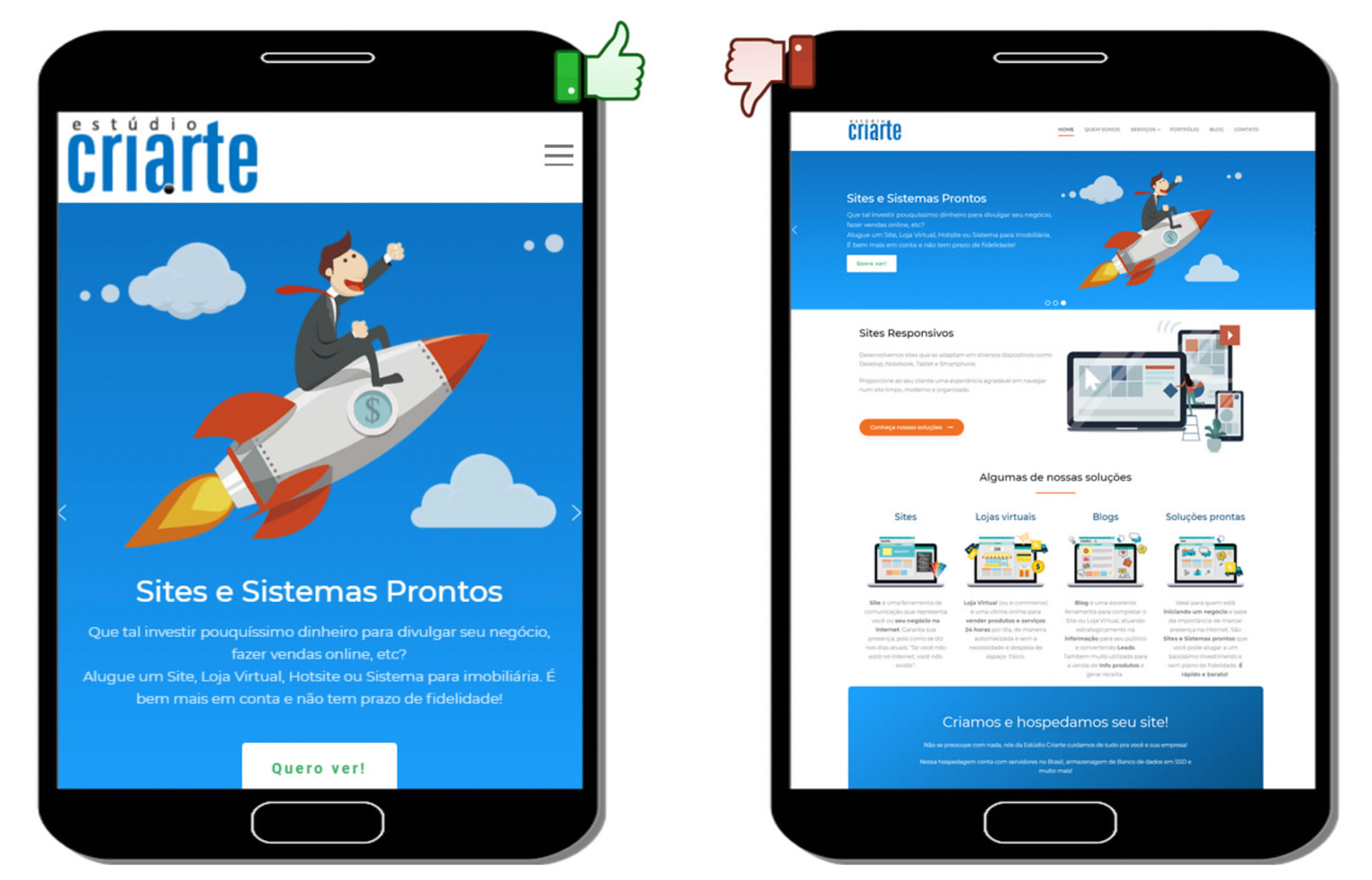
Responsive websites avoid

  • the need to zoom in to read text on mobile devices;
  • cluttered overlapping of elements on smaller screens;
  • hiding buttons and CTA’s on different resolutions;
  • loss of important information on smaller screens;
  • misalignment of forms and input fields;
  • creation of unnecessary scroll bars on smaller devices.

Source: Estúdio Criarte

Responsive design and SEO

Based on recent data showing the increase in mobile traffic to your site, it’s clear that even if you decide to start a site with a desktop version, you’ll need to invest in a mobile-friendly version and later – but not too late – a mobile-first version.

Since 2018, with Google’s adoption of the mobile-first principle, page loading speed has become crucial for SEO. Responsive design condenses pages for faster loading, especially on smaller screens, avoiding user frustration.

SEO agencies recommend responsive design to reduce bounce rates and improve search engine rankings: responsive design makes it easier to deliver content in an organized and clear way.

The ability to easily view and navigate content on any device is essential for creating good first impressions.

With the increase in the volume of internet access via mobile devices, the number of online purchases made via these devices is also following the same upward trend.
A responsive website creates more interaction, providing digital word-of-mouth, which is to say, more shares on social networks.

Responsive design and copywriting

If images have to be optimized, so do words.

Labels and placeholders are strategic decisions.

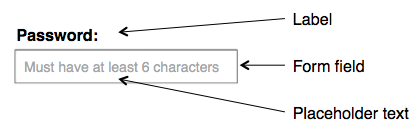
Labels tell users what information should be in a particular form field and are usually positioned outside of it. A placeholder, located within a form field, is a suggestion, description or example of the information required for a particular field. Good UX practice dictates that the placeholder disappears when the user types in the field.

The decision whether or not to write a placeholder will also depend on the persona of your business: how digitally literate is your persona?

Current best practices suggest replacing the placeholder with a more explanatory label.

Benefits of responsive design

  1. A responsive website provides easy access on any device, without the need to zoom or scroll horizontally.
  2. Google recommends responsive sites because a single site with the same URL makes it easier to crawl and index.
  3. Users easily find what they’re looking for, increasing engagement and potentially generating more sales or leads.
  4. Managing a single responsive site saves time and resources
  5. A responsive website conveys a more professional and up-to-date brand image.
  6. Responsive design facilitates the implementation of marketing strategies, allowing detailed analysis of user behavior on various devices, enhancing the overall marketing strategy.

Artificial Intelligence and Machine Learning

Gabriela Polidoro Lima
UX Designer & Content Writer

We live in a new technological era, where every day new products and tools are created to make life and work more efficient, faster, more practical and easier. The development of new software produces a large number of tools and technologies that make it possible to achieve more with less.
Technology has seen more changes in the last 12 months than in the last 10 years in total, thanks to one disruptive factor: Artificial Intelligence. And if 2023 was the year of consolidation, 2024 will be the year of operationalization.

Gabriela Polidoro Lima
UX Designer & Content Writer

We live in a new technological era, where every day new products and tools are created to make life and work more efficient, faster, more practical and easier. The development of new software produces a large number of tools and technologies that make it possible to achieve more with less.
Technology has seen more changes in the last 12 months than in the last 10 years in total, thanks to one disruptive factor: Artificial Intelligence. And if 2023 was the year of consolidation, 2024 will be the year of operationalization.

Artificial Intelligence (AI)

Artificial Intelligence (AI) is computer software that mimics human cognitive abilities to perform complex tasks that historically could only be done by humans, such as decision-making, data analysis, and language translation.
In other words, it is code in computer systems explicitly programmed to perform tasks that require human reasoning. Although machines and automated systems follow a set of instructions and execute them unchanged, those using AI can learn from their interactions to improve their performance and efficiency.

While AI is the broad science of reproducing human capabilities, Machine Learning is a specific subset of AI that trains a machine to be able to learn. In other words, it is a method of analyzing data that automates the construction of analytical models. It is a branch of Artificial Intelligence based on the idea that systems can learn from data, identify patterns and make decisions with little human intervention.

We know that technology is always advancing to improve and make people’s lives easier and when we analyze these advances from a professional perspective, more specifically code development, we realize that the benefits are even more impactful. As well as making it easier and quicker to create, these techniques make programming more accessible to non-specialists by automating tasks such as writing, synthesizing, checking, testing, and maintenance.

And if Artificial Intelligence is playing a revolutionary role in the way society carries out its activities, programming is no exception. Development professionals can become even more efficient if they know how to apply the benefits of new technologies in practice, as well as collaborate with systems and take advantage of their insights and automation.

Other benefits:
Task automation

Repetitive and monotonous tasks can be easily automated, creating more time for more valuable ones, such as those of greater value, such as developing algorithms and solving complex problems.

Process optimisation

AI algorithms can analyze application performance, identify bottlenecks, and suggest improvements. This allows for the optimization of codes, and greater software efficiency, and even helps with project management and the efficient allocation of resources.

Assistance with decisions

Providing valuable insights when analysing a large volume of data is a great aid to decision-making. For example, determining which resources should be prioritized, based on user feedback and analysis of usage data.

Improving security

Automate the detection of vulnerable points and identify suspicious activity and cyber attacks.

But how can Machine Learning algorithms be applied in practice?

It is already possible to identify many examples of the application of Machine Learning in our daily lives and many sectors are already being impacted by this technology.

Entertainment and Multimedia

– Streaming platforms: use of recommendation algorithms to suggest programs and films to viewers.
– Social networks: personalized recommendations through searches, screen time and likes.

Health and Medicine

– Diseases: identification of diseases, more accurate diagnoses and improved treatments.
– Tests: analyzing medical images (X-rays and MRI scans) and identifying anomalies more assertively.
– Data analysis: detection of health trends and risks by analyzing data from a large number of patients, enabling more effective public health interventions.

Finance

– Fraud detection and risk analysis: identifying suspicious patterns in financial transactions to protect institutions and clients.
– Forecasting market trends: greater assertiveness and security when making investment decisions.

Natural language processing (NLP)

PLN is a sub-area of Machine Learning that converts information from computer databases into a language that is understandable to humans.
– Automatic conversion of information: automatic mobile phone corrector, language translation, virtual assistants, and chatbots.

Virtual Assistants became popular in 2011 with the launch of Siri by Apple. Since then, other examples have appeared on the market, which has helped them become popular and gain more space in people’s homes. A virtual assistant is nothing more than software designed to execute voice or written commands. They learn to understand voice patterns, and the way words are spoken, and deliver the best result for the command given. They can be connected to mobile phones, lamps, fridges, or television screens.

The Internet of Things (IoT) is the name given to the integration between these products and the internet, i.e. they work when connected to Wi-Fi and can be used remotely.
Alguns exemplos disponíveis no mercado:
– Amazon’s Alexa: launched in 2014 as a “voice-controlled artificial intelligence”, it responds to commands to play music, read the news, and dim light bulbs.
– Cortana, by Microsoft: launched in the same year, it is described as a productivity assistant that “will help you save time and focus on what’s most important”.
– Apple’s Siri: the first version was launched in 2011 with technology, but is now able to perform complex tasks using voice commands.

But the importance of these products goes far beyond responding to the commands they are given, they play an essential role when it comes to accessibility for people with disabilities. Increasing autonomy and carrying out tasks that might previously have seemed challenging are just some of the benefits. In addition, calling for help in dangerous situations can be much easier and safer when using this type of technology. A great advantage!

Capable of creating text, images and videos from commands, with impressive speed and quality, chatbots are generative Artificial Intelligence tools. The most popular ones currently available are:
– Merly.ai, the AI assistant: it helps programmers understand, correct and maintain complex c, while providing information tracking ,g and summaries on code quality.
– GitHub Copilot, the AI pair programmer: suggests code and functions in real time. According to GitHub itself, this tool has a real impact on the productivity and happiness of software development teams.
– OpenAI Chat GPT, the chatbot: generates code fragments in various programming languages based on immediate examples. The generated code is kept in context in the conversation and can be changed, improved, or corrected during the process, simulating interaction with a real human being.

It is important to emphasize that while these applications bring significant benefits, they also raise ethical and privacy issues that need to be addressed carefully. Responsible exploitation of resources must be at the center of systems development and not only involves moral considerations but also preventing negative impacts and ensuring beneficial development.

Some of the main ethical challenges related to Artificial Intelligence:
– Trends and discrimination: Algorithms are trained based on existing data and can contain inbuilt biases and discrimination, leading to unfair decisions and social inequalities.
– Privacy and security: With the massive collection of data, AI can cause people’s privacy to be violated through the misuse of personal information.
– Responsibility and transparency: The opacity of AI systems can make it difficult to attribute responsibility in the event of errors or accidents caused by intelligent machines.
– Technological unemployment: AI-driven automation could lead to the displacement of traditional jobs, encouraging an ethical approach to the re-employment and re-skilling of the workforce.
– Machine autonomy: With the advance of AI comes the possibility of autonomous machines making critical decisions without human intervention, raising questions about ethics.
– Information manipulation: Dissemination and creation of false information and manipulation of content can be done through AI.
– Human-machine relations: As machines become more intelligent and interactive, it becomes relevant to think about the issue of empathy and ethics in human-machine relations.

In order to minimize the impact of these challenges, measures can be taken such as:
– Ensuring diversity in data to train algorithms to be diverse and representative of society.
– Developing transparent systems allowing users to understand how decisions are made.
– Establishing regulations and ethical standards to guide responsible use and protect individual rights.
– Educate and raise awareness about ethical issues to promote conscious and responsible use.
– Work collaboratively to address ethical issues between companies, governments, academic institutions, and civil society.

The future is deeply intertwined with AI, and those who embrace this partnership are destined to become the most efficient and successful programmers of tomorrow. A new technological era is approaching which will have a tremendous impact on the IT industry, so embracing and adapting to this change will position many professionals and organizations for digital success in the coming years.

Fontes das imagens:
Imagem Machine Learning
https://www.linkedin.com/pulse/machine-learning-qual-o-seu-papel-da-sociedade-t%C3%A2nia-marante/?originalSubdomain=pt

Imagem Chatbots
https://itforum.com.br/noticias/7-mitos-sobre-chatbots-e-assistentes-virtuais/

Imagem AI
https://blog.axians.pt/machine-programming-ia-no-desenvolvimento-de-software

Imagem Ética
https://medium.com/data-hackers/explainable-ai-extraindo-explica%C3%A7%C3%B5es-e-aumentando-a-confian%C3%A7a-dos-modelos-de-ml-3a89b7b5a584

How to create a Social Media Marketing strategy in 2024

Catarina Alves de Sousa
Social Media Manager & Content Writer

Social media marketing is an essential component of modern communication. By using platforms such as Facebook, Instagram, Twitter, LinkedIn, TikTok, and others, companies can reach a wide and diverse audience, promote their products or services, and build lasting relationships with customers.

Catarina Alves de Sousa
Social Media Manager & Content Writer

Social media marketing is an essential component of modern communication. By using platforms such as Facebook, Instagram, Twitter, LinkedIn, TikTok, and others, companies can reach a wide and diverse audience, promote their products or services, and build lasting relationships with customers.

One of the main benefits of social media marketing is its ability to reach a wide and diverse audience. With over 4 billion active social media users worldwide, there is a significant opportunity to connect with potential customers, regardless of their location or demographic. Social media platforms also offer advanced targeting options, allowing companies to reach specific groups of people based on factors such as age, location, interests, and behaviors.

Source: Pexels

One of the main benefits of social media marketing is its ability to reach a wide and diverse audience. With over 4 billion active social media users worldwide, there is a significant opportunity to connect with potential customers, regardless of their location or demographic. Social media platforms also offer advanced targeting options, allowing companies to reach specific groups of people based on factors such as age, location, interests, and behaviors.

In this article, you’ll find a short, concise guide to how Social Media Marketing works and how to devise your strategy.

Social media marketing: how does it work?

Social media marketing involves creating and sharing content on social media platforms to achieve branding and marketing objectives. This includes text posts, images, videos, and other content that drives user engagement, as well as paid advertising.

Advantages and Disadvantages of Social Media Marketing

Source: Pexels

Although it’s a necessity for practically any company or brand today, that doesn’t mean that Social Media Marketing doesn’t have its advantages and disadvantages.

Advantages of Social Media Marketing:

  • Broad reach: Social Media Marketing is extremely powerful for companies because of its ability to reach a wide and diverse global audience. Social media allows companies to communicate directly with a wide range of potential customers from all geographical locations. In addition, social media platforms offer advanced targeting options, allowing companies to direct their ads and content to specific groups of people based on interests, behaviors, demographics, and much more. This increases the relevance and effectiveness of campaigns, making social media marketing not only comprehensive but also precisely targeted;
  • Cost-effective: compared to traditional advertising methods, Social Media Marketing can be less expensive and offer a high return on investment. Companies can reach a large number of people at a relatively low cost, taking advantage of the platforms to connect directly with customers, receive feedback in real-time, build relationships, and build customer loyalty through meaningful interactions. What’s more, content on social media can go viral quickly, which means that brand messages can be amplified exponentially, increasing visibility and brand recognition significantly.

To help you create a social media strategy with a limited budget, we recommend reading the article “Digital marketing strategies for small businesses: how to make the most of a limited budget“.

  • Direct engagement: companies can reach a large number of people at a relatively low cost, taking advantage of platforms to create engagement directly with customers, receive feedback in real time, build relationships and build customer loyalty through meaningful interactions. What’s more, content on social networks can quickly go viral, which means that brand messages can be amplified exponentially, increasing visibility and brand recognition significantly.

Disadvantages of Social Media Marketing:

  • Reputation: gmanaging a crisis can be challenging and damaging to a company’s/brand’s reputation;
  • Constant change: platforms are constantly changing, requiring frequent adaptations, meaning that the process of learning how social media works never ends;
  • Limited visibility: algorithms can limit the reach of posts, no matter how good the content is.

How to design a Social Media Marketing Strategy

The Social Media Marketing strategy consists of a detailed plan that guides how a company or brand interacts with its audience, promotes products or services, and achieves its business goals through social networks. It consists of a series of carefully planned steps and methods, based on understanding the target audience, choosing the most appropriate platforms, and creating content that resonates with that audience. Here are the essential elements of a social media marketing strategy and the importance of having one (and applying it):

  • Define your objectives: swhether it’s increasing brand awareness, sales, or engagement;
  • Know your audience: identify who your customers are and what they want;
  • Choose the right platforms: not all social networks are suitable for all businesses
  • Create relevant and attractive content: ccreating relevant and attractive content that resonates with your audience is one of the most important pillars of Social Media Marketing. This means developing messages, images, videos, and other types of media that capture the public’s attention, encourage engagement, and reinforce the brand’s image;
  • Monitor and adjust: use analysis tools to measure performance and adjust strategies as necessary.

To better adapt your social media strategy, be sure to read the article “How to create and define your target audience on social media?“.

Examples of Social Media Marketing Strategies

Source: Pexels

In the dynamic world of social media marketing, companies have a variety of strategies at their disposal to increase reach, engage audiences, and boost sales. Choosing the right strategy depends on several factors, including the brand’s objectives, the target audience, the type of product or service offered, and the budget available.

Below we’ve listed some examples of effective social media marketing strategies that have helped companies build a solid online presence, create a community, and convert followers into customers. These strategies are adaptable and can be customized to meet each company’s specific needs and objectives.

  • Influencer campaigns: partnerships with influencers to reach new audiences.
  • User-generated content: encourage customers to share their own experiences with the brand;
  • Competitions and sweepstakes: engage your audience with interactive activities;
  • Paid advertising: invest in targeted adverts to increase reach.

Essential Tips for Maintaining a Social Media Marketing Strategy

Maintaining an effective Social Media Marketing strategy requires not only the implementation of initial tactics but also continuous monitoring and adjustment.

Here are some essential tips that all companies should consider to ensure that their social media presence is productive and aligned with their long-term business objectives.

  • Consistency: maintain a regular and coherent presence;
  • Active listening: monitor what is said about your brand and respond appropriately;
  • Adaptation: be ready to change strategy according to market trends and consumer behavior;
  • Measurement: define clear metrics to evaluate the success of your initiatives;

By considering these aspects, companies can harness the power of social networks to improve visibility, interact with customers, and drive growth. It’s crucial to stay up to date on the latest trends and technologies, as the field of digital marketing is constantly evolving.

Start 2024 on a high note on social media

Source: Pexels

As we’ve already mentioned a few times in this article, the world of social media is always changing; whether due to the way algorithms work or as a result of the introduction (or disappearance) of certain features. This means that for your strategy to “succeed” on social media, you’ll have to stay alert and informed about changes, yes, but also trends.

For 2024, if you haven’t already started, consider exploring video marketing as the preferred content to share on your social networks, and don’t forget to integrate Influencer Marketing as required into your strategy, as it shows no signs of slowing down in effectiveness and popularity next year.

If you need professional and experienced help in creating your social media marketing strategy, you can count on Scallent and its talent pool to serve your brand.

How to produce engaging videos following good practices

Pauliny Zito
Planner, copywriter & copydesk

3… 2… 1… Action!

Image, sound, and movement. The video has established itself as the resource or format that most impacts, engages, and converts.

For any content you create, always connect your brand with your audience, communicating with a specific pre-defined group to generate conversations.

Pauliny Zito
Planner, copywriter & copydesk

3… 2… 1… Action!

Image, sound, and movement. The video has established itself as the resource or format that most impacts, engages, and converts.

For any content you create, always connect your brand with your audience, communicating with a specific pre-defined group to generate conversations.

Source: Freepik


Find out in this article the best practices for producing exclusive and attractive videos that impact and captivate.

Why should you invest more in videos?

Video content has brought greater customer engagement with the brand and increased organic traffic.

Almost half of all internet usage is dedicated to viewing video content.

According to the Sprout Social Index™, 66% of consumers think that short videos are the most engaging type of content on social networks.

Short videos are up to 3 minutes long, yet 83% of marketers have identified that the best length for a short video is less than 60 seconds.

Videos on social media are a highly effective way of attracting and holding the attention of your target audience and demonstrating your brand’s personality.

Remarkably, people continue to watch more videos. According to video marketing research by Wyzowl, the amount of online videos watched per week, per person, has almost doubled since 2018, although it will see a slight decrease by 2023.
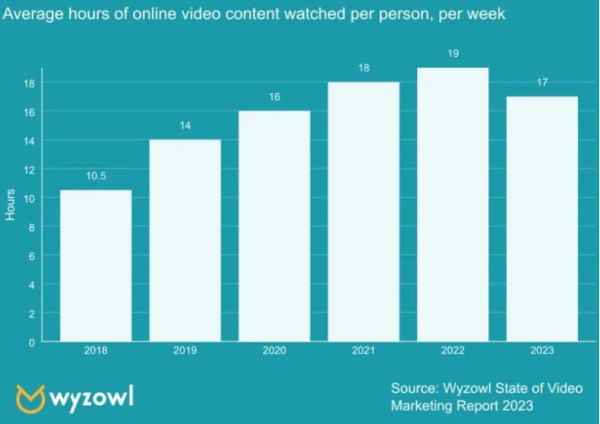
Source: Video Marketing Statistics 2024


Consumers continue to use video as an integral part of their journey with brands. They expect to see video content from brands – and to use it as a key part of their research and purchasing decisions.

73% of consumers prefer to watch short videos when looking to learn about a product or service.

Except for YouTube videos, which are longer, short videos are more watched and shared among users on social networks, and algorithms make it easier for short video content to be discovered and seen.

First Things First

Goal

Before starting to create the video, and having already defined the audience you want to reach, the first step is to have the objective of the content clearly in mind.

Stop and think:

What is the purpose of this video?

Why am I creating this content?

Is it to:

Entertain?

Teach?

Enlighten?

Delight?

Or what for?

Roadmap

Storytelling: it all starts with a story. Not just any story. A good story, interesting and captivating, worth sharing, and preferably one that benefits the viewer in some way.

Learn Pixar’s 22 rules for storytelling and apply them to your video content.

The second step is to write a script with language that is close to orality to create empathy.

Types of content with the highest ROI – Return Over Investment (Top 7):

Source: The Video Marketing Playbook – Trends & Tips to Create a Video Strategy in 2023 – HubSpot and PlayPlay

Storyboard

Create a storyboard to preview the main actions that will appear in the video.

Duration and Format

The first 15 seconds of the video are crucial and must capture the consumer’s attention. To do this, you need to quickly show what the video is about and what the consumer can expect.

Bet on vertical videos, shorter than 15 seconds, as they tend to be more engaging.

Best practices for creating engaging and perhaps viral short videos

Reason

You have up to 3 seconds to grab attention, so give people a reason to keep watching your video, either through images, a teaser of what’s to come, or on-screen text. Go for an emotional narrative and write an explanatory but succinct caption, with a call to action at the end of the text.

Value

Make it worthwhile. Offer a clear and simple value proposition.

Trends

Be aware of trends in sound, music, filters, animations, and visual resources, so that you can incorporate them into your videos with intention and if they make sense.

Authenticity

Real, sincere, and honest videos that highlight the human being behind the brand increase the possibility of identification, create an authentic connection with the audience, and attract more people to watch.

Originality

Avoid cross-posting videos with watermarks. The ideal is to create an original and different video for each social network, so as not to compromise its visibility on each platform.

Design

Video design depends on the objective and the content, but there are three main types of video.

Live Action

This type of video is ideal for interviews as well as testimonials and promoting corporate culture. 49% of video marketers said that live-action videos are more likely to go viral.

Animation

In a variety of formats and styles, animation is ideal for presenting moving graphics. It’s especially great for super-short videos that need to convey simple information such as new product launch dates or sales.

Screen-Capture

It’s the perfect type of video for creating informative or educational content, often used in technical tutorials and recorded games.

Brevity

A short video will be between 5 and 90 seconds long, but the average length of short videos is 15 to 30 seconds, and these are the ones that get the best results.

Ideal lengths on short-form video platforms:

  • TikTok: between 11 and 17 seconds;
  • Instagram: between 7 and 15 seconds;
  • YouTube shorts: between 15 and 60 seconds;
  • Snapchat highlights: between 5 and 60 seconds.

Partnerships

Partnerships with influencers and relevant brands with similar values to yours or with professionals in the same sector as yours can be highly effective, as they increase your reach and help you create more engaging videos.

Demonstration of use

Videos that show the features and benefits of the product and explain how to use it are appreciated by people and are a great way to leverage content as a brand.

UGC – User Generated Content

Take the opportunity to share user-generated content, from testimonials to spontaneous videos of your customers talking about you or your brand/product/service.

Humor

Depending on the topic and purpose of the video, humor can be a good strategy to create positive feelings towards your brand and consequently lead to greater engagement and conversions.

Accessibility

Ensure that the text and audio of your video are accessible and optimized for people with visual or hearing impairments.

How to make your video accessible:

  • Include text overlays or subtitles and visual cues;
  • Provide high-quality audio;
  • Write subtitles to describe the content of the video;
  • Leave enough time for reading text or animations within the video;
  • Use subtitles and text on solid color backgrounds;
  • Follow the WCAG guidelines – Web Content Accessibility Guidance 2.1.
Source: Freepik


Equipment: Camera, Tripod and Microphone

Depending on the objective, consider investing in a specialized camera, with interchangeable lenses that take advantage of the light in different ways, as well as a tripod and a suitable microphone.

A lot can be done with modern smartphones, but there are three types of cameras most commonly used by video marketers.

Source: The Video Marketing Playbook – Trends & Tips to Create a Video Strategy in 2023 – HubSpot and PlayPlay

Lighting and Visual Composition

Adequate lighting helps to highlight the content of the video, shows details of facial expressions or products and makes it more aesthetically pleasing, giving the viewer a good impression, increasing trust and even engagement.

If you’re not recording outdoors, with perfect natural light, you can use some equipment.

Ring light

An effective solution for video log-style filming – with a person in an American shot covering a large part of the screen.

Specialized lamps

There are several options for specialized lamps with different purposes and results. Here, it’s good sense to invest in those that make a difference to the quality of the video.

Beaters and softboxes

Just as important as the bulbs is how you manipulate the light. Spotlights and softboxes allow you to control the “harshness”, tonality, direction, and intensity.

Here are 6 tips for improving the lighting in your videos:

1.Create an ideal set-up.

2. Invest in the right equipment.

3. Test different lights: different temperatures, light hardness, focal points.

4. Master 3-point lighting on set:

1) main light, which illuminates and highlights the object or person in focus, positioned at an angle between 15º and 45º to the camera; 

2) fill light, placed opposite the main light with the aim of softening or eliminating the harsher shadows caused by the first point; and 

3) backlight, which is behind, pointed towards the camera, with the object or person between them, whose function is to create an aura of illumination on that person’s silhouette so that they stand out and differentiate themselves from the scenery.

5. Control or eliminate natural light in the studio or internal recording space.

6. Create the identity of the photograph in post-production using editing software.

Edition

According to HubSpot and PlayPlay, 61% of video marketers prefer to use Adobe Premiere Pro to edit their videos. And 31%, iMovie.

Best editing practices include:

  • Work on elements such as color grading, exposure, white balance, contrasts between light and shadow;
  • Make smooth cuts, including a pause time (1 second) between cuts;
  • Make cuts at moments of action when you are using two cameras during the video recording;
  • Include transitions that make sense and are in line with the content;
  • Remove mistakes, language vices, or undue pauses during a sentence;
  • Take accessibility into account;
  • Use images, illustrations, and graphic effects to enhance the quality of the final video;
  • Adding soundtracks to create specific atmospheres, such as the opening, call to break, and call to action, taking care to use free-licensed content or obtaining express permission from the authors of the music;
  • Add special visual and sound effects to enhance the aesthetics of the video and create the desired effect.


Tools for creating and editing short videos:

  • Adobe Premiere Rush
  • Adobe Express
  • CapCut
  • Descript AI
  • Pictory AI

Sound Design and Subtitles

Sound enhances your video, and subtitles make it accessible. The Clipomatic tool automatically adds subtitles to your video.

Audio has a major influence on the overall quality of the video. That’s why it’s essential:

  • Record in a quiet environment, without interference from external sounds;
  • Rehearse a lot before recording.

AVOID the audio recording problems described below.

Distortion: when the volume of the audio exceeds the capacity of the software or equipment, making the sound harsh and uncomfortable, with the voice cracking. Solution in editing: use filters, as distortions cannot be corrected in recorded audio.

“Plosives”: when certain phonemes such as ‘b’, ‘p’, or ‘t’ sound as if a ball of air is exploding in the audio (usually because the person is speaking too close to the microphone). Tip: avoid this by keeping the microphone next to the speaker’s mouth (and not in front of it). Solution in editing: use filters to reduce noise or exclude the sound wave from the noise.

Speaking away from the microphone: leaving the voice muffled or hollow and the noises more noticeable. Tip: position the microphone towards the person’s chin and keep it 10 to 13 centimeters away from their mouth. Editing solution: equalizing the recording can be an alternative in programs such as iZotope RX or Audition (note: the correction is different for each type of voice).

Interference: from any kind of external sound in the recording environment. Tip: change the environment. However, if the problem is linked to the equipment itself, replace worn cables and microphones.

Squeaking in the background: this could be the result of interference or a microphone about to discharge. Tip: make sure the microphone is charged and, if in doubt, change the cables. Solution when editing: find a section of audio where you can hear only the hiss, without the interference of voices and movement, so that the program recognizes the noise and removes it.

Echo: sound reverberates normally when recording in large environments. Tip: prefer small rooms with carpeting and soft fabrics in the room. Test the room by speaking out loud to see if it echoes.

Wind: can appear when recording outdoors; the noise is similar to “plosives”. Tip: use wind protection on the microphone, such as Dreadcats – a fuzzy protector that prevents the wind from producing unwanted sounds.

Mouth noises: these come from natural mouth movements when the mouth is dry or from excess saliva. Changing the position of the microphone and drinking apple juice can help. It’s a good idea to avoid water, coffee, and dairy products before recording.

About the audio mix, once it’s finished, a good practice is to listen to the result on various pieces of equipment, such as your car stereo, your cell phone headset, and your home theater, among others. The final audio needs to sound good on all these systems. If not, compare and point out the differences and try to equalize your mix.

CTA – Call to Action

Include a call to action, directing the audience on what to do next. If possible, brand a product or service, include purchase links in the video description, bio or story.

Consistency

Establish a publishing frequency so that your audience knows when to expect your next video content. Quality videos published regularly keep your audience engaged and provide the algorithm with enough content to choose from and display.

79% of marketers plan and publish between 2 and 10 videos per month.

Scheduling

Schedule your videos in advance. This will give you more time to plan and then choose the days and times when your audience is most likely to interact with your profile.

Distribution channels

According to 63% of marketers, social networks are the most effective way to promote videos.

Top 4 most used channels:

Source: The Video Marketing Playbook – Trends & Tips to Create a Video Strategy in 2023 – HubSpot and PlayPlay

Platforms that generate the most viral videos:
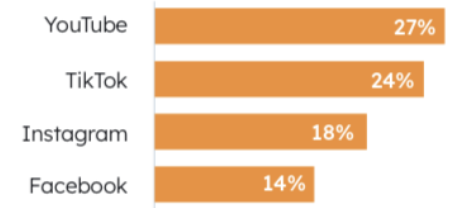
Source: The Video Marketing Playbook – Trends & Tips to Create a Video Strategy in 2023 – HubSpot and PlayPlay


The dancer who went viral: watch one of the most viral videos on TikTok in 2023.

And this video, which explains how to go viral on TikTok in 2023, has also gone viral!

Instagram videos

Stories

Up to 60 seconds long, informal, quick to consume, ideal for showing behind-the-scenes, day-to-day life. Add interactive elements such as filters, emojis, tags, question boxes, polls, etc. Use direct links, a great resource for generating leads and organic conversions.

Extra tip: keep abou

Reels

Comprehensive video, vertical portrait format (9:16), from 15 to 90 seconds long if you record using the Instagram camera, or from 3 seconds to 15 minutes if you upload the video created in another app or software. Make your video more dynamic by using the app’s features, such as stickers, filters, speed, audio, and more.

Extra tip: include text, music, and on-screen captions to make your Reels engaging and accessible.

Useful video tools:

  • Adobe Creative Cloud Express
  • Hootsuite
  • Pictory
  • Clipomatic
  • Apple Clips
  • Lumen5
  • Headliner

4 ways to create video ads that stand out

  1. Add animated text to highlight new products or special features and discounts.
  2. Use slow-motion for a dramatic effect.
  3. Create with stop-motion to tell a quick story focused on the product and attract attention.
  4. Tell a story using the slideshow feature with photographs.

Videos on YouTube

Project an identifiable image and tell meaningful stories to potential customers through long, interesting, and engaging videos on YouTube.

The most popular topics on YouTube are tutorials, video games, ASMR (Autonomic Sensory Meridian Response) – a type of video that helps viewers enter a state of relaxation, mashups (mixing two different songs, movie clips, or any other combination of sources), music and education.

5 attractive elements to improve your video’s viewing time and get more retention

  1. An unmissable title and thumbnail.
  2. An emotional or informative opening hook that grabs and holds attention.
  3. A well-structured Story that keeps viewers engaged.
  4. A Reason to Watch: challenge or risk situation at the start of the video.
  5. A quick ending with a Call to Action. Use the end card in your video to link to other relevant videos, keeping the viewer on your channel. And include links to other videos in the description.

Dica extra 1: nos segundos finais do vídeo, não encerre a ação nem se despeça. Finalize o vídeo repentinamente para fazer com que o espectador queira mais!

Dica extra 2: adicione um clipe de poucos segundos logo após o vídeo, como erro de gravação ou cenas de bastidores ou última dica ou lembrete para treinar o espectador a sempre assistir aos seus vídeos até o fim.

Regular standard interruptions in YouTube videos

With this type of (long) video and the decrease in our attention span, it is essential to use standard interruptions every 30 seconds:

  • Changing camera angle, perspective, or filming location;
  • Filming in different locations: if the video content has a list of points, film each of them in different locations;
  • Sense of urgency: in tasks, add timers and countdowns;
  • Speed feature: film the products in slow motion and then go back to normal speed;
  • Callbacks: if a character appears in your video, refer to them again throughout the video;
  • Signaling a problem or a question at the start of the video, but without immediately providing the solution.

Graphics and other visual elements in addition to music are also essential resources to keep the viewer interested enough to watch the long video to the end.

The Wrap Up

More than nine out of 10 people said they wanted to see more brand videos by 2023, which makes video an excellent tool for lead generation and brand awareness.

Video oversaturation raises the bar in terms of content quality. All the more reason to plan your videos and execute them very well.

Video content is among the most shared on social networks.

However, it’s not enough for the video to be good and relevant. It needs to be engaging to convert.

When creating your next video, keep these 4 tips in mind:

  • Be visual.
  • Be relevant.
  • Have a clear purpose and talk about it often.
  • Have a CTA.

Whether creating videos, images, text or audio, always consider the AIDA model:

ATTENTION: grab attention in the first 3 seconds.

INTEREST: arouse interest.

DESIRE: arouse some desire in your audience.

ACTION: end with a clear call to action.

Cut!

Ready to turn your videos into powerful conversion tools?!

Video marketing: what’s worked in the past and what’s in store for the future

Catarina Alves Sousa
Social Media Manager & Content Writer

Have you noticed that we’re constantly exposed to videos? More than ever we’re being targeted by this type of content, whether we’re looking for it or not. Brands have also noticed this phenomenon and are trying to keep up with it, increasing their investment – and even creativity – in video marketing. In this article, we’ll explore what has led to this consumption and look at the biggest trends for the future of video marketing.

Catarina Alves Sousa
Social Media Manager & Content Writer

Have you noticed that we’re constantly exposed to videos? More than ever we’re being targeted by this type of content, whether we’re looking for it or not. Brands have also noticed this phenomenon and are trying to keep up with it, increasing their investment – and even creativity – in video marketing. In this article, we’ll explore what has led to this consumption and look at the biggest trends for the future of video marketing.

Whether on social networks, websites or even landing pages, videos are everywhere and it’s impossible to ignore them. However, the rise of video marketing didn’t happen by chance and if video content currently achieves up to 1200% more engagement compared to other formats, some facts explain these figures, starting with the pandemic.

The COVID-19 pandemic, which hit the world in 2020, brought with it a series of significant changes in human behavior and habits. One of the most notable transformations has been the exponential boom in video and video marketing. With the restrictions of mobility and confinement, people began to consume (and produce) more content online, and companies quickly realized the importance of adapting to this new reality. Video, due to its ability to convey messages dynamically and engagingly, has become the tool of choice for many brands. Companies of all sizes and sectors have stepped up their digital presence, betting on video marketing campaigns to reach and engage their target audience. This trend, which began as an immediate response to the pandemic, promises to continue growing and shaping the future of digital marketing.

But what makes video so powerful and what are the emerging trends that companies should be paying attention to?

The play button is the most compelling call-to-action on the web.” – Michael Litt, co-founder and CEO da Vidyard

Source: Pexels


The science behind the video connection

Since the dawn of humanity, stories have been a powerful tool for transmitting knowledge, culture, and values. Human beings are intrinsically attracted to narratives and moving images, a predisposition that has deep roots in our evolution as a species. This attraction is no mere coincidence; it has a scientific explanation. Our brain, an incredibly complex and efficient machine, processes visual information 60,000 times faster than text. This speed is an evolutionary advantage, allowing us to react promptly to stimuli and situations in the environment. Furthermore, it is estimated that around 90% of the information transmitted to our brain is visual. 

This predominance of the visual over other senses highlights the importance and effectiveness of videos as a means of communication. In a world saturated with information, videos have emerged as a key tool, not only because they can be processed quickly, but also because of their unparalleled ability to capture attention, evoke emotions, and convey messages in a clear and impactful way.

Emerging trends in Video Marketing

Source: Pexels


In the dynamic world of video marketing, trends are constantly evolving. 

These trends reflect the incessant search for innovation and adaptation to changes in media consumption habits.

  • Short videos: platforms such as TikTok and Instagram Reels have popularized the short video format. These videos, usually between 15 and 60 seconds long, are ideal for conveying quick messages and engaging audiences.
  • Vertical video: once considered a mistake, vertical video has become the norm, especially with the increase in content consumption on mobile devices.
  • 360º videos: these videos offer a totally immersive experience, allowing viewers to feel as if they were inside the video. They are particularly popular in sectors such as tourism and real estate.
  • Live video: live streaming allows for real-time interaction with the audience, creating a sense of urgency and exclusivity.

In addition to these trends, which will continue, new developments are already being predicted and lined up in the video content production landscape for 2024. Among the trends expected for next year are the following:

  • Smartphone production;
  • Search-optimized videos;
  • Vlogs;
  • Stories on social networks;
  • AR/VR/IA videos (Augmented Reality/Virtual Reality/Artificial Intelligence);
  • Silent videos;
  • Personalized video experiences.

Changes in the human paradigm and the demand for short-form content

The rise of short videos, such as those found on TikTok, Instagram Reels, and YouTube Shorts, reflects significant changes in consumer behavior and preferences, which in turn can be linked to broader developments in the human species and in our abilities to concentrate and pay attention. 

Due to the omnipresence of smartphones, we are constantly surrounded by stimuli. Notifications, messages, app updates, and other frequent interruptions have conditioned many of us to quickly switch our attention between tasks and information. This environment of constant stimuli may have contributed to a decrease in our attention spans.

In this world saturated with information and content, attention has become a valuable currency. Social media platforms compete fiercely for users’ attention, and short videos have emerged as an effective solution for capturing and retaining that attention, even briefly.

In addition, the human species has shown a growing demand for instant gratification. We want immediate entertainment, information, and satisfaction. Short videos satisfy this need, offering digestible and often captivating content in a matter of seconds.

Another factor explaining the rise of short videos is time. Modern life is often characterized by fast-paced rhythms and busy schedules, so short videos fit perfectly into the brief intervals of everyday life, whether it’s a coffee break, waiting for public transport, or between appointments.

Despite their brevity, many short videos can create a quick emotional connection with the audience. Whether through humor, surprise, or excitement, these videos are designed to provoke an immediate reaction, encouraging sharing and interaction.

Examples of Successful Video Campaigns

Some campaigns, due to their creativity, message and execution, stand out and become iconic, influencing not only purchasing decisions, but also the way we see and interpret the world around us. Here are some notable examples of video campaigns that have left an indelible mark on the advertising landscape and in the minds of consumers.

Nike – “Just Do It”

Nike’s “Just Do It” campaign became iconic not only for its simple but powerful slogan but also for the way it was presented to the public. The campaign’s videos are often short but emotionally charged, showing athletes and ordinary individuals overcoming obstacles and achieving their goals. The underlying message is clear: with determination and the right equipment, anyone can overcome challenges and achieve excellence. The videos in this campaign resonate deeply with audiences because they appeal to the human desire to overcome and achieve.

"Just Do It"

Nike’s first “Just do it” ad dates back to 1988 and, despite its age, retains the timelessness of the inspiration behind the campaign and the human desire to excel, which is common to every era, gender, age and economic and social context.

Dove – “Real Beauty”

Dove’s “Real Beauty” campaign stood out for challenging the traditional and often unattainable standards of beauty promoted by the fashion and media industries. Instead of using perfect models, Dove chose to present real women, with real bodies and real stories, celebrating diversity and natural beauty. The videos in this campaign touched a nerve in society, questioning ideals of beauty and promoting self-acceptance. By creating a deep emotional connection with the public, Dove not only promoted its products but also started a body positivity movement.

Read also: Inclusive Marketing: why inclusion and diversity are essential for brands

"Real Beauty"

Red Bull – Adrenaline to the max

Red Bull is more than just an energy drink; it’s a brand associated with adventure, extreme sport, and adrenaline. Through its video ads, Red Bull captures moments of pure excitement, from parachute jumps from the stratosphere to car races on challenging terrain. These videos are not just product promotions, they are experiences. By associating itself with extreme and exciting moments, Red Bull solidifies its position as a brand for those who live on the edge and seek strong emotions, showing that it knows its target audience well.

Adrenalina ao máximo

These campaigns are brilliant examples of how video marketing, when well executed, can not only promote a product, but also create movements, challenge norms and connect deeply with the public.

The Future of Video Marketing

“Stop thinking of video marketing as this separate entity that is optional for your business. Video is an effective form of communication that needs to be integrated into each and every aspect of your existing marketing efforts.” – James Wedmore, founder of Vidyard

As technology advances, we can expect to see more innovations in the video marketing space. Virtual and augmented reality, for example, will offer opportunities to create even more immersive video experiences. In addition, personalization will play a crucial role, allowing companies to create videos tailored to viewers’ individual preferences.

Video marketing is more than just a trend; it’s an essential tool for any modern marketing strategy. As we enter an increasingly digital age, companies that harness the power of video will be better placed to connect with their audience and achieve success.

We invite you to take a look at some of Jelly’s video work on YouTube channel. If you would like us to produce videos for your company or brand, please get in touch using the contact details on this page.

NEOBAROQ - A Delicadeza de um Legado Intemporal

Read also: Video is Content King

How to create a logo that is accessible to people with disabilities

Catarina Alves de Sousa
Social Media Manager & Content Writer

In an increasingly digitalized and interconnected age, accessibility is becoming a fundamental pillar, not only for online environments but also for companies’ visual identity. The logo, one of the most vital elements in the composition of a brand’s identity, must be designed to be inclusive and accessible to everyone, including those with disabilities.

Neglecting accessibility in logo design is not only an ethical mistake; it is also a wasted opportunity to communicate with a wider and more diverse audience.

Catarina Alves de Sousa
Social Media Manager & Content Writer

In an increasingly digitalized and interconnected age, accessibility is becoming a fundamental pillar, not only for online environments but also for companies’ visual identity. The logo, one of the most vital elements in the composition of a brand’s identity, must be designed to be inclusive and accessible to everyone, including those with disabilities.

Neglecting accessibility in logo design is not only an ethical mistake; it is also a wasted opportunity to communicate with a wider and more diverse audience.

Individuals with visual, hearing, or cognitive impairments face specific challenges when interacting with visual elements such as logos. Design that does not take these needs into account can inadvertently exclude a significant part of society. What’s more, in several countries, legislation is becoming stricter about digital accessibility, making this a legal obligation as well as a moral one.

In this context of inclusion and diversity, an accessible logo is not just an example of good design; it is a conscious and responsible design.

In this article, we cover good practices and essentials of a logo developed from scratch with accessibility in mind, to make your brand accessible to everyone.

Inclusive logos: there’s more to it than alt-text

Logos are often overlooked when organizations or companies set out to make their websites more accessible. However, given their widespread use, they should be high on the list of accessibility updates and priorities. This doesn’t mean that you need to create an entirely new logo; even small adjustments can have a significant impact on users.

Many people believe that as long as you provide the right alt-text in the logo, you don’t need to worry about aspects such as color contrast, letter sizes, or focus effect. While this may be technically correct, since the logo is treated as an image and not as web content, we argue that true accessibility means providing an optimal experience for each user.

Below, we’ll describe the essential steps for creating an accessible logo, how to use it on the web, and some useful resources.

What makes a logo affordable

Colors: They should be high-contrast and easy to read. The colors of the brand should complement each other and, most importantly, have sufficient contrast so as not to blend in, especially for visually impaired users.

Source: Chris Holloway, Digital Accessibility Manager PwC (via Linkedin)
Source: Upanup


Read more: Color trends in 2023

Fonts: They should be easy to read. It is recommended to use simple, sans-serif fonts, avoiding fancy writing styles and typefaces. In addition, fonts should be large enough to be easily read in different contexts and locations.

Logos don’t always need to include the font; however, in most cases, the font can add additional context and value. It is also important to ensure that you choose a font that is clear, legible, and easy for the client to read. Using a thin, script or joined fonts can cause problems for clients who rely on optical character recognition (OCR) software.

Source: Upanup


Complexity: This should be kept to a minimum. The logo should be easy to identify and not too visually complex. Avoid using too many color palettes, gradients, or too many shades of the same color.

Source: Upanup 


Alternative Text: This should describe what is represented in the logo. If the logo is not a clickable element, it must describe what is in the image. If it is a clickable element, the context must also be provided.

Dark mode: Dark mode has become an option on many devices, and is a comfortable option even for those without vision problems. Most of today’s devices often use dark or high-contrast modes. Apple and Android devices don’t even have programs set up to turn off blue light, warm up the screen color, and invert colors like black and white. This in turn means that if you’re using a logo with a dark background and you haven’t provided alternatives, it will be harder to see. Try creating two logos, one to complement the dark mode and one for the light mode.

On her YouTube channel, Visually Impaired Designer, Angela, a graphic and user experience designer who is also visually impaired, tackles various issues related to accessible design, including logo design.

“Accessible design is good design – it benefits people who don’t have disabilities as well as people who do. Accessibility is all about removing barriers and providing the benefits of technology for everyone.” – Steven Ballmer, former CEO of Microsoft Corporation

Define the basics: start with an accessible color palette

When it comes to color accessibility, contrast is fundamental and is a decisive factor in the readability of your content.

WCAG Level AA (Web Content Accessibility Guidelines) establishes standard indices for the color contrast required between foreground and background elements for them to be accessible to individuals with color vision deficiency (CVD), low vision, or blindness.

It is important to note that color accessibility is not subjective. A color combination either meets the Level AA criteria or does not. Conveniently, there are online tools (such as Stark) that tell you whether a color combination passes or fails the accessibility test at the touch of a button.

If you want your brand to transition seamlessly between print and digital spaces, you need a distinctive and consistent color palette – which means that considering accessibility in the early stages of creative direction is imperative.

What if your current palette doesn’t meet the requirements?

Sometimes, small adjustments to your existing color palette can increase the contrast enough to meet accessibility requirements (make this blue a little darker, give this green a touch more, etc.). The image below shows a brand’s colors before and after being adjusted for accessibility – a relatively easy fix that keeps brand recognition intact.

Source: Radish Lab


Whether your company is tweaking its existing brand or doing a complete redesign, accessibility should always be considered in the early stages of the project.

If you’re working with a marketing agency, make sure you communicate that having an accessible color palette and typography is important to you (although a good agency should already have this in mind). This way, you’ll avoid blowing the budget on future changes.

Mission: to build a Digital World for all

Source: Diversability


In the wake of the COVID-19 pandemic, the already heavy reliance on digital platforms grew exponentially. As the mass inequalities disproportionately affecting people with disabilities became apparent, advocates turned to social media to spread messages of inclusion, equity, and justice.

The use of the digital space increased rapidly and became a central focus of disability activism, and advocates took the opportunity to highlight long-standing inequalities and barriers to access that had been largely ignored before.

Redesigning or creating inclusive logos is just one way of making brand content more accessible to all consumers, but it is also a must for brands that want to become or remain relevant in the increasingly diverse world we inhabit.

As we have seen, digital accessibility has become a must for brands wishing to become or remain relevant in the increasingly diverse world we inhabit.

Let’s remember that the digital world is vast and diverse, and each person has a unique way of interacting with it. Our mission is to open the doors of the digital experience to everyone, without exception.

Accessibility guidelines are like roads that we continually explore and improve. Consistently maintaining accessibility is our compass, ensuring that we never stray from the path of inclusion.

We will create content that is more than functional, that is welcoming, comfortable, and accessible for everyone. Exceeding compliance guidelines isn’t just an act of kindness, it’s a reflection of our commitment to making everyone feel at home in our digital world. Together, we build a space where no one is left behind.

If your brand needs a rebranding, read this article. If you need help, get to know the Scallent model and work with us!

An extensive guide to using typography

Gabriela Polidoro Lima
UX Designer & Content Writer

Typography is in everything we read and we often don’t even realize the impact that letters, words, and phrases have on us. That’s the importance of typography which, as well as allowing us to read and receive messages through the design of letters, can convey other meanings and emotions.

Gabriela Polidoro Lima
UX Designer & Content Writer

Typography is in everything we read and we often don’t even realize the impact that letters, words, and phrases have on us. That’s the importance of typography which, as well as allowing us to read and receive messages through the design of letters, can convey other meanings and emotions.

Concept

Typography is the study of words when it comes to their appearance, whether it’s their design – shape style – application, or even layout. This study is one of the most important tools for professionals in the fields of Design, Communication, Advertising, and Marketing, as it is essential for building brands and conveying various messages.

History

The letterpress printing process originated in the early 15th century with the German Gutenberg, who created the technique of movable dies, which were nothing more than iron molds of the letters of the alphabet. His invention boosted the printing press, which quickly spread throughout Europe, arriving in Latin America in 1539, starting in Mexico. Historically, the printing industry is the starting point for graphic design and printed communication.

Source: Canva


Type = font or drawn letter + Graphia = printing; formerly done using iron molds that left a texture on the paper

A font is made up of the typeface, its style, and size, while types are a set of different fonts.

Typology is the study of typefaces, which has become increasingly popular due to the increasing diversity of font options.

A set of fonts with the same basic characteristics, but with some differences in thickness, width, and size, is called a Typographic Family.

The old typographic method of using iron molds to engrave the design of the letters on paper has long since been replaced by modern printing methods, but nowadays it is still possible to combine both processes for low print runs in order to present a unique and rich visual form, like an engraving.

Main types of font

In typography, the different types of fonts are divided into four according to their shape.

Source: ml paper

Serif

A serif font has small strokes and extensions at the ends. Serif fonts are often used for longer texts, such as those in newspapers and magazines. Because it is visually more comfortable for the eyes, it is the most suitable for longer readings. This type of font also conveys seriousness and respect and can be reminiscent of the traditional.

Times New Roman is the most widely used font in this group, along with Courier and Georgia.

Source: Pinterest

Sans Serif

A sans serif font is the opposite of a serif, i.e. it’s straighter, without extensions. This type of font is ideal for shorter texts because they are neutral, simple, and contemporary. They convey security and joy and one of the most common examples is Arial.

Source: voxel digital

Cursive or Script

Cursive, script, or handwritten type is the type that simulates handwriting. It can be used to write on invitations or cards, as it is usually elegant and expresses feeling. What’s more, the curvier their shapes, the more feminine they are. A good tip can be to combine a cursive font with a sans serif, creating a contrast. Two good examples of this type of font are Monotype Corsiva and Lucida Handwriting.

Source: Fonts In Use


Display or Decorative

Finally, Display fonts are the most “artistic” fonts, which don’t fit into the previous classifications. They are used for commemorative purposes, as they are reminiscent of parties and comics, and can include symbols, drawings, and figures such as animals and objects as well as letters.

Precisely because of these characteristics, they are not suitable for writing long texts. A very common typeface is Comic Sans.

Source: voxel digital

How do you choose the right typeface?

When creating graphic material that will contain text, it is important to pay attention to the type of font that will be used. This is because, as we have already seen, typography conveys other feelings and emotions in addition to the written message.

There are two ways to choose: you can choose an existing font, or you can create a new font.

When choosing to create a new font, the advantage is the possibility of having something unique, with specific characteristics, that conveys the values of a brand or theme, a non-verbal message. With new and ever-evolving digital technologies, it’s becoming easier and easier to create your typography and develop an entire alphabet to create layouts that are completely in line with the interests and positioning of the company or brand.

If you choose to use an existing font, although you won’t be presenting something unique, it is still essential that the font is aligned with the brand, with the PUBLIC you want to talk to, and with the message you want to convey and how you want it to be received. Another essential aspect is accessibility. It’s important to choose an internet source, as not all of them are usable in this digital format. Otherwise, visualization difficulties may occur.

A good source is Google Fonts, a site with many different typefaces for inspiration, as well as being a good place to check the accessibility of your chosen font. Those with a larger family will be easier to use, regardless of the size and format you need.

Source: voxel digital

Pay attention to graphics:

To help you choose the ideal font, one that is not only beautiful but also suitable for your purpose, bear in mind important elements such as:

Composition, colors, and contrast

To ensure good contrast and to guide the eye to follow a specific reading order and convey your message in the best possible way. Use contrasts such as different sizes, font types, and versions of the same font, such as bold and italics

Size

The size of the font is essential for good viewing and reading, whether by the type of audience or device used.

Graphic composition

How content is composed will have a direct impact on its legibility and readability.

Readability: the ease with which one letter can be differentiated from another. For this, it is important to consider color contrasts, choice of font type (serif, sans serif, etc.), and attention to spacing between characters.

Readability: refers to the ease with which the eye absorbs the message. It is linked to the spacing between lines, between words, the use of upper or lower case characters, and alignment.

When creating a layout remember:

 Hierarchy to guide the user’s eyes

When designing the layout, you need to consider the hierarchy of information according to the intention, i.e. which parts of the text are most important, and these are the parts that should attract the reader’s attention. You then need to work on the layout in such a way as to direct the user’s eyes exactly to the most relevant part of the text. This could be a title, a statement, or a quote.

Alignment to organize content

To create a textual structure that is visually clear and easy to read, you can organize the lines of text in 4 ways:

  • Justified – All lines start and end aligned, in blocks, either to the right or to the left. This form of alignment requires care, as it can end up forcing greater spacing between words.
  • Left-aligned – All lines start at the same point, regardless of their length.
  • Right-aligned – Same as the previous format, but with the lines starting on the other side. Suitable for materials with a different layout or format, making reading more natural. It is not recommended for materials with a lot of content, such as books.
  • Centered – When the lines are aligned in the center and the ends are irregular. It is often used in magazines to highlight quotes in the middle of an interview, for example.

Spacing – for legibility

It’s the space between the lines that has a big impact on reading the text. Too little or too much space means that the reader’s eyes can’t easily find the content, making it difficult to absorb.

Typography is also a strategy

As we have seen, the study of typography is an essential element of design and has a major impact on the construction and communication of a brand.

It is directly linked to the target audience and, of course, the branding strategy.

Creating a hierarchy helps the reader to move through the content in the desired way and thus convey the main message. By using a few simple techniques, you can direct the user’s attention where you want it – and that’s a strategy worth exploring!

This makes it easier to choose the right typography to convey the right message to the right audience.

Design for email marketing: how to create impactful and effective messages

Gabriela Polidoro Lima
UX Designer & Content Writer

Quando se trata de chamar a atenção do cliente para o seu produto ou marca através de estratégicas de marketing de comunicação, uma das formas possíveis é o envio de emails.

Com a rápida evolução do Marketing Digital e das suas estratégias, é essencial estar atento às tendências e ter em mente as melhores práticas para destacar-se no meio do mar de informações que os utilizadores recebem diariamente.

Gabriela Polidoro Lima
UX Designer & Content Writer

Quando se trata de chamar a atenção do cliente para o seu produto ou marca através de estratégicas de marketing de comunicação, uma das formas possíveis é o envio de emails.

Com a rápida evolução do Marketing Digital e das suas estratégias, é essencial estar atento às tendências e ter em mente as melhores práticas para destacar-se no meio do mar de informações que os utilizadores recebem diariamente.

Boas prática de design para email

1. Remetente

Muitas vezes ignorado, o nome do remetente é um elemento crítico de qualquer email pois agrega credibilidade e deixa o leitor curioso.
Dica: mantenha-o pessoal, relevante e curto.

2. Assunto

As pessoas leem os assuntos para filtrar emails irrelevantes, por isso, um assunto bem escrito é uma maneira infalível de se destacar.

Dicas:

  • Mantenha-o curto – até 41 caracteres / 7 palavras;
  • Torne-o atraente – desperte curiosidade;
  • Seja transparente – o assunto deve ser fiel ao conteúdo para estabelecer confiança;
  • Divirta – o uso de emojis pode destacar e aumentar a taxa de abertura.
Fonte: unlayer

3. Pré-cabeçalho

O pré-cabeçalho ou texto de visualização introduz o assunto e deve transmitir a proposta de valor para convencer o utilizador a abri-lo.

Dicas:

  • Use entre 30 e 70 caracteres;
  • Não repita a linha de assunto, mas torne-a relevante;
  • Agregue valor, interesse ou contexto;
  • Ajuste o comprimento para dispositivos móveis.

4. Cabeçalho

O cabeçalho de um email é a primeira coisa que é vista quando aberto, por isso, deve ser atraente, relevante e gerar curiosidade.

Dica: combine texto com imagem.

Fonte: unlayer

5. Conteúdo

Dicas importantes ao escrever no corpo do email:

  • Não exceda 200 palavras;
  • Tenha cuidado com o uso de expressões ou calão;
  • Escolha o máximo de duas fontes, legíveis, sem serifa e entre 14 e 16pt.

6. Imagens

Imagens são sempre uma boa ferramenta para deixar o visual mais atrativo.

Dicas:

  • Até 1MB de tamanho para um carregamento mais rápido;
  • Alta resolução para maior impacto;
  • Formato PNG;
  • Prefira imagens exclusivas às de bancos de imagens;
  • O texto sobre a imagem deve ter boa leitura;
  • Inclua texto alternativo para o caso das imagens não carregarem ou serem desativadas.

7. Cores

O uso de uma paleta de cores agradável auxilia na leitura e compreensão. Defina uma paleta de no máximo 3 cores e utilize-a para criar secções ou destacar algo importante. Lembre-se de manter bom contraste entre texto e fundo para garantir a leitura.

Fonte: unlayer

8. Call to Action

O uso de Call to Action (CTA) é extremamente importante para campanhas de email.

Dicas:

  • Texto curto, significativo e orientado para a ação;
  • Posicione-o na parte superior do email, alinhado ao assunto;
  • Use tamanho e cor apropriados;
  • Máximo de 2 botões por email.
Fonte: unlayer

9. Rodapé

Essa parte do email também é muito relevante pois é onde os leitores costumam procurar informações como contactos, perfis de redes sociais e link para cancelar a subscrição.

Dicas de conteúdo extra:

  • Proposta única de venda ou código de desconto;
  • Missão e valores fundamentais da marca;
  • Localização da loja.

10. Personalização

Misturar tags

Esta ferramenta permite reconhecer o leitor com o seu primeiro ou segundo nome, usuário ou alcunha. Com isso, o leitor sente como se estivesse a ter uma conversa com a marca.

Conteúdo Dinâmico

Outra técnica utilizada para gerar proximidade através da personalização de conteúdo. Um exemplo comum é a exibição de produtos específicos para género ou idade.

11. Disposição

Proporção texto-imagem

O recomendado é seguir a regra 60% texto e 40% imagens para evitar a caixa de Spam.

Equilíbrio de branco

Ter uma quantidade adequada de espaço em branco reduz a fadiga ocular, melhora a legibilidade, proporciona uma aparência mais limpa e permite destaque ao que é essencial.

Equilíbrio espacial

Dispor adequadamente os elementos gera um visual mais agradável e uma leitura mais fluida. Os três layouts mais comuns são: coluna única, pirâmide invertida e ziguezague.

Fonte: unlayer

12. Responsividade

Ao considerar que 46% de todos os emails são abertos em telemóveis, é essencial que o conteúdo possa ser perfeitamente lido quando visualizado neste dispositivo.

Dicas:

  • Texto e imagens devem se adaptar ao tamanho do ecrã;
  • Botões CTA devem ser grandes o suficiente para que possam ser clicados com o polegar;
  • O espaço em branco deve estar adequado aos diferentes elementos.

Tendências em 2023

Depois de listar boas práticas na construção de um email, é importante estar atento às tendências de design para transformar uma simples mensagem numa experiência incrível para o utilizador.

1. Gamificação

A gamificação é a prática de integrar elementos de jogos em contextos tradicionalmente não relacionados a isso e transformar a mensagem numa verdadeira experiência de interação.

Dicas:

  • Mantenha a mecânica do jogo simples;
  • Forneça instruções claras para incentivar a participação;
  • Personalize a experiência e adapte o desafio e as recompensas às preferências do utilizador;
  • Inclua um CTA para que fique claro qual a ação que espera ser realizada;
  • Certifique-se de que os elementos sejam intuitivos e não escondam a mensagem principal.
Fonte: duolingo

2. Interatividade

Elementos interativos como questionários ou sondagens que solicitam ação do utilizador podem aumentar significativamente o envolvimento.

O conteúdo dinâmico, com dados e informações baseadas no perfil do destinatário, oferece uma experiência altamente personalizada. Citar a localização, o nome, as compras anteriores ou histórico de navegação, aproxima o cliente e transmite a sensação de exclusividade.

3. Dark mode

O dark mode tem ganhado cada vez mais adesão por parte dos utilizadores e à medida que empresas de email (Gmail, Outlook, Apple Mail, etc.) e dispositivos oferecem essa opção, é essencial garantir que os emails tenham uma ótima aparência nos modos claro ou escuro.
Para isso, é importante escolher muito bem as cores, imagens e texto para garantir uma experiência de leitura confortável independentemente da escolha do utilizador.

Dicas:

  • Fundo transparente para garantir que a imagem se mistura perfeitamente no fundo;
  • Cores de alto contraste para aumentar a legibilidade;
  • Tons mais suaves ao invés de preto ou branco puro para garantir mais conforto visual.
Fonte: litmus

4. Acessibilidade

Criar emails acessíveis a diversos públicos é, além de uma medida ética, estratégica, pois ajuda a alcançar um público mais amplo e promove a inclusão.

Dicas:

  • Email bem estruturado;
  • Tamanhos de fonte maiores e facilmente legíveis;
  • Contraste de cores suficiente para boa visibilidade;
  • Uso inteligente de espaços em branco.
Fonte: mailtrap

5. Esquemas de cores

A simplicidade de uma única cor ou o contraste de duas cores pode destacar qualquer email.

Paleta Monocromática: diferentes tons de uma única cor transmitem harmonia e calma, destacando o conteúdo.

Esquemas daltónicos: o seu contraste cria envolvência e guia o olhar do leitor para o que é mais importante.

6. Animações

O uso de sutis animações em loop pode dar mais vida ao email e torná-lo muito mais interessante.

Dicas:

  • Equilibre o movimento com elementos estáticos para evitar sobrecarregar o utilizador;
  • Forneça texto alternativo para quem não consegue visualizar;
  • Certifique-se de que sejam compatíveis com diferentes dispositivos;
  • Compacte para que sejam rápidos de carregar.

Exemplos de aplicação:

  • Chamar a atenção para uma informação específica;
  • Demonstrar um processo do início ao fim;
  • Destacar um botão CTA.
Fonte: Adobe

7. Ilustrações

Ilustrações personalizadas podem ajudar a criar uma identidade de marca única além de adicionar uma camada de interatividade aos emails, tornando-os marcantes e mais agradáveis de ler.

Dica: crie uma narrativa através de uma série de ilustrações ou animações, em vários emails ou num único para explicar a jornada de um produto, desde a criação até a entrega, por exemplo.

8. Elementos nostálgicos

O tema retro aplicado na tipografia, nas cores e nos elementos pode desencadear memórias positivas e fortalecer a conexão emocional estabelecida entre marca e cliente.

Dica: o design deve se manter limpo, legível e compatível com dispositivos móveis para fornecer uma experiência perfeita.

9. Colagens

Combinar fotos, ilustrações e texturas oferece um visual envolvente, além de criar uma identidade de marca poderosa.

Dicas:

  • Não sobrecarregue o utilizador, mantenha o equilíbrio e foque na mensagem principal;
  • Mantenha os elementos visuais alinhados e com uma narrativa consistente;
  • Tenha uma hierarquia clara com destaque no que é mais importante;
  • Alinhe o visual à identidade da marca, evitando elementos que possam gerar confusão.
Fonte: Canva

10. Elementos 3D

O uso de 3D pode adicionar profundidade e dimensão ao design, tornando o email mais surpreendente.

Dica: adicione interatividade como o paralaxe – quando elementos do fundo e do primeiro plano se movem em velocidades diferentes – e tenha um design ainda mais dinâmico.

Fonte: envato


11. Elementos desenhados à mão e orgânicos

Incorporar elementos desenhados à mão como fontes manuscritas, bordas rabiscadas ou formas orgânicas, comunica sutilmente que existem pessoas reais por trás da marca, o que ajuda a construir uma relação mais próxima e de confiança com o público.

Fonte: Rifle Paper Co.


O marketing por email é e sempre será parte integrante da estratégia de marketing de qualquer empresa e, por isso, para obter sucesso com essa prática é importante estar atento a todos estes detalhes – desde a sua construção até o seu visual – e também estar sempre atualizado às novas tendências.

Digital marketing strategies for small businesses: how to make the most of a limited budget

Catarina Alves de Sousa
Social Media Manager & Content Writer

Neste nosso mundo cada vez mais digital, o Marketing Digital tornou-se uma ferramenta essencial para todas as empresas, independentemente do seu tamanho. Para pequenas empresas com orçamentos limitados, maximizar o retorno do investimento em marketing digital pode ser um desafio. No entanto, com as estratégias certas, é possível aproveitar ao máximo um orçamento limitado.

Catarina Alves de Sousa
Social Media Manager & Content Writer

Neste nosso mundo cada vez mais digital, o Marketing Digital tornou-se uma ferramenta essencial para todas as empresas, independentemente do seu tamanho. Para pequenas empresas com orçamentos limitados, maximizar o retorno do investimento em marketing digital pode ser um desafio. No entanto, com as estratégias certas, é possível aproveitar ao máximo um orçamento limitado.

Para qualquer empresa se manter competitiva, uma forte estratégia de Marketing Digital é essencial. Se tem uma pequena empresa, uma boa estratégia de marketing digital é essencial se quiser posicionar-se à frente da concorrência. À medida que a tecnologia continua a desenvolver-se a um ritmo alucinante, a comunicação online e as próprias plataformas de redes sociais crescem em dimensão e importância, pelo que garantir a sua presença digital já não é algo opcional, mas sim essencial.

De fato, 63% das empresas aumentaram os seus orçamentos de marketing digital no ano passado, portanto, ao não fazê-lo, corre o risco de ficar para trás.

Fonte: Statista
Alocação de orçamento para online marketing de acordo com CMOs em todo o mundo em março de 2022, por canal


Vamos então explorar algumas estratégias de Marketing Digital que pode pôr em prática na sua empresa, independentemente da sua dimensão ou budget.

1. Conheça o seu público-alvo

A primeira etapa para uma estratégia de marketing digital eficaz é entender quem é o seu público-alvo. Isso inclui conhecer as suas preferências, comportamentos e necessidades. Com essas informações, poderá criar campanhas de marketing mais direcionadas e eficazes.

Será necessário elaborar relatórios que o ajudem a estudar e a manter um registo das principais características dos seus clientes e potenciais clientes, pelo que deve ter isso em mente no aperfeiçoamento de qualquer estratégia. 

2. SEO (Search Engine Optimization)

O SEO é uma estratégia de marketing digital de baixo custo que pode gerar um alto retorno de investimento. Ao otimizar o seu site para motores de pesquisa, poderá aumentar a visibilidade do seu negócio e atrair mais tráfego para o seu site.

Na sua forma mais simples, as boas práticas de SEO utilizam palavras-chave no seu site para ajudar a impulsionar o desempenho e garantir que tenha uma classificação mais alta nos resultados de pesquisa online. Ao fazer isso, é mais provável que sua empresa seja reconhecida e o tráfego para o seu site aumente.

Uma boa estratégia de SEO também pode ajudar a sua pequena empresa:

  • A construir confiança com os seus clientes;
  • A melhorar organicamente a sua visibilidade;
  • A aumentar a sua credibilidade;
  • A maximizar estratégias de marketing pago;
  • A expandir o seu alcance;
  • A melhorar a usabilidade do site;
  • A impulsionar as taxas de engagement dos utilizadores.

O conteúdo incorporado de SEO deve sempre ser impactante e direcionado ao tráfego, e é por isso que tantas empresas agora empregam especialistas em SEO. No entanto, se a sua pequena empresa estiver restrita a um orçamento apertado, existem vários pequenos cursos e tutoriais online e em vídeo que poderão ensinar-lhe aquilo que precisa de saber para alavancar esta estratégia essencial.

3. Marketing de conteúdo

O marketing de conteúdo é outra estratégia de baixo custo que pode ser muito eficaz. Ao criar conteúdo relevante e de alta qualidade, conseguirá atrair e envolver o seu público-alvo, aumentando a sua reputação e visibilidade online.

A pesquisa gera 53,3% do tráfego global da Web (dos quais o Google detém uma grande participação de mercado de 92%). Os 46,7% restantes são provenientes do tráfego total combinado de redes sociais, anúncios de pesquisa pagos, anúncios gráficos, tráfego direto, tráfego de email e tráfego de referência de outros sites.

Portanto, claramente, uma das maneiras mais eficazes de atrair clientes para a sua loja online com um orçamento limitado, é publicar conteúdo relevante no seu website e blog direcionado às palavras-chave que as pessoas usam ao procurar uma solução no seu nicho.

Ao criar conteúdo informativo e envolvente que aparece regularmente nos resultados de pesquisa, atrairá leitores que, de outra forma, não encontrariam o seu site. Isso pode incluir artigos sobre seus produtos ou serviços, notícias do setor ou dicas e conselhos para os consumidores.

Aqui, outra dica importante é lembrar-se de não trabalhar o conteúdo apenas para os motores de pesquisa, mas também – e acima de tudo – para leitores humanos, especialmente aqueles que ainda valorizam conteúdo de qualidade.

Leia também: Funil de Marketing de Conteúdos: um mini-guia definitivo

Fonte: Ikea


A Ikea tem várias publicações no seu site nas quais aborda diversos temas de lifestyle relevantes ao seu público-alvo e aproveitando sempre a oportunidade para fazer a ligação a produtos que vende nas suas lojas. 

Ainda que este seja um artigo mais direcionado a pequenas empresas, nada o impede de tirar inspiração de “gigantes” como a Ikea.

4. Redes sociais

As redes sociais são uma ferramenta poderosa para empresas de qualquer dimensão. Elas permitem que se conecte diretamente com o seu público-alvo, construa relacionamentos e promova o seu negócio. Além disso, muitas plataformas de redes sociais oferecem opções de publicidade de baixo custo que podem ser altamente direcionadas.

Outra maneira económica de publicitar o seu negócio é desenvolver uma presença nas redes sociais. Isto envolve a criação de perfis em plataformas como o Facebook, Twitter, Instagram, TikTok e LinkedIn e, em seguida, envolver-se ativamente com os seus seguidores, publicando conteúdo de qualidade, respondendo a comentários e fazendo networking com outras empresas.

A chave para uma presença bem-sucedida nas redes sociais é publicar conteúdo que ressoe com seu público-alvo e interagir com os utilizadores/seguidores regularmente para construir relações.

Mas para que essa estratégia dê frutos, precisa de conhecer muito bem os dados demográficos (quem são) e psicográficos (o que pensam e sentem) do seu público — caso contrário, as suas mensagens podem não ter o efeito que deseja.

Para além disso, precisa ainda de descobrir quais as plataformas de social media que o seu público-alvo frequenta para poder concentrar os seus esforços apenas nas plataformas que contam. Ou seja, não irá compensar estar em todas as plataformas ao mesmo tempo, mas sim nas plataformas certas.

Por exemplo, se seu público-alvo é formado por clientes com potencial B2B, publicar  regularmente no LinkedIn é uma resposta lógica e acertada, ao invés de concentrar a maior parte dos seus esforços no TikTok ou no Instagram.

Por outro lado, se tiver uma loja online que vende roupas ou acessórios para adolescentes e jovens adultos, o TikTok e o Instagram provavelmente serão a sua melhor escolha para se ligar a este público-alvo.

Algumas dicas para criar conteúdo de valor nas redes sociais:

  • Promova as publicações do blog da sua empresa com link para o website, para aumentar o tráfego;
  • Converse diretamente com os seguidores para expressar a voz da sua marca e obter mais engagement;
  • Faça sondagens e solicite feedback;
  • Utilize excertos de formas de conteúdos mais longos e crie publicações rápidas e informativas que são mais fáceis de consumir.

O mundo das redes sociais e do Social Media Marketing é vasto, complexo e em constante mudança. Não se sinta culpado por não saber navegá-lo intuitivamente à primeira. Se tiver vontade de aprender mais, existem vários tutoriais e vídeos para o orientar e ajudar a navegar nestas águas misteriosas.

Leia também: Como criar e definir o seu público-alvo nas redes sociais

Fonte: United Colors of Benetton


Caso tenha uma loja online, poderá aproveitar partilhas de influenciadores ou de seguidores que partilhem conteúdo no qual estão a utilizar os seus produtos. Ter uma secção no seu site com conteúdo deste género, é uma excelente ideia.

5. Email Marketing

O email marketing é uma das estratégias de marketing digital mais eficazes em termos de custo. Ele permite que se conecte diretamente com os seus clientes, fornecendo-lhes informações relevantes e ofertas personalizadas.

Apesar do aumento da utilização das redes sociais e de outras ferramentas de marketing digital semelhantes, o email marketing ainda é uma parte fundamental de qualquer estratégia de marketing digital bem-sucedida.

Independentemente da idade, quase toda a gente usa um email, o que significa que tem a oportunidade de expandir o seu alcance e atingir pessoas de todos os dados demográficos e origens. No entanto, é importante segmentar, ou seja, curar o conteúdo aos diferentes segmentos de clientes ou leads que tem na sua lista de contactos ou mailing list.

Newsletters informativas mensais, promoções, notícias e passatempos/sorteios são ótimas maneiras de se envolver com o seu público por meio de emails. Também é uma ótima opção de baixo custo que permite personalizar as suas mensagens para ajudar a sua marca a conectar-se com o seu público-alvo a um nível mais profundo.

Dicas rápidas

Embora o Marketing Digital possa parecer uma tarefa desafiadora para pequenas empresas com orçamentos limitados, com as estratégias certas, é possível obter um alto retorno do investimento. Ao conhecer o seu público-alvo, otimizar o seu website para motores de pesquisa, criar conteúdo de alta qualidade, utilizar as redes sociais e o email marketing, pode maximizar o seu orçamento de marketing e alcançar o sucesso online.

  • Pesquise os seus concorrentes: conhecer as marcas dos concorrentes e o que eles oferecem é um bom ponto de partida. Isto é especialmente relevante para novas startups que ainda estão a apalpar terreno e a tentar conquistar o seu lugar;
  • Fale com os clientes e entenda o seu público: falar com clientes existentes e potenciais é absolutamente essencial, seja através de ações, sondagens ou de community management; o importante é descobrir tudo o que for possível sobre o seu público-alvo;
  • Crie uma conta no Google My Business e melhore as avaliações dos clientes: ter uma listagem no Google My Business é uma ótima maneira de melhorar a sua visibilidade online;
  • Aperfeiçoe o seu website: há inúmeras maneiras de melhorar e desenvolver o seu site, mas acertar os fundamentos primeiro é absolutamente essencial;
  • Crie conteúdo interessante: o conteúdo é rei. Sejam postagens de blog ou vídeos, o conteúdo que produz é uma das melhores ferramentas de marketing digital que existem;
  • Otimize o seu website para utilizadores de dispositivos móveis: é incrivelmente importante que o seu site seja adequado para telemóveis, uma vez que é onde ocorrem a maioria das visualizações hoje em dia;
  • Entenda e melhore o seu SEO: nenhuma estratégia de marketing digital está completa sem considerar o SEO,
  • Escolha a plataforma de social media que seja melhor para o seu negócio: cada vez mais, as redes sociais a tornar-se uma das ferramentas mais importantes que uma empresa pode usar como parte de sua estratégia de marketing digital;
  • Desenvolva o email marketing: apesar do aumento da utilização das redes sociais e de outras ferramentas de marketing digital semelhantes, o email marketing ainda é uma parte fundamental de qualquer estratégia de marketing digital bem-sucedida;
  • Entre em contato com influenciadores: trabalhar com influenciadores é uma ótima maneira de fazer com que a sua pequena empresa seja reconhecida e aumente o reconhecimento junto do seu público-alvo.
Fonte: WordStream

Não existem estratégias de marketing sem falhas

Apesar de termos partilhado consigo algumas estratégias que poderão ajudar a aumentar a notoriedade, o alcance, engagement e, quiçá, as vendas do seu negócio, saiba que não tem (nem deve) colocar todas as estratégias de marketing em curso. Algumas serão apropriadas ao seu negócio e budget, outras não. Especialmente no que diz respeito a tendências, não se sinta pressionado a embarcar em todas. Também não deverá ter receio de testar e falhar, uma vez que esse é precisamente o caminho que leva às aprendizagens mais valiosas. 

Teste, repita, analise e abandone as estratégias que não funcionarem para si.

Se precisar de ajuda para desenvolver uma estratégia de marketing digital 100% personalizada ao seu negócio, fale connosco.