
Maximize your conversions: Email Marketing strategies to recover abandoned carts

Pauliny Zito
Planner, copywriter, and copydesk

A customer enters a store, walks through the aisles looking at the products, chooses one or two items, and his cell phone rings. He answers the call and, after a few minutes, hangs up and hurries out of the store.

The sales assistant observes the situation but does nothing. He can’t leave the store and go after the customer to ask if he’d like him to keep the products to pay for and pick them up later.

Lost sale.

This is just one of the many situations in which a purchase in a physical store is abandoned. On the internet, in online stores, so-called cart abandonment also happens, and that’s the subject of this article.

Pauliny Zito
Planner, copywriter e copydesk

A customer enters a store, walks through the aisles looking at the products, chooses one or two items, and his cell phone rings. He answers the call and, after a few minutes, hangs up and hurries out of the store.

The sales assistant observes the situation but does nothing. He can’t leave the store and go after the customer to ask if he’d like him to keep the products to pay for and pick them up later.

Lost sale.

This is just one of the many situations in which a purchase in a physical store is abandoned. On the internet, in online stores, so-called cart abandonment also happens, and that’s the subject of this article.

Regardless of the cause of cart abandonment, it’s important to try to recover that sale through an email strategy. But before we talk about exactly that, let’s take a look at the e-commerce landscape in the world and in Portugal.

E-commerce in the world

Data Reportal’s Global Digital Report 2023 reveals that 4.11 billion people shop online, reaching an estimated total spend of 3.59 trillion dollars in the year.

The average annual spend per person on online consumer goods is 873 dollars.

E-commerce in Portugal

Of the more than 8 million users in Portugal (85% of the country’s population), more than 5 million shop online, with an estimated total annual spend of 5.04 billion dollars.

The average annual spend per person on online consumer goods is 930 dollars (around 848€).

The decisive factors influencing online purchases are:

  • Free delivery (69.2%)
  • Coupons and discounts (51.7%)
  • Easy return policy (34.7%)
  • Easy and quick checkout (32.2%)
  • Online reviews from other customers (31.8%)
  • Next-day delivery (31.3%)

44.8% of users between the ages of 16 and 64 shopped online every week, and 30.8% made price comparisons on existing platforms.

The 7th edition of the CTT e-Commerce Report 2022, a document that brings the results of the market study on e-commerce in Portugal promoted by CTT, which took place between August and September 2022, reveals that:

The vast majority of users who buy online are aged between 18 and 44, but the majority of new adherents are in the higher age groups.

Women are the biggest buyers (52% of all online purchases).

The average value of the last purchase was €55.3 in 2022.

The preference for the online channel is due to the convenience of the purchase, namely the ease of buying (68.2%) and the possibility of buying at any time (61.4%), followed by promotions (60%) and lower prices on online platforms (55.8%).

The most popular categories were Clothing and Footwear (73% of consumers), followed by Electronic and Computer Equipment, Books and Films and Hygiene and Cosmetics.

The payment method most used by the Portuguese is MB reference (43.6%), followed by PayPal (43.4%) and MB WAY (33.8%).

The main reasons for repurchasing are “lower prices” (62%) and “promotions” (57%), followed by “security” (49.2%).

Cart abandonment statistics

According to Checkout.com, the main reason for abandoning a purchase is a lack of confidence in the payment as well as a lack of options for making it.

The Baymard Institute gathered 49 statistics on the rate of shopping cart abandonment in e-commerce and calculated that the average cart abandonment rate is 70.19%.

Source: Freepik

As for the main reasons why customers abandon their shopping carts, according to the 7th edition of the CTT e-Commerce Report 2022, the “final price being more expensive than expected” continues to be the main reason for abandonment at the checkout (67.8%).

Source: CTT e-Commerce Report 2022


The biggest difficulties with online shopping are: “delivery costs” (48%), “uncertainty about the returns policy” (36.6%) and “needing to register on the site to make the purchase” (36.6%).

Source: CTT e-Commerce Report 2022


B2C email marketing statistics

Almost 22% of all email campaigns are opened within the first hour of being sent. (GetResponse, 2020).

59% of respondents say that marketing emails have influenced their purchases (Salecycle, 2022).

Email marketing demographics

99% of email users check their inbox every day – some of them 20 times a day. Of those, 58% check their emails first thing in the morning (OptinMonster, 2020).

84.3% say they check their emails at least once a day (Pathwire, 2021).

Consumers spend an average of 10 seconds reading brand emails (Statista, 2021).

Effective email marketing strategies to convert abandoned carts into sales

The main purpose of remarketing is to convince the potential customer that it is worth completing the purchase with you.

One of the remarketing actions is to send emails to remind the customer of the products that have been left in the shopping cart.

The thing is, a lot of emails are received every day, and the challenge here is to stand out by getting the person to open and read your email.

Abandoned cart emails have an average conversion rate of 18.64% (Barilliance).

Number of e-mails

Sending a single cart abandonment email is not enough. If you want to maximize conversions, you need to send at least three. 

Data collected by Chadwick Martin Bailey – CMB indicates that 64% of people open your emails based on the subject line, which we’ll see below.

The first email should be sent one hour after cart abandonment; the second, 24 hours after cart abandonment; and the third, 72 hours after cart abandonment.

Email subject lines

The subject line is the most important factor in each of these emails. 

Effective subject lines increase the open rate of shopping cart abandonment emails.

Write a short*, direct, and optimistic subject line, with clear and concise language.

Action verbs at the beginning of the email subject tend to be more attractive to click on.

Create an email subject that arouses interest or curiosity so that the customer opens your email.

In the second email, use the urgency trigger, informing them that the cart will expire soon.

In the third email, with the cart about to expire, offer the customer a free shipping benefit to encourage the purchase, or a discount, with a clear call to action.

Using personalization tokens such as the recipient’s name or location in the subject line increases the click-through rate (HubSpot Research).

Another tactic is to focus on a product that is in the cart and has limited stock (scarcity trigger).

Everyone likes to feel special and to have a sense of belonging, so use this tactic to your advantage when writing email subject lines.

Use data and numbers to get your email noticed.

And don’t forget to always use a friendly tone. Above all, be human. And, if your brand allows it, use humor.

Remember the KISS approach – Keep It Simple, Stupid.

*Although shorter email subject lines are generally better, according to Gartner, “longer and more detailed subject lines, with more than 70 characters, perform just as competitively as those with 11 to 20 characters”.

However, it’s best not to exceed 50 characters, as 41% of email opens come from mobile devices, according to research from HubSpot’s blog in 2022.
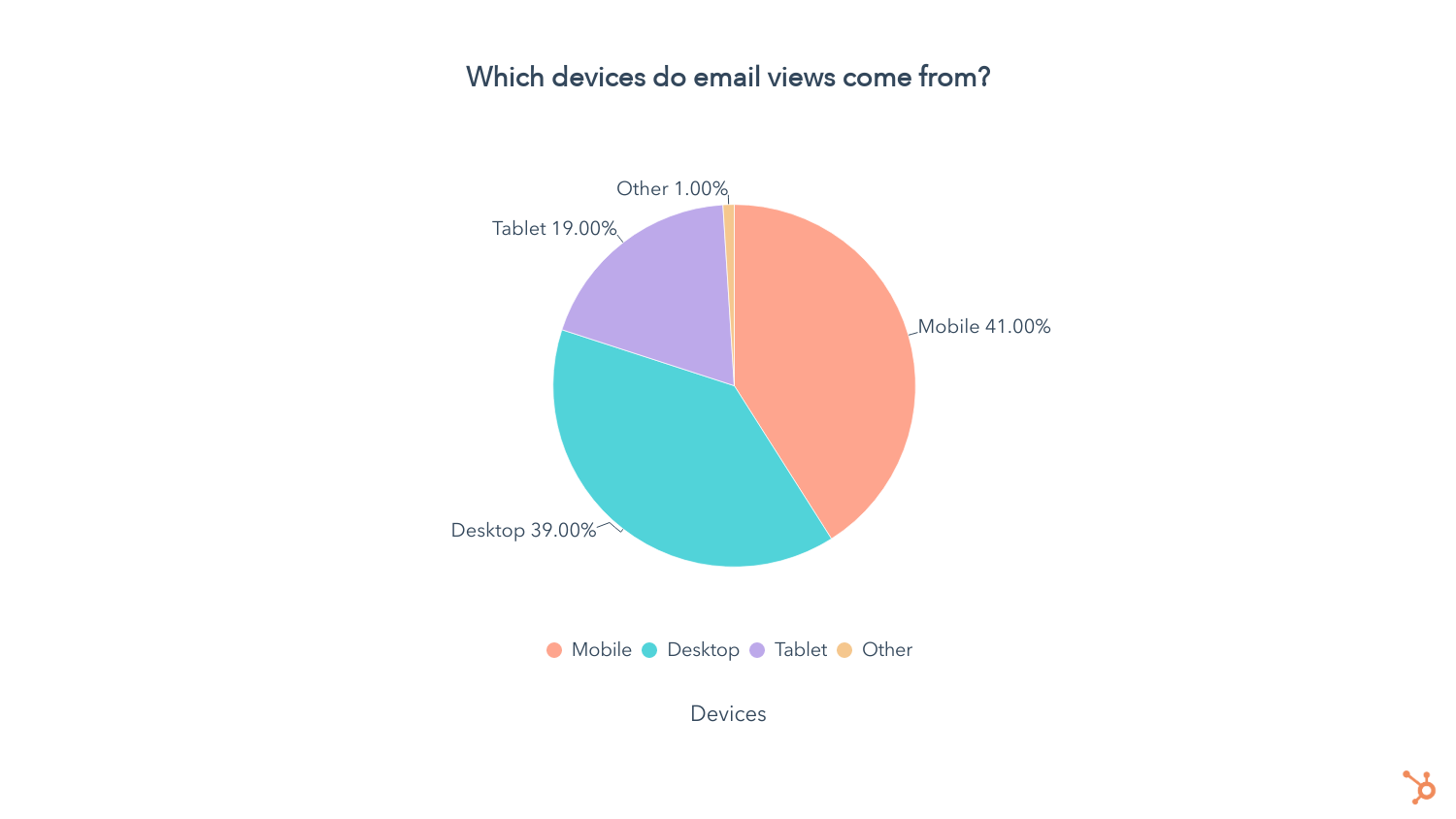
Source: HubSpot Blog – Estatísticas de marketing móvel


Extra tip

Define an attractive display text.

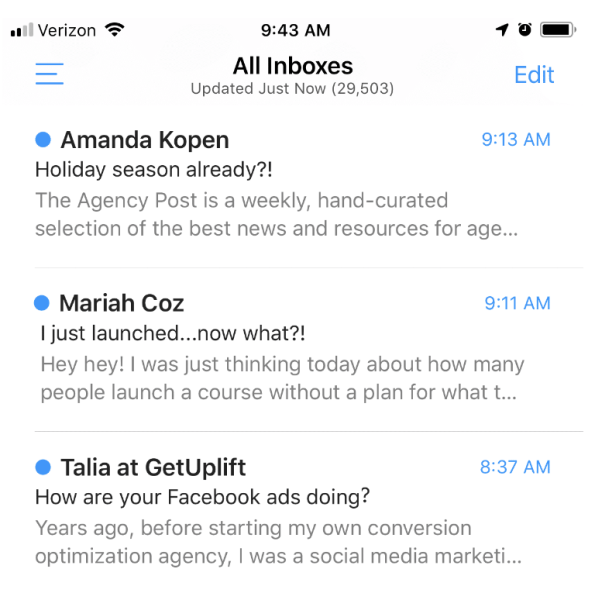
Even though it is not technically part of the email subject, the preview text must be defined in advance and appear right next to the subject line, as it will be displayed next to the subject line for recipients using iPhone Mail, Gmail, and Outlook.

If this text is not defined, the email-sending platform will automatically display the beginning of the email body text next to the subject line, which may not be ideal and may even be confusing for the customer.

What NOT to do

Don’t use CAPITAL LETTERS or lots of exclamation marks!!!! As well as being distracting, your email will also look like spam.

Don’t write a question and an exclamation mark in the same subject line, as your email may automatically go to the spam folder.

Examples of email subject lines for abandoned shopping carts

Your purchase is reserved! [OPEN] to view…

Complete your purchase! Your cart is about to expire…

(Customer name), we’ve noticed that you haven’t completed your purchase

Don’t miss out! Empty your cart and get 10% off

15% off your shopping cart!

(Customer name), your (product name) is waiting for you! 

Hurry up! The items in your cart are running out fast!

We’re waiting for you! You forgot to complete your purchase

Reminder: Purchase your products before the shopping cart expires 

Congratulations! You’ve made some great choices, now all that’s left is to complete your purchase 😉

(Customer name), we’ll save your cart

We’ve saved your cart! Only one step left to complete your purchase

(Customer name), continue your purchase with us!

Price reduction notice! Complete your purchase with a discount within 24 hours

More than (#) customers have already bought and approved this (product name) this week alone

Last few hours to complete your purchase!

(Customer name), we have an exclusive offer for you in your shopping cart

Call to Action (CTA)

For each email, use only one call to action, with clear language and contrasting design elements. Guide the customer to take the action, i.e. complete the purchase, and set expectations about what will happen when they do.

A/B tests

Run A/B tests on your email subject lines and adjust the text according to the results.

Sending e-mails via the main e-commerce platforms

E-commerce platforms such as Shopify, WooCommerce, and BigCommerce automatically track users’ actions on the website by registering potential customers who add products to the cart and leave the website without completing the purchase.

Shopify

Shopify provides basic abandoned cart email templates, which can be edited in the Settings > Notifications section. You can also edit the design using the CSS style sheet and add a personalized message.

Source: O Guia de Ação para E-mails de Carrinho de Compras Abandonado – Kinsta Blog

To control the template and content of your emails, you need to install an application such as Abandoned Cart Recovery.
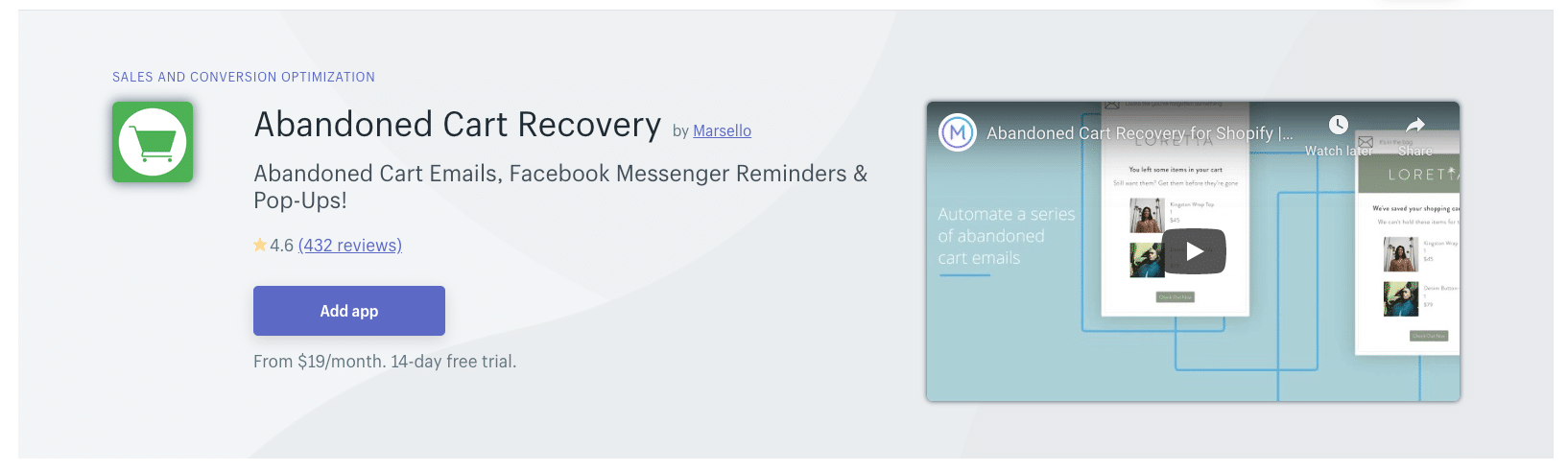
Source: O Guia de Ação para E-mails de Carrinho de Compras Abandonado – Kinsta Blog

Other cart abandonment email tools for Shopify:

WooCommerce

WooCommerce doesn’t have the functionality for cart abandonment emails, but you could use the official WooCommerce Follow-Ups extension (paid), or the free Abandoned Cart Lite plugin for WooCommerce, which adds a new section to your WeCommerce control panel called Abandoned Carts, where you can edit your email content, change the email sending settings, check on recovered carts, among other actions.

Source: O Guia de Ação para E-mails de Carrinho de Compras Abandonado – Kinsta Blog


Option: use the standard WordPress WYSIWYG editor to create your emails in the Abandoned Carts > Email Templates section (by clicking on the Add New Template link).

Other cart abandonment email tools for WooCommerce:

BigCommerce

BigCommerce gives you total control over your cart abandonment emails, from the design, product images, and texts, to the number of emails to be sent and when they should be sent.

Source: O Guia de Ação para E-mails de Carrinho de Compras Abandonado – Kinsta Blog


You can edit all the settings in the Abandoned Cart Notifications section of the dashboard.

Source: O Guia de Ação para E-mails de Carrinho de Compras Abandonado – Kinsta Blog


Other cart abandonment email tools for BigCommerce:

Third-party email marketing software

To create, optimize and personalize your email campaigns even more, without having technical experience or even graphic design skills, there are several options for specialized e-commerce tools that not only send cart abandonment emails, but also reminders and recommendations based on your browsing and purchase history, for example:

7 Hacks to optimize your online store

  1. Mobile friendly and responsive website.
  2. The quickest and simplest possible purchasing process.
  3. Payment security.
  4. Various payment method options.
  5. Checkout options for customers who don’t have a registered account or the
  6. option to complete registration automatically, via a social login, for example.
  7. Transparency on all additional costs.
  8. Complete and solid refund and return policy.

Anticipate! Taking into account the various reasons that lead customers to abandon their shopping cart, optimize your online store for a better shopping experience for your customers and prevent abandonment from occurring. 

Write effective subject lines, send emails at the right time, and create a sequence of emails that convert.


Developing mobile apps to improve marketing

Gabriela Polidoro Lima
UX Designer & Content Writer

It’s not news to anyone that the internet has transformed the way brands communicate with their customers and, as a result, new tools and ways of boosting this relationship are emerging all the time. More and more companies are turning to advanced marketing strategies to generate better results for their businesses.

Betting on a proprietary application has been one of the paths adopted by many brands who, with this tool, seek to improve customer loyalty and increase the value of their presence on the web. Differentiating yourself amid the avalanche of information available and still generating income is not an easy task, which is why it’s important to be aware of market trends to choose the best strategy for your brand and your audience.

Gabriela Polidoro Lima
UX Designer & Content Writer

It’s not news to anyone that the internet has transformed the way brands communicate with their customers and, as a result, new tools and ways of boosting this relationship are emerging all the time. More and more companies are turning to advanced marketing strategies to generate better results for their businesses.

Betting on a proprietary application has been one of the paths adopted by many brands who, with this tool, seek to improve customer loyalty and increase the value of their presence on the web. Differentiating yourself amid the avalanche of information available and still generating income is not an easy task, which is why it’s important to be aware of market trends to choose the best strategy for your brand and your audience.

Self-employment – is it worth it?

From the outset, it’s important to understand that developing a new mobile application is time consuming and expensive. In addition to the investment of time and money, consider that there are already about three million applications available in the App Store. With this in mind, companies should explore this environment and consider what options already exist, how they can differentiate themselves, and whether it is worth investing in yet another tool to attract and retain customers. If you are going to invest, you need to take the time to understand your customers’ wants and needs, and then design a solution that is ideal for them.

78% of smartphone customers have used a store’s app to make a purchase.

Learn about other strategies related to your own applications:

1 – Omnichannel

This cross-channel content strategy is used by organizations to improve the user experience and ensure better relationships at the points of contact. The idea is to integrate all the available channels in an interrelated way and thus allow the customer to start their communication with the company through one channel and continue through another.

A practical example of this strategy is when a customer starts a purchase on the company’s website, asks questions about the desired product on webchat, sends their proof of address by email, and completes the purchase on a voice call, and most importantly, without having to restart the conversation or repeat information already provided.

The advantages of applying this strategy are:

  • Provide a quality experience regardless of the medium chosen by the customer;
  • Improve relationships and increase brand loyalty;
  • Help maintain the company’s perceived value in the market.

To ensure the best results, it’s important to:

  • Ensure that all channels act with simplicity and transparency;
  • Unify resolution criteria and adapt to customer demands;
  • Align the tone of voice: the brand’s values must be present, in other words, the company’s service culture must be reviewed and molded to support this initiative.
Source: Mercado & Consumo


Web to app – discover Google’s tool

Another way to improve the web experience is to redirect the user directly to the desired page. To facilitate this, Google offers a tool that allows this to happen quickly and easily. Through advertisements on the internet, Web to app takes the customer directly to the desired page within the app.

In addition to guiding the user and preventing them from getting “lost” along the way, it is also possible to measure conversion actions such as purchases, registrations, and subscriptions, which allows the performance of online ads to be tracked and optimized.

The main advantages of Google’s tool are:

  • Provides better user experiences through direct links that enable seamless integration between web and app.
  • Offers conversion rates on average twice as high for clicks on ads in the app compared to the mobile site.
  • Optimizes the performance of campaigns and ads to keep high-value users engaged and generate more conversions.

2 – Exclusives for new customers

When a new user finally downloads the app, the company has a unique moment to offer an excellent first impression. To impress and immediately retain this new customer, companies often offer exclusive facilities, discounts, promotions, insider information, and other benefits that are only valid for new users.

83% of US retailers agree that customers of their app tend to make more purchases compared to customers who don’t use it, and up to 87% agree that these users are more loyal and have a higher lifetime value

Paid campaigns can also be a good way to inform users that your brand/company offers its app as an alternative channel and thus direct them directly there.

Amazon, for example, reported that 45% of the activity within its app comes from paid installation. In this way, it can be said that betting on this strategy has helped the company boost its share of e-commerce by 17 percentage points between 2016 and 2021.

3 – Data retention

Obtaining a good database, thus enabling an even more personalized experience, allows users to access the app more often. Requiring them to enter their details every time they log in makes the experience repetitive and tiring.

Young people, in particular, want an experience with less friction when making a purchase. A recent global study reveals that Generation Z (45%) and Millenials (48%) are significantly more likely to say that having their account and payment information already on file is important for their decision to buy, as well as making it more regular. If we consider that Generation Z represents almost 30% of the global population, this age group becomes the main target for these digital strategies.

But to maintain this increasingly close relationship, transparency in communication is essential. The company must make it clear how the information retained will be used, as well as show how this exchange of information will provide a lighter, easier, and more personalized experience. Finally, in exchange for the value provided to your users, encourage them to create an account on the app and log in.

Once this relationship of trust has been established, the information retained can generate analytical data that can further boost the growth of the brand and the app itself, as well as improve the user experience when using it.

Source: Medium


Once you’ve invested in this tool, it’s then part of your marketing strategies to plan how it will be promoted and how best to exploit this channel to attract followers and, consequently, boost earnings.

Several strategies can be used: gamification, geolocation, paid advertising on social networks, and the use of push notifications, among others, everything will depend on the brand concept, the app’s objectives, and the budget, of course.

The most important reason to promote the app is to reach all potential smartphone users and let everyone know that your brand also has this communication channel. With several apps on the move in the market, there’s a chance that they won’t spot you in the app store.

User perspective

When analyzing this strategy from the user’s point of view, the main benefits identified can be:

  1. Mobility – what used to require a laptop can now be done and accessed anywhere via cell phone
  2. Agility – if access is easier, answers come more quickly. Users can quickly clarify doubts, obtain information, and even resolve small issues, depending on the app.
  3. Proximity – users feel closer to the brand as if they were inside its home. If they have a good experience within the app, they will feel “welcomed”, which will easily make them come back often and use the app more and more.
  4. Reliability – the user has the feeling that, because they are inside a brand’s channel, the information is more truthful and reliable, they feel they are in a safe environment, making them more comfortable with providing personal data and carrying out financial transactions, for example.

Increasingly reinforcing these values to the user strengthens the relationship between them and the brand. Both sides win.

Source: blog.7comm


It can therefore be concluded that, as consumer expectations rise and online and offline experiences become more connected, it is essential for marketers to adapt to new, more effective strategies.

The importance of mobile application marketing cannot be ignored, especially in a world where almost everything is available on your cell phone, just a tap of your finger away. And if users are spending more and more time on that device, there are more ways to build direct relationships between brand and customer.

Adopting this strategy, with a well-crafted approach, can be a practical and efficient way to delight consumers, generate income, and take your business to the next level.

Personal branding for freelancers: how to develop a successful brand

Inês Tito
Copywriter

More and more professionals in a wide variety of fields are deciding to transform their careers and dedicate themselves to freelance work. Flexible working hours, a healthy work-life balance, and the chance to work on what they love are just some of the reasons driving this change.

Inês Tito
Copywriter

More and more professionals in a wide variety of fields are deciding to transform their careers and dedicate themselves to freelance work. Flexible working hours, a healthy work-life balance, and the chance to work on what they love are just some of the reasons driving this change.

Today, almost half of the global workforce is freelance, and the trend is growing continuously. 

For this reason, freelancers are faced with an unprecedented level of competition on a global scale. To stand out from the crowd, the solution is personal branding.

Source: Freepik

What is personal branding?

When we say branding, it’s natural to think of big global brands like Nike or Coca-Cola. These are established, reputable brands that convey an unshakeable sense of trust and authority.

It’s the same with personal branding! As freelancers, we are the face of the business. It’s our personality that comes through. It’s how we present ourselves to others. It’s the feeling we convey to those who seek our services.

For this reason, personal branding goes far beyond creating a logo or choosing a color scheme. Communication with clients and the image we convey is just as important.

The importance of a strong personal brand

Competition in the freelance market is fierce and there are thousands of quality professionals around the world. That’s why personal branding isn’t an accessory; it’s a necessity!

Is it that advantageous? Of course, it is!

By creating a personal brand, freelancers can reach their target audience much more effectively. People tend to make an emotional connection with other people, not with companies. That’s where the importance lies of the freelancer making their personality known and clarifying what values they stand for.

In addition, personal branding makes it possible to create a relationship of trust between freelancers and their clients. By positioning themselves as an authority on a particular subject, freelancers can easily attract new clients and get positive recommendations and comments about their work. This is particularly important if you consider that these days customers search for information online before purchasing any type of product or service.

Another great advantage of a strong personal brand is the possibility of charging more for the same services. In other words, a reputable freelancer can justify higher prices and find potential clients willing to pay them.

How to develop a strong personal brand?

Building a personal brand doesn’t happen overnight. It takes time, persistence and consistency. Want to know how to develop a strong personal brand? Read on!

  • Bet on authenticity

A freelancer’s personality is the basis of their personal brand. There’s little point in reinventing who you are to meet other people’s expectations. Clients want authenticity

That’s why it’s best to let your moral and professional values speak louder. Communication with the client, decision-making and the creative process itself become mo

  • Telling your own story

As a freelancer, this will be one of the biggest challenges you face. How do you describe your personality, beliefs and personal tastes in a few, engaging words?

When we write about other people, we have a global and simplified vision. But when you write about yourself, things get more complicated. That’s why it’s best to write several versions until you find the one that best represents you. 

Another tip is to write as if you were talking to a potential client. A simple, conversational text makes it easier to read, captures the reader’s attention, and creates a stronger emotional connection.

  • Choosing a business name

This is another common question. Many freelancers decide to use their name, followed by the service they provide. This is an excellent way to get started, especially if you work alone and are the face of the business.

However, if you have a common name, or if you want to expand your business in the future, it’s best to bet on a name that will last over time. If you’re short of ideas for a striking name, you can always use a business name generator.

  • Create a brand image

A brand’s image is the way to build memorable mental associations with customers. That’s why it’s important to choose an image that represents the services provided, and the brand’s values and that is easily recognisable.

Colour psychology plays a key role here. Each colour is associated with different emotions. So avoid choosing any colour just because it’s your favourite. You may love black, but if you want to convey an image of calm and tranquillity, it may be better to choose another colour.

In short, you want to convey the right emotions. That’s why it’s important to analyse which colours best convey the desired feeling or emotion.

Source: howtoartist.com


There are various platforms on the internet, such as Canva, that make it easy to create logos. That’s one option. However, when it comes to developing a brand, it’s best to leave this part to a specialized designer. 

  • Invest in professional photography

By now, you’ve probably noticed the importance of images. As well as investing in your business image, it’s vital to invest in professional profile photos. 

Several studies indicate that a profile picture of a smiling face is more likely to generate positive results. One of them is to demonstrate openness to establishing contact. In addition, you can include the brand’s colors in the photo, either through the clothing you choose or the background.

To convey a professional and consistent image, it is essential to use the same photo on all social networks and personal websites.

  • Develop a personal website

It’s the best way to show the world who you are, what you do and what motivates you. It’s your home in the digital world. 

Nowadays, it’s possible to develop a personal page in a few minutes, without spending a fortune. Platforms such as WordPress or Wix provide free, ready-to-use templates. Simply choose the one that best suits your purpose and get going.

Over time, it’s important to update the website’s content, especially if you’re using it as a portfolio. This way, potential clients have the opportunity to see your work before hiring you.

  • Be present on social media

Social media is a powerful tool for building a strong personal brand. Among the most used by freelancers around the world are LinkedIn and Facebook. However, depending on the type of work you do and your target audience, you could also use Instagram, Youtube, or TikTok.

Source: Freepik


As well as being able to interact with your clients, social media is one of the most effective methods for attracting new clients, promoting your work, and providing testimonials from those who have already hired you. 

However, a freelancer’s relationships don’t stop there. A strong online presence allows you to create a network of contacts with professionals in the same field. The likelihood of finding new opportunities increases exponentially.

Being a freelancer…

Especially when you’re just starting, promoting your services is the most time-consuming task. We spend many hours looking for opportunities, sending out proposals, and sharing our best product with potential clients. In between, we also do a bit of work. 

As difficult as this initial phase is, the work put into creating a personal brand is fundamental. It’s what defines your future as a freelancer. That’s why being a freelancer involves discipline and commitment to your chosen craft. It also means dedicating yourself to building a strong personal brand that is easily recognizable.

So? Do you already know what your next step will be?

The impact of online reviews on brand reputation

Pauliny Zito
Planner, copywriter e copydesk

If, by definition, reputation is a concept, the favorable or unfavorable public opinion about something, brand reputation is the general opinion that the public shares about it.

All of us, as communication and marketing professionals, are (or should be) reputation managers, with the essential mission of caring for and protecting the image of the brand, its leaders and everything around it. In essence, we must be true brand guardians.

In times of the Internet, where everyone has a voice, it is necessary to define positions, communicate clearly and on all platforms the values and purpose of the brand.

Pauliny Zito
Planner, copywriter e copydesk

If, by definition, reputation is a concept, the favorable or unfavorable public opinion about something, brand reputation is the general opinion that the public shares about it.

All of us, as communication and marketing professionals, are (or should be) reputation managers, with the essential mission of caring for and protecting the image of the brand, its leaders and everything around it. In essence, we must be true brand guardians.

In times of the Internet, where everyone has a voice, it is necessary to define positions, communicate clearly and on all platforms the values and purpose of the brand.

A Minc Law article on the importance of brand reputation lists five main components that contribute to a company’s reputation:

  1. Quality
  2. Financial performance
  3. Customer service
  4. Workplace culture and
  5. Reputation of the CEO
Source: Freepik

“Reputation is responsible for the soft power and social license for for-profit and non-profit organizations to operate.” – Tatiana Maia Lins – Makemake Corporate Reputation Consultant

Online reviews or ratings

Online reviews are one of the ways to measure a brand’s reputation.

Ogilvy Cannes study points out that even today, nearly 75% of customers cite word-of-mouth marketing as a critical factor in their purchasing decisions.

When it comes to online reviews, 92% of business-to-business (B2B) decision-makers are more likely to make a purchase after reading a trusted review, according to Kristen McCabe – Consumer Reviews – B2B Sales and Marketing Report. G2 (2018).

Negative reviews directly affect sales and the ability to attract and retain talent. It’s abundantly clear that brand perception and public sentiment impact the consumer decision-making process.

And not only. Negative online reviews also have a direct impact on a company’s bottom line, as 25% of a company’s market value can be related to its reputation, according to a 2015 survey by Deloitte.

More than monitoring online reviews and responding to demands in the shortest time possible, it is crucial to apply good practices to maintain brand health.

Best practices for brand reputation management

Brand reputation management is the art of keeping it positive.

No strategy can beat a bad, poor-quality product or service.

Assuming the product is good, the golden rule for managing brand reputation is to always be aware and listen to people.

Hootsuite shares important strategies to avoid damage when managing brand reputation. These practices also help improve your online reputation.

Brand recognition

Increase your brand recognition, with your aesthetic and voice.

Brand consistency

Keep your brand consistent by providing an excellent and engaging product or service and content.

Social guidelines and crisis management plan

Create social guidelines and a crisis management plan to know how to behave in the worst-case scenario.

Sense of community

Contribute to your community by offering genuine value and cultivating connections.

Brand-aligned partnerships

Approach partnerships with caution, making sure that the values of partner brands, influencers, or ambassadors are aligned with your brand values.

Social listening and brand monitoring

Practice social listening by engaging with comments and reactions. To do this, monitor mentions of your brand and products, and also analyze the reputation of your competitors.

Social Listening serves to gain relevant insights into:

  • The behavior of the public;
  • New business opportunities for the company;
  • The level of customer satisfaction;
  • Possible brand crises (preventing brand reputation crises);
  • The evolution of the brand’s digital presence.

It is a cycle of continuous improvement of the user experience, composed of four steps: 1. Monitoring, 2. Listening, 3. Analysis and 4. New Actions.

Responsiveness

Be responsive. Nothing worse for a bad reputation than poor customer service.

Social feeling

Track social sentiment by monitoring the most common words used to talk about your brand.

Social defense program

Create a social advocacy program that rewards people who praise your brand digitally. This is because brand advocates help you connect with potential customers and reduce online noise, and can increase visibility by demonstrating your products on social media, positive online reviews, and driving more traffic to your products.

User Generated Content (UGC)

Share user-generated content. Original, brand-specific content created by customers and shared online influences brand awareness and acts as a trust signal.

Brand safety

Practice brand safety by ensuring that ads are not associated with inappropriate content that could damage the brand’s reputation.

How to manage and respond to customer reviews on platforms such as Google and TripAdvisor

According to Google itself, your customers’ reviews can provide valuable feedback for your business.

And your responses can help gain the trust of your customers, who, after reading them, may even update their reviews.

Consider criticism as an opportunity to improve both the product or service and the customer experience. And not as a problem to be solved.

Respond promptly

This is the number one recommendation regarding online reviews, as it shows that the company is attentive and cares about its customer’s experience.

Show that you are a real person

Sign with your name or initials, as this helps to convey an image of greater authenticity.

Analyze the common themes in complaints

By detecting the complaints, it is possible to identify the problem and act to solve it.

If you made a mistake, own up to it and apologize

It is not shameful or a sign of weakness to take responsibility for mistakes made and apologize. In doing so, show compassion and empathy. Be honest, and explain what you can and cannot do in the situation.

Respond to negative online reviews, avoiding online attacks and arguments with customers and promises you can’t keep.

Focus on understanding and solving the problem. And thank the customer for bringing the case to your attention. Source: Freepik

Write a useful, short and simple answer

There is no room for flourishes. Be objective. Write meaningful, readable, and polite answers.

Thank the commentators

Google suggests responding to positive comments when you have news or relevant information to share. You don’t have to thank each commenter publicly, as each reply reaches multiple customers.

Don’t be a salesman

Don’t offer incentives or advertise. What you can do is tell commenters something new about your company or share something they may not have known on their first visit.

Never share personal data

Suggest that the commenter contact you personally by email or phone to resolve the issue.

Investigate the reasons behind the negative impression

Check your records on the commentator and their experience with your company.

Hire a trademark or internet defamation lawyer

If so, consider contacting an experienced and specialized lawyer for the removal of defamatory negative content and mitigation of damages.

The importance of giving customers a say

Not having a strong online presence is NOT an option for a brand that wants to succeed and grow.

Hiding, deleting, ignoring or replying to customer comments with ready-made and “cold” phrases have only one consequence: irritating and driving customers away from your brand.

An angry customer impacts exponentially many more customers and non-customers, who may not become customers of your brand.

But by focusing on customers’ needs, wants, values, and opinions, you align brand experiences with these factors and thus help shape the customer’s perception of your brand.

Did you realize how it’s a never-ending cycle that feeds back on itself?

Maintain a good brand reputation to get positive online reviews

A brand’s positive reputation is one of its most desirable and valuable intangible assets.

In today’s context, reputation can change rapidly as a consequence of changing customer expectations or negative publicity.

Positive online reviews generate a positive brand reputation and vice versa.

Start by always behaving ethically and engaging with your customers and the wider community.

Do the right thing and be considerate of employees, customers, fans, followers, investors, suppliers, and other stakeholders.

Prioritize social listening to detect problems and complaints before they snowball, damaging the brand and, consequently, its reputation. Social listening also serves to anticipate problems.

A good reputation builds trust. And trust is the basis for any healthy relationship.

Content Marketing Funnel: a definitive mini-guide

Catarina Alves de Sousa
Social Media Manager & Content Writer

Content marketing is a marketing strategy that concerns the creation, publication, and distribution of relevant, useful, and consistent content to attract and retain a clearly defined target audience, with the ultimate goal of driving action from readers.

In the case of this article, our goal is that you read it to the end and put into practice what you learn here to boost your brand or business.

Catarina Alves de Sousa
Social Media Manager & Content Writer

Content marketing is a marketing strategy that concerns the creation, publication, and distribution of relevant, useful, and consistent content to attract and retain a clearly defined target audience, with the ultimate goal of driving action from readers.

In the case of this article, our goal is that you read it to the end and put into practice what you learn here to boost your brand or business.

No matter what you say about the decrease in cybernauts’ attention span and interest in long-form content, the truth is that content marketing is still one of the most powerful marketing tools.

Among the main functions of content marketing, the following stand out:

  1. Attract and retain audience attention: by sharing valuable information with the target audience;
  2. Build trust and authority: by providing high-quality content;
  3. Improve SEO: quality content can help improve a company’s search engine ranking, making it more visible to potential customers;
  4. Generate leads and sales: content marketing can be used to capture contact information from potential customers (leads) or to encourage direct purchases;
  5. Nurture customer relationships: content marketing does not end with the sale. It can be used to continue to provide value to customers, keeping them engaged and encouraging brand loyalty and repeat sales.
  6. Educate the public: Content marketing can also be used to educate the public about a company’s products or services, helping them understand why they are the best choice.
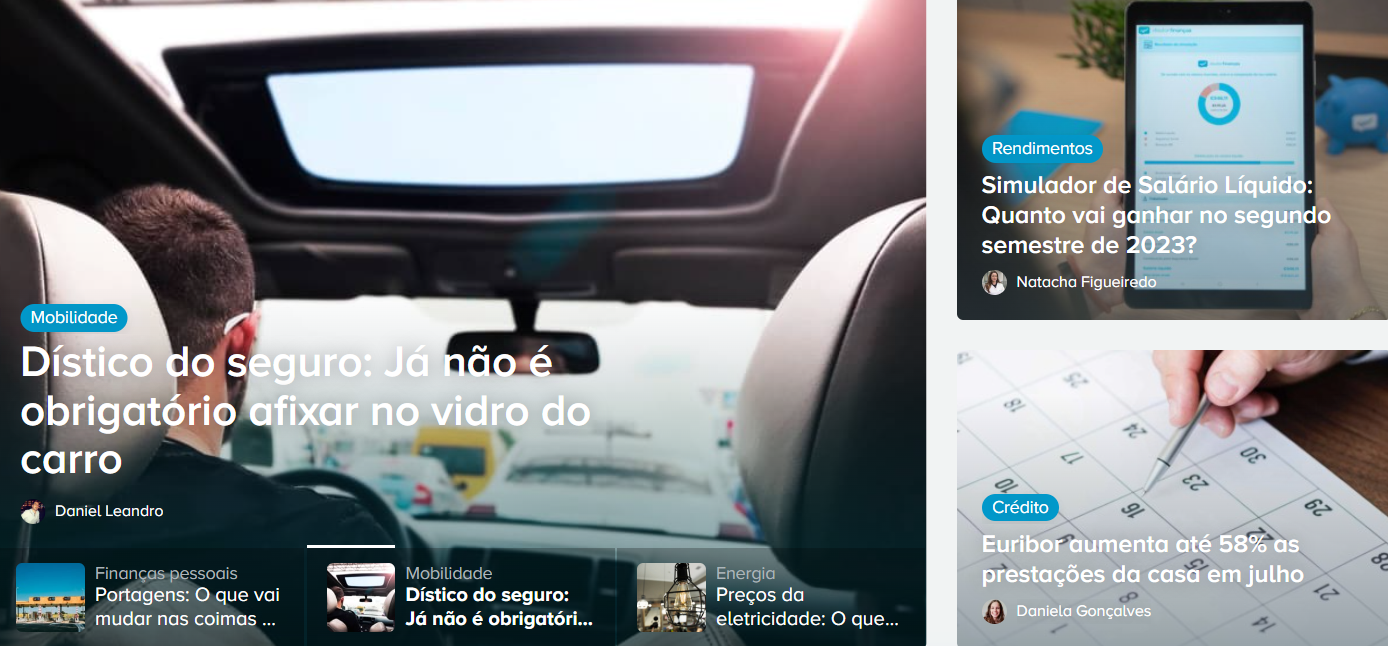
Source:  Doutor Finanças


The Portuguese fintech Doutor Finanças offers several contents that aim only to inform readers that is, they add value without the intention of buying or capturing leads. In other articles on topics more in line with the service they offer, they post contact forms. Different content for different intentions and stages of the funnel (we will go there later).

Having addressed the importance that Content Marketing has for companies, we must now explore its funnel.

What is a Content Marketing Funnel?

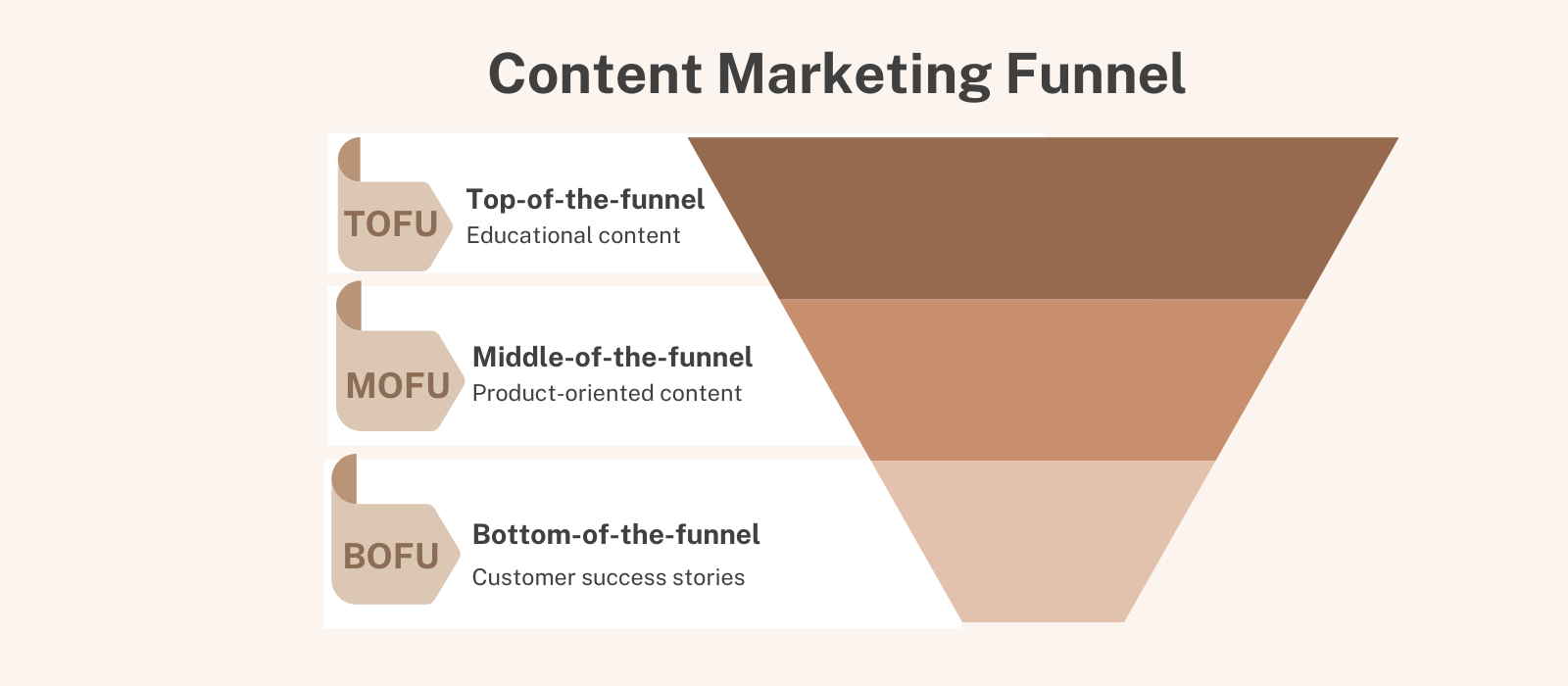
A Content Marketing Funnel is a visual representation of the customer journey, from the first point of contact with your brand to the final conversion. This journey is usually divided into three stages: top of the funnel (ToFu), middle of the funnel (MoFu), and bottom of the funnel (BoFu). Each stage requires different types of content to move prospects through the funnel toward the desired action.

Source: Search Engine Journal

How to start mapping your Content Marketing Funnel?

Mapping your Content Marketing Funnel can seem like a daunting task, but it doesn’t have to be. Here are some steps to get you started simply:

  1. Identify your target audience: first of all, you need to understand who your target audience is. What are their needs, wants, and challenges? What kind of content do they find valuable?
  2. Define the stages of your funnel: as mentioned earlier, a content marketing funnel is usually divided into ToFu, MoFu, and BoFu. However, your funnel may have more or fewer stages depending on your business and your target audience. Use this guide as inspiration, but feel free to customize your funnel!
  3. Map the content for each stage: once the stages of the funnel are defined, it’s time to map the content for each of them. What type of content will attract your target audience into the funnel? What type of content will take them to the next stage?

What to do after mapping all the stages of the Funnel?

Once you’ve mapped out all the stages of your Content Marketing Funnel, the work isn’t over yet. Here are the actions you need to take in the next step:

  1. Produce and distribute the content: now that you have a plan, it is time to create and distribute the content. Remember that quality is more important than quantity.
  2. Monitor and adjust: use analytics tools to monitor the performance of your content. Are you attracting and moving the audience through the funnel as expected? If not, you may need to adjust your content or your strategy.

What is the best content for each stage of the funnel?

To answer this question, we would have to analyze your company (and we can do that if you wish!). The type of content that works best will vary depending on your target audience and your industry, but here are some general suggestions:

Top of the Funnel – ToFu: generate interest and capture attention

The top of the funnel is the starting point of the buyer’s journey and is the most populated stage. Here, people aren’t ready to buy yet and have probably never heard of your company. 

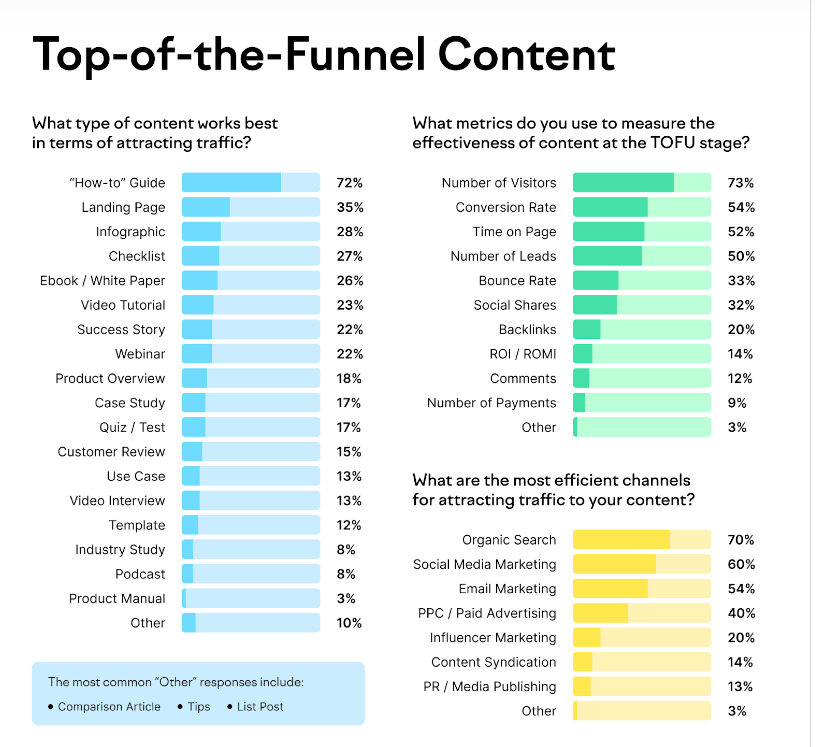
The goal at this stage is to therefore attract the audience. According to a SEMRUSH study, the most effective types of content for this stage tend to be more educational and add value, which helps drive users and readers to your website.

ToFu is usually measured by the following metrics:

  • Organic traffic, referral traffic, and total traffic;
  • Engagement on social media (shares, comments, likes);
  • Influencer and media mentions;
  • Website engagement metrics (bounce rate, time spent on page);
  • Newsletter subscriptions.

Based on the same study, these are the top five types of content that work best at the top of the funnel:

  1. How-to guides
  2. Landing pages
  3. Infographics
  4. Checklists
  5. E-books
Source: SEMRUSH

Middle of the funnel – MoFu: guide and educate

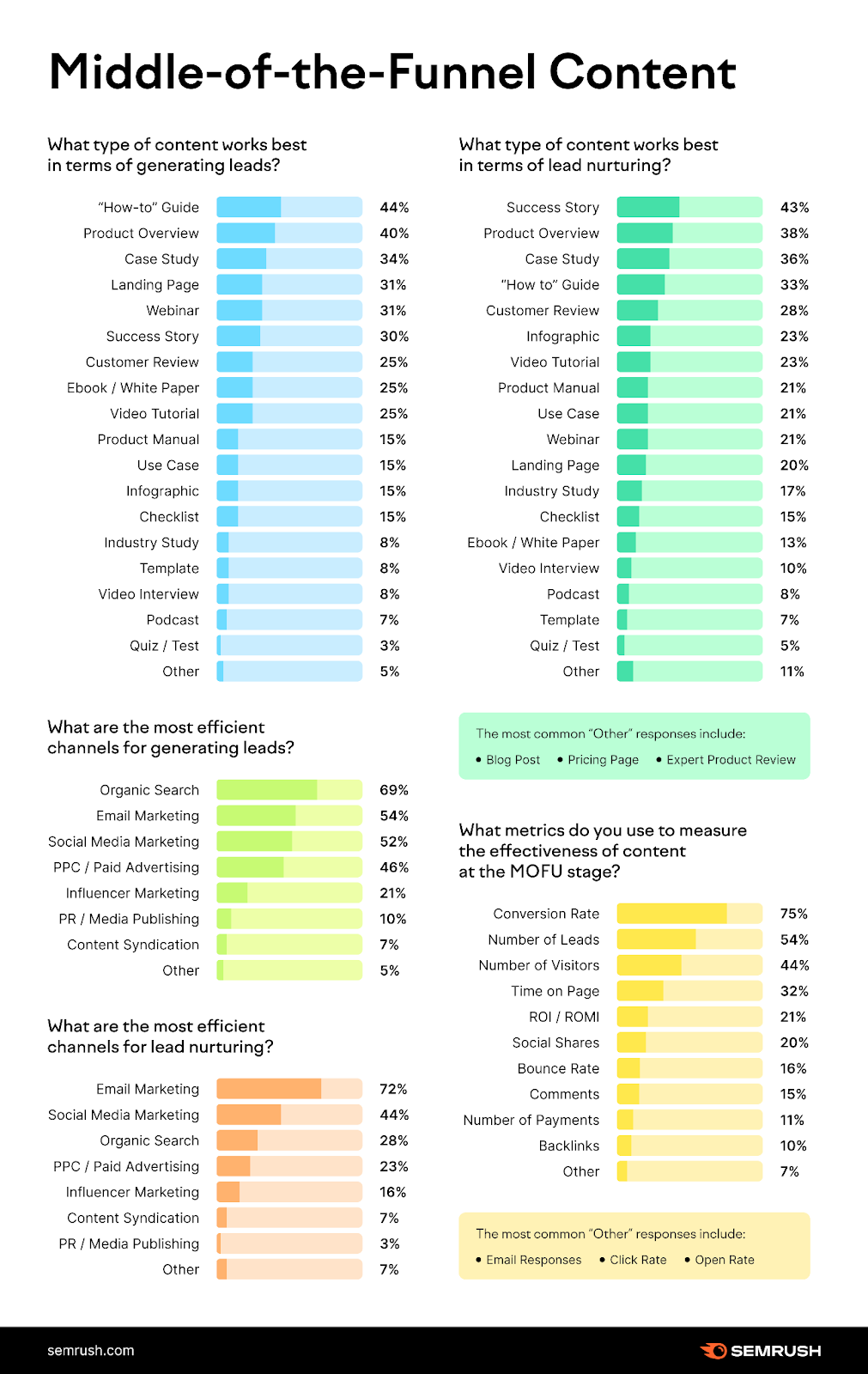
In this step, the goal is to nurture the leads and move them to the next state. The content should be more in-depth and specific. Here, the goal is to convert leads into customers. Content should be highly personalized and focused on demonstrating the value of your product or service. 

MoFu content is usually measured by conversion rates and the number of leads. Typically, mid-funnel content still generates more traffic from organic searches.

At this stage, the top five commonly used content types include:

  1. How-to guides
  2. Product overviews
  3. Case studies
  4. Landing pages
  5. Webinars
Source: SEMRUSH

Bottom of the Funnel – BoFu

The bottom-of-the-funnel stage is the finish line, where content can help position your brand as superior to competitors, build trust and accelerate purchases.

The content you create at this stage should answer very specific questions about your product or service (for example, how it works or what skills are needed to handle it).

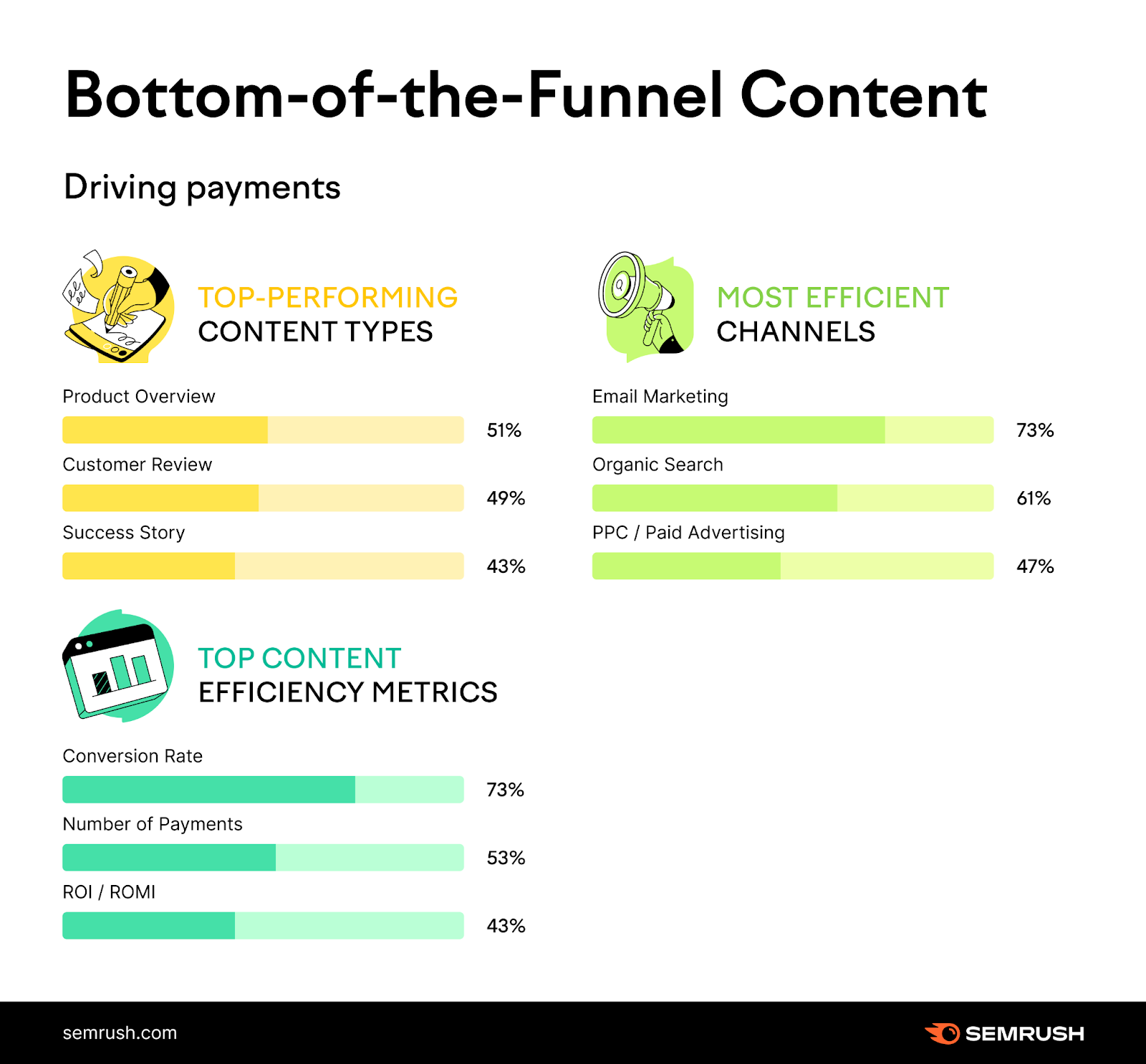
The three main types of content for the BOFU stage are:

  1. Product overview
  2. Customer reviews
  3. Success stories
Source: SEMRUSH

Tips and Good Practices

To conclude, here are some tips and best practices for your Content Marketing Funnel:

  • Know your audience: the key to effective content marketing is understanding your audience. The more you know about them, the more effective your content will be.
  • Be consistent: consistency is key when it comes to content marketing. This not only means being consistent in publishing content but also in maintaining a consistent brand voice and style.
  • Use multiple content formats: Don’t limit yourself to one type of content. Experiment with different formats to see what works best for your audience.
  • Optimize for SEO: SEO is crucial for attracting traffic to your content. Make sure your content is optimized for search engines.
  • Measure and adjust: Finally, remember that content marketing is an ongoing process. Frequently measure the performance of your content and adjust it to your strategy as needed.
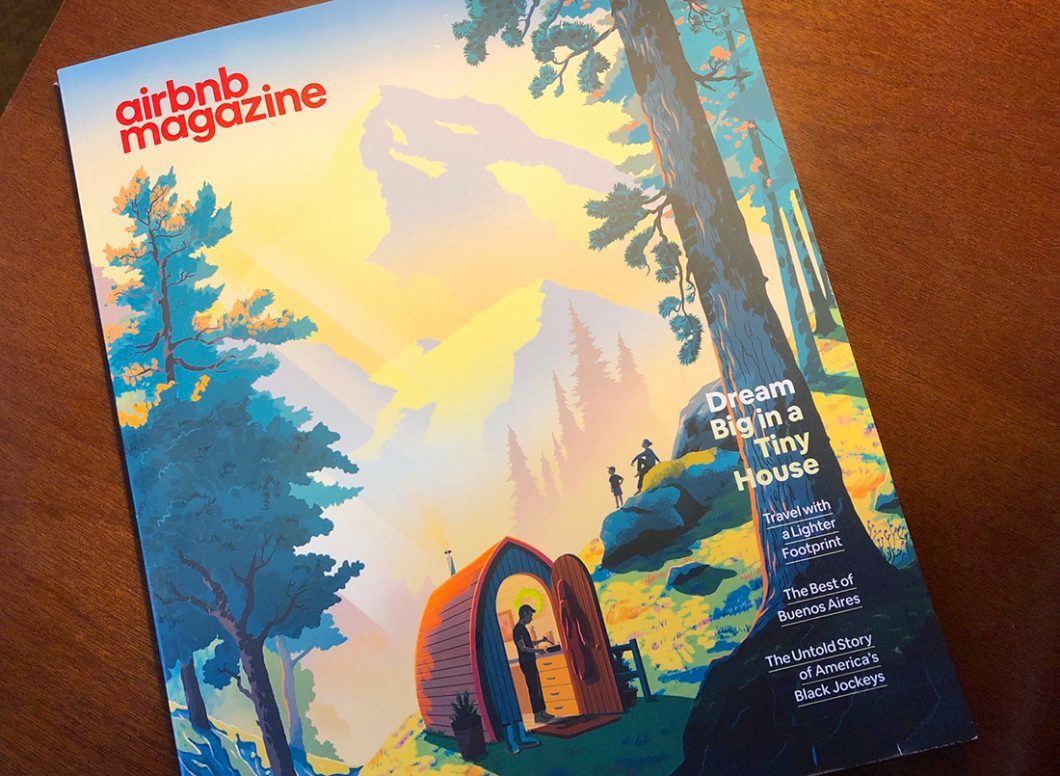
Source: Airbnb Magazine, um exemplo de diversificação na produção de conteúdos


A Content Marketing Funnel is a powerful tool to attract, engage and convert your audience. With careful planning and strategic execution, you can use content marketing to drive your business growth.

If you need help developing a 100% customized content strategy tailored to your audience and business characteristics, talk to us.

The importance of segmentation in inbound marketing

Inês Tito
Copywriter

Every day, we are bombarded with unsolicited advertisements for products and services that do not interest us. Brands that adopt such an intrusive strategy make us feel like we are just a number.

Eventually, we turn away and look for brands that make us feel unique. After all, who doesn’t like to feel special?

Inês Tito
Copywriter

Every day, we are bombarded with unsolicited advertisements for products and services that do not interest us. Brands that adopt such an intrusive strategy make us feel like we are just a number.

Eventually, we turn away and look for brands that make us feel unique. After all, who doesn’t like to feel special?

Differentiating the target audience to better understand customers has proven to be a successful strategy. Therefore, issues such as segmentation and personalization of marketing campaigns play a key role. 

Do you want to build customer loyalty? Let’s see how segmentation in inbound marketing can help you.

Inbound vs. Outbound marketing

Over the last hundred years, society has undergone dramatic changes that have affected our perception of the world. The same has happened with marketing.

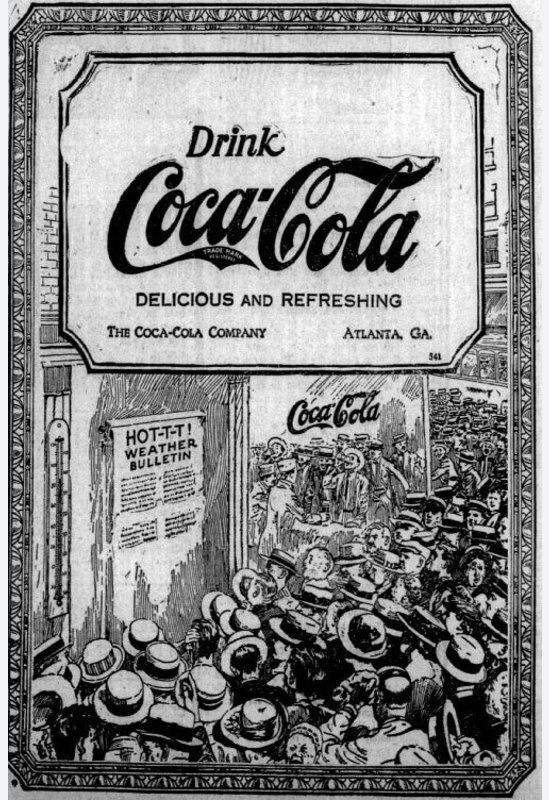
As society has evolved, new methods to promote products and services have emerged. Originally, brands relied on traditional outbound marketing strategies consisting of newspaper and radio adverts or direct customer contact.

Source: Georgia Exhibits, Coca-Cola advert published in a newspaper in the early 20th century


However, this customer demand has lost its effectiveness. The wide range of products and services on offer, as well as their excessive promotion, has changed customer perception. Therefore, it has become imperative to find new ways to attract the customer without harassing them.

Thus, inbound marketing strategies emerged. The goal is to attract and engage the customer through content that interests them and promotes brand discovery. The methods are varied and, these days, the internet is the place where everyone wants to be.

How to attract customers in the digital world? Through customer segmentation and an effective content strategy!

“Divide and conquer”

Julius Caesar was unaware of the existence of marketing. However, his premise fits like a glove!

Julius Caesar was unaware of the existence of marketing. However, his premise fits like a glove!

Customer segmentation is a way of dividing the target audience into small groups that have common characteristics such as age, gender, behavior or interests. In this way, marketers develop more relevant and effective campaigns.

Through customer segmentation, brands can improve the effectiveness of their message, promote the personalization of their campaigns and raise the quality of customer service.

Source: Freepik

This does not mean that we are labelling customers. It’s about learning more about their preferences to deliver content that interests them. This personalisation approach gives companies a competitive edge and allows them to generate better quality leads. 

That’s why brands usually use one (or more) methods to segment their target audience based on common characteristics:

  • Demographics – age, gender, income, education level, nationality or marital status;
  • Geography – location by country, region or city;
  • Psychology – personality, values or interests;
  • Technology – mobile devices, computers, apps or software; 
  • Behaviour – frequent trends and behaviours, knowledge about the brand and products or services;
  • Positioning in the customer journey – discovery, consideration, decision.

Once this process is complete, it will be easier to develop messages focussed on the needs and desires of each segment.

The impact of segmentation on inbound marketing strategy

In theory, the concept of “divide and conquer” seems to be the best strategy. But is segmentation the right choice?

Let’s see…

In short, segmentation strategies make it possible to personalise contact with the customer, present them with what they are looking for and get them to buy the products and services they want. Ultimately, brands are able to develop customer-focused products, differentiate themselves from the competition and improve customer service, promoting customer loyalty. 

Now another question arises… What is the best way to achieve these benefits?

The role of artificial intelligence in customer segmentation

Atualmente, a inteligência artificial (IA) está presente por todo o lado, desde o atendimento ao cliente até carros ou tradutores automáticos. Quase toda a tecnologia que utilizamos apresenta algoritmos de IA.

Como seria de esperar, os profissionais de marketing não perderam tempo ao identificar as potencialidades desta ferramenta.

A IA na segmentação de clientes

O volume de informação online cresce exponencialmente a cada segundo. Por esse motivo, é impossível para o comum mortal monitorizar tudo.

Source: Freepik

For this reason, more than 61% of marketers report using AI in their daily activities. In addition, 44% use AI in content creation. Still, they do not hide their belief that artificial intelligence could outperform them.

An intriguing paradox, no?

This behavior of professionals is essentially due to the advantages that artificial intelligence offers in the short term:

  • It allows target audience segmentation 100 times faster than a human.
  • It predicts with 90% more accuracy the customers who abandon the brand.
  • Ensures 80% more accurate personalization of marketing campaigns.
  • Increases customer lifecycle by 25%.
  • Reduces marketing strategy costs by 30%.

In general terms, segmentation through artificial intelligence tools allows to improve marketing campaigns. How?

AI can manage colossal volumes of data, identify patterns and trends, and establish correlations that would easily go unnoticed by humans. This allows professionals to deepen their understanding of their customers.

In addition, AI enables the automation of customer segmentation by analyzing data in real-time. For professionals, this means they can monitor changes in customer behavior patterns at all times. In this way, they can adapt their marketing strategy according to perceived changes.

AI tools useful in customer segmentation

Investment in artificial intelligence has increased in recent years. Not only because of its application in the most varied business areas but also because of the specificity of each one.Source: HubSpot, 20 Artificial Intelligence Statistics that Marketers Need to Know in 2023


Thus, AI tools (some new and some improved) are emerging to make the daily life of marketers easier.

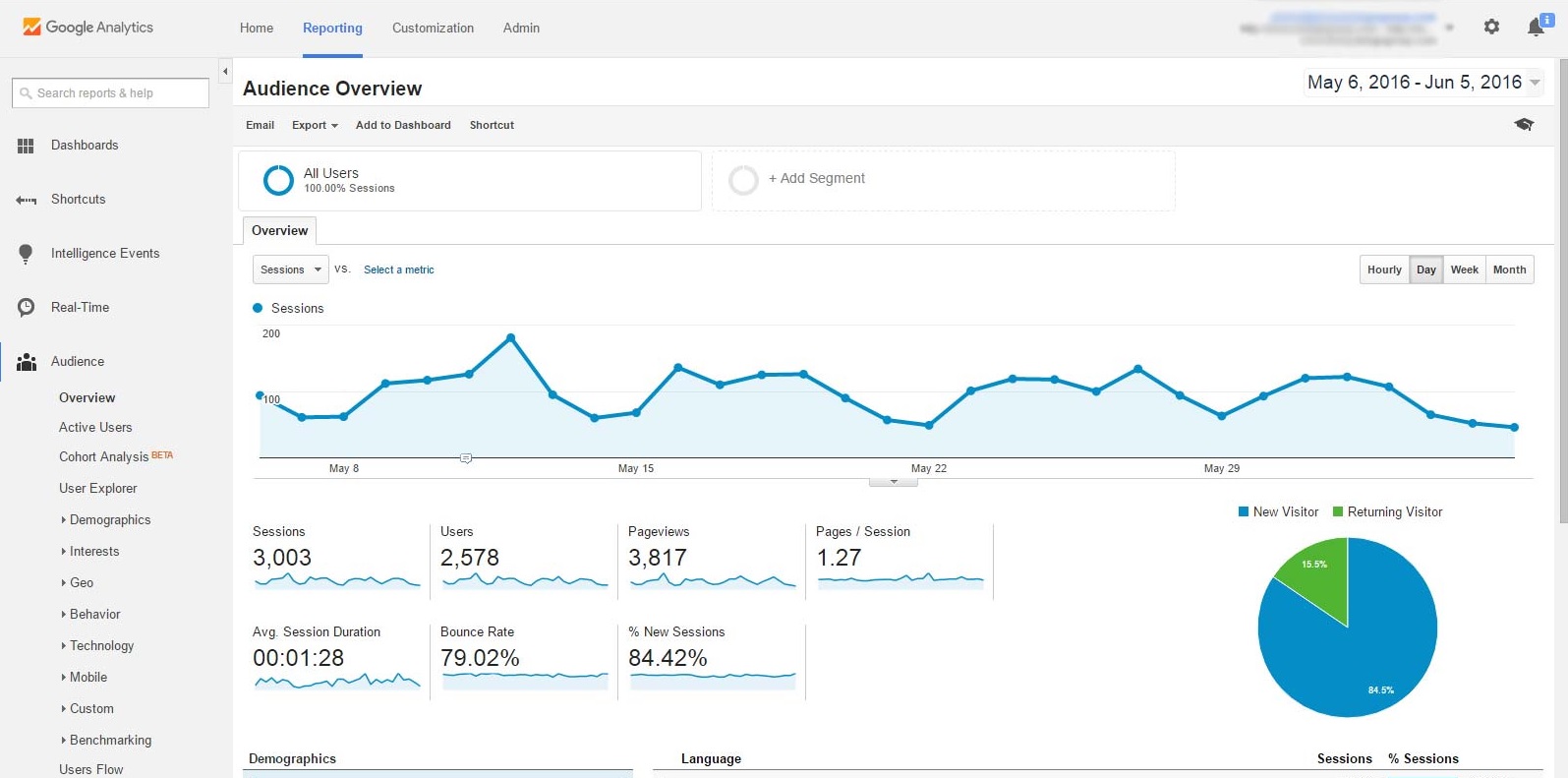
Google Analytics 

This is considered by some to be the best tool for customer segmentation.

Fonte: Google Analytics


Google Analytics is a free platform developed by Google to collect data on websites and applications. Through the data collected, brands get information about the number of visitors, their behavior on the page or the type of device used. 

Google Analytics provides some suggestions to segment the target audience quickly. However, you can always customize each group according to your needs. 

It also allows you to filter data to focus all your attention on specific users. This makes it possible to understand why some pages have higher bounce rates than others.

But the advantages of this tool do not stop there. Its interface is intuitive and all functionalities can be learnt through the Google Analytics Academy. In addition, it can be easily integrated with other platforms, such as WordPress, for example. 

However, this powerful tool can become incomprehensible to those who do not have the necessary technical knowledge. In addition, the large volume of data collected can lead to confusion when not properly handled.

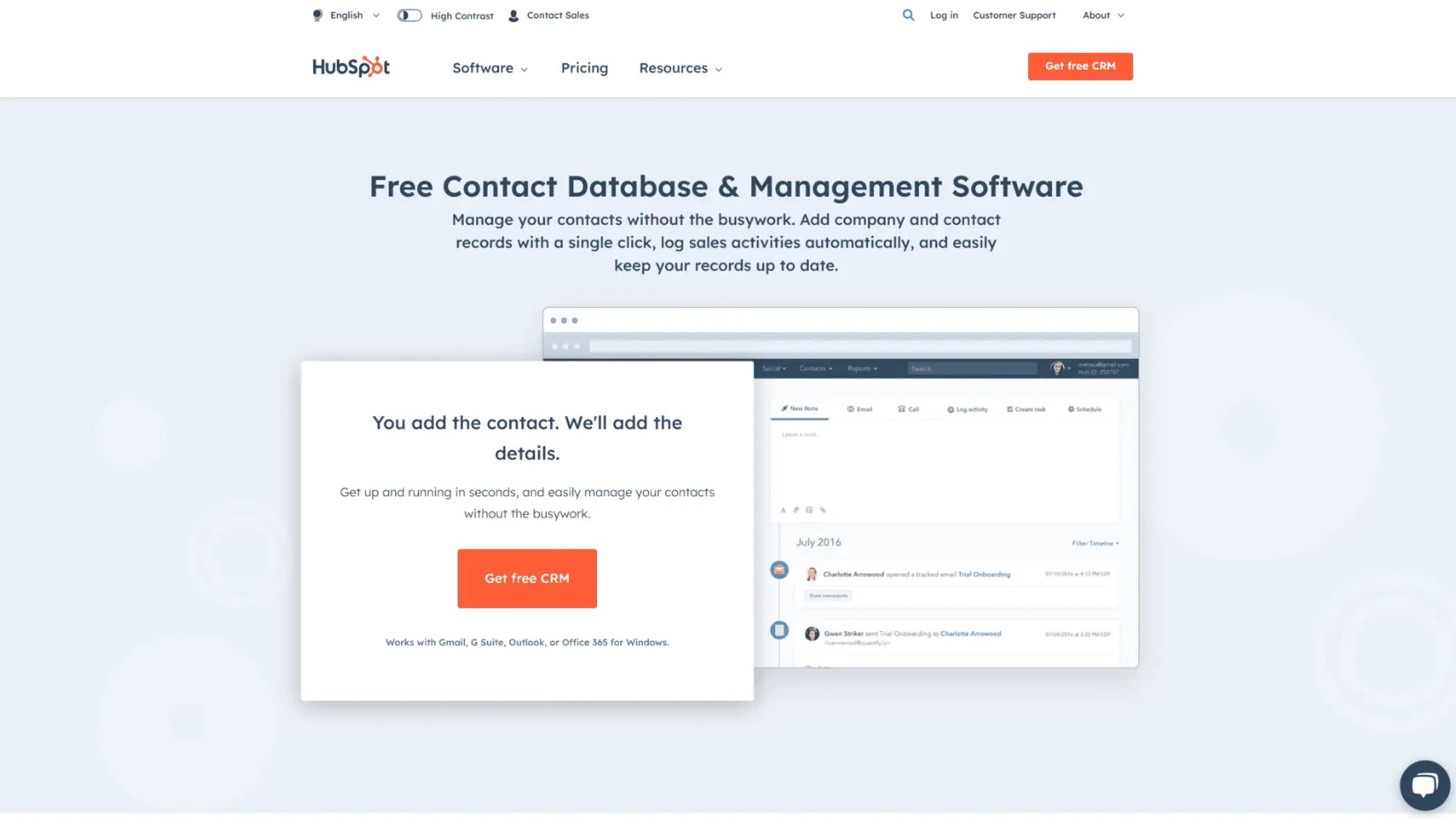
HubSpot

In the world of marketing, HubSpot needs no introduction. This inbound marketing and software company has developed an essential tool for professionals in this field.

Source: HubSpot


Its CRM (Customer Relationship Management) platform seeks to unite brands and customers. Thus, HubSpot allows you to segment customers by categorizing contact lists. Another option is event-based segmentation, which allows you to localize key customers in specific areas.

To use this tool, simply select your segmentation criteria, collect contact data and create segmented customer lists. From here, you can create personalized content to reach customers at the exact moment in their journey.

In this sense, the main advantages of HubSpot’s software are the ability to generate campaigns focused on each segment and to increase customer satisfaction and loyalty. However, this software is not very flexible and its implementation is challenging.

Not to be forgotten…

Customer segmentation is one of the best options to strengthen your inbound marketing strategy. 

By presenting content targeted to the right customer, you will improve the customer experience and increase conversions. That’s why we leave you with some important tips:

  • Segmenting without exaggeration – when segmenting the target audience we run the risk of focusing on too many details and creating groups that are too restrictive. Therefore, it is important to create segments that are both small and comprehensive.
  • Continuous improvement – as we have seen, the information collected is constantly changing. Therefore, it is essential to monitor the segmentation criteria and adjust as necessary.
  • Set clear objectives – the same goes for the objectives that underpin the whole strategy. Testing and analyzing the results is the best method to segment customers according to the brand’s needs.

Meeting all these requirements is a real challenge. Hence the importance of artificial intelligence. The technology exists and is here to be utilized. Those who don’t will be wasting time and money.

CRM: how customer relationships drive brands to success

Inês Tito
Copywriter

We are social beings. We were born programmed to relate to each other. 

In fact, we are more successful when we interact with those around us. It is our recipe for giving meaning to a world full of uncertainty. Without the relationships we nurture from birth, we would be doomed to extinction.

The same happens in the business world.

Inês Tito
Copywriter

We are social beings. We were born programmed to relate to each other. 

In fact, we are more successful when we interact with those around us. It is our recipe for giving meaning to a world full of uncertainty. Without the relationships we nurture from birth, we would be doomed to extinction.

The same happens in the business world.

Brands that develop a special bond with customers are more likely to achieve success. In the digital age, those who manage relationships are one step ahead of the competition. After all, without customers, there is no business!

Customer relationship management

The evolution of marketing has led us to a model focused on customer experience. This paradigm shift has been driven by an interest in understanding customer needs and establishing a close relationship.

High street shops and other small businesses know their regular customers by their first names. The world’s big brands want that complicity, too. Customer relationship management, or CRM, is the formula for realizing that goal. 

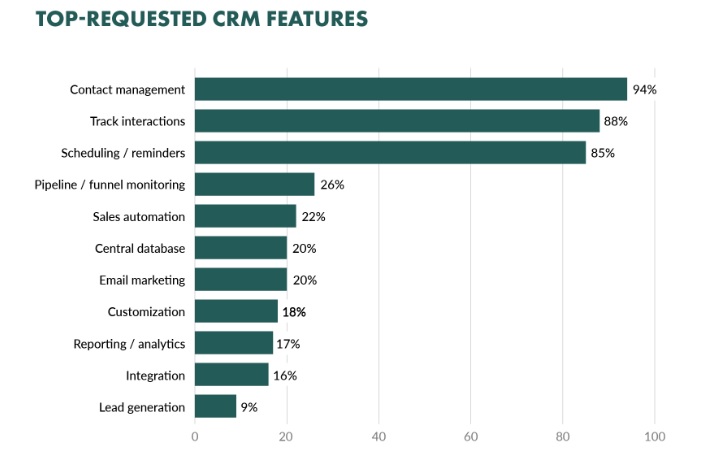
CRM refers to the set of strategies and techniques used to manage and analyze customer behavior. Using CRM software, brands store and categorize information about their customers and prospects. Contact management, tracking interactions with the brand, and scheduling reminders are some of the most commonly used functions.

Source: Super Office, 2022

But it’s possible to go further…

What is the impact of CRM on brands?

Recent studies show that 43% of companies still use spreadsheets to record and monitor customer information.

CRM allows you to discard these kinds of obsolete manual procedures by automating them. More than 80% of companies use CRM software to obtain sales reports and automate processes. 

This tool also allows you to increase revenues, manage the sales funnel and capture leads. In this way, data analysis will be the foundation for developing marketing campaigns and setting sales and customer service objectives.

Gathering information, at every touchpoint in the journey, provides a holistic view of the customer. For the company’s employees, it is the opportunity to personalize their service and increase their productivity and autonomy.

On the other hand, customers favor brands with which they are already familiar or which offer a personalized experience. Thus, using CRM software allows you to increase customer satisfaction by 45% and raise the revenue generated by 37%.

Implementing a CRM strategy

Developing and implementing a customer relationship management strategy requires some thought. Let’s look at what the most important steps are.

1. Audit

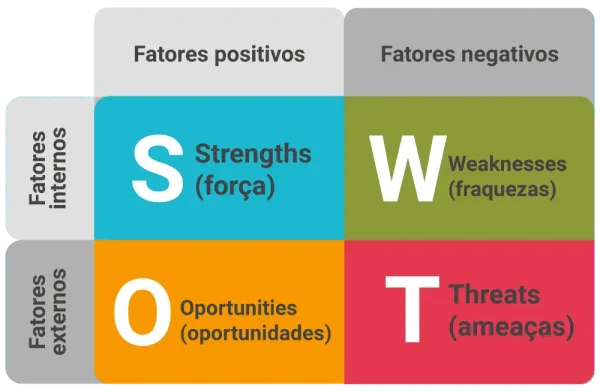
The SWOT (Strengths, Weaknesses, Opportunities, Threats) analysis allows you to study the market and evaluate the competition and determine whether the company has the necessary resources. This makes it easier to identify the path to follow.

2. Setting SMART objectives

Without goals, a business sails adrift, staying afloat until it eventually sinks. Therefore, it is critical to formulate SMART (Specific, Measurable, Achievable, Realistic, Time-Bound) objectives. These should be specific, measurable, achievable, realistic, and time-bound. Through this technique, it is easier to monitor and adjust the CRM strategy.

3. Mapping the customer journey

Knowing who contacts the brand, and how and when they do so, allows you to identify the stages of the sales funnel. 

In addition, creating a buyer persona helps you understand who has bought your products or services. Data such as age, gender, location, socio-economic status, or the preferred contact platform is, constitute the archetype of the ideal customer. From here the personalization of marketing campaigns is a step.

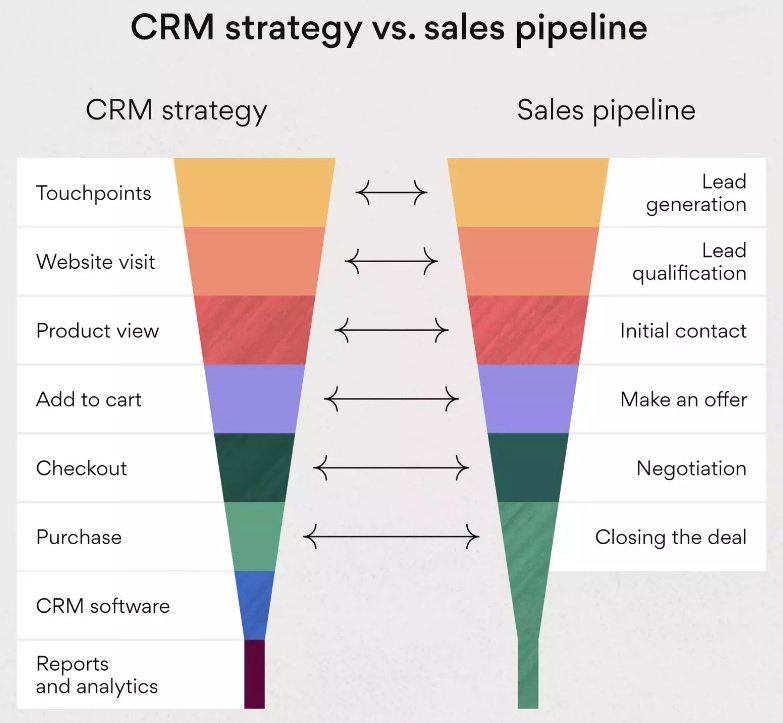
4. Mapping the sales funnel

This step allows you to visualize the customer’s touch points with the brand. Aligning the CRM strategy with the sales funnel helps determine when action is needed to convert the customer.

Source: Asana, 2023

5. Sharing information

CRM software collects information from various sources and presents it in an organized way to the various departments of the company. In this way, employees save time and are more autonomous in their daily tasks.

For this circuit to work, it is necessary to ensure adequate internal communication channels and a transparent communication strategy. By sharing information, each department avoids repeating questions put to the customer.

6. Personalising the customer experience

CRM software organizes customer details and makes it easier to understand strategic goals. As a result, employees can personalize customer contact and improve the customer experience throughout the customer journey.

7. Automatize

Tasks such as integrating new customer data or sending newsletters used to be done manually, taking up large amounts of time. Through automation, you can reduce costs and allocate resources to other tasks.

8. Monitoring strategy performance

It is important to set goals to reach our destination. However, it is equally important to analyze whether we are on the right track. CRM software allows you to evaluate the performance of your teams to ensure that everyone is meeting the objectives you have set. So you can analyze the positive aspects and identify the points for improvement.

CRM strategies to boost business

There are many reasons why brands adopt a CRM strategy. However, most strategies cut across any business. Here are some examples:

  • Personalise the customer experience
  • Create personalized marketing campaigns
  • Reduce costs with automation
  • Analyse KPIs
  • Manage content

Where is the CRM of the future taking us?

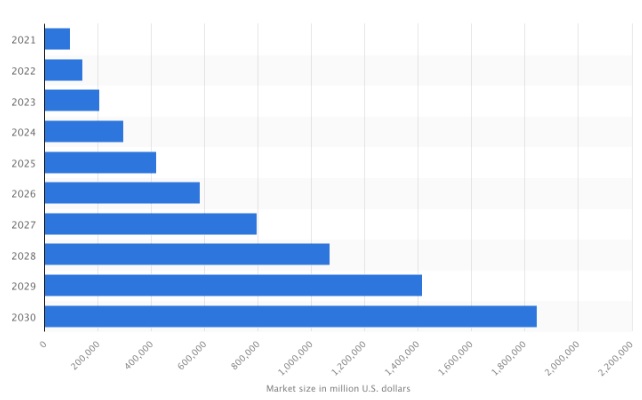
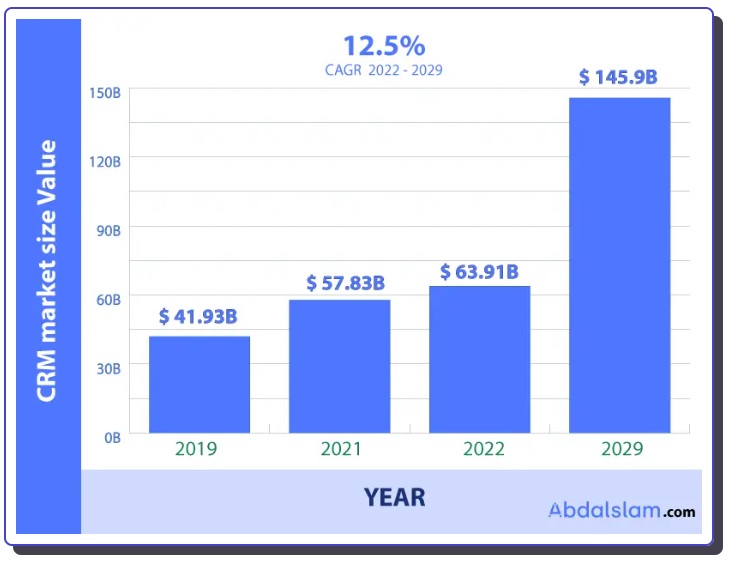
The CRM industry’s evolution has been rampant. Not surprisingly, by 2023, this industry will be worth around $65 billion. By 2029, forecasts indicate growth of $145 billion.

Fonte: Abdalslam, 2023

What fuels such strong growth? Companies adopt CRM strategies to remain competitive in the face of technological evolution and changes in consumer behavior.

So, what should we expect in the coming years?

Artificial Intelligence (AI)

Every day, we hear about artificial intelligence and its application in many different sectors. In the case of CRM, AI is a powerful tool to improve customer relations by automating tasks and personalizing service.

Internet of Things 

The Internet of Things refers to the network that connects billions of devices connected to the Internet. We’re talking about everyday objects like a fridge, a smartphone, or a smart security system.

These devices collect and store data about our daily lives. By integrating this information into CRM software, detailed information about consumer behavior can be obtained. This enables brands to provide highly personalized service.

Mobile CRM 

The pandemic has accelerated the acceptance of remote working. This means the dispersal of work teams around the world. Despite this, it is still necessary to access the information contained in the CRM. Using a tablet or smartphone, professionals can access their customer information anywhere, anytime.

CRM Social

The integration of social media with CRM software is a growing trend. More than ever, customers can comment on their satisfaction (or displeasure) on any digital platform. For brands, it is the opportunity to listen to their customers and maintain close contact in real-time.

CRM Self-Service

In customer relationship management, automation is synonymous with bots that perform tasks and save staff time. In self-service logic, it is the customer himself who seeks the answers he needs.

For companies, self-service CRM saves money by using simple software without the need for specialized IT support.

Voice interface

Technological evolution is accompanied by increasingly simple user interfaces. Voice-activated virtual assistants, such as Siri or Alexa, are gaining ground in the CRM industry. This technology offers a more engaging and simple user experience. Simply use natural language to interact with the software and consequently build a personalized relationship with the customer.

Customer relations are a long-term investment

Personal relationships are the result of our commitment and dedication. They are the result of what we give and what we receive. They are the pillar of our happiness and well-being. 

In business, the brands that offer an engaging and dedicated experience are the ones that thrive. Therefore, a CRM strategy is not a sprint. It’s a marathon! The results will come in the long term, through consistency and dedication. 

For this reason, and also due to technological evolution, it is difficult to predict in which direction customer relationship management will go. In any case, we can state that developing a solid CRM strategy is fundamental to overcoming the challenges of customer relationship management.

How to take off your business through a marketing plan

Pauliny Zito
Planner, copywriter, and copydesk

The Marketing Plan is a detailed document of the strategies and actions to achieve pre-defined objectives oriented toward results and aligned with the company’s purpose, in the short and long term.

It can be specific to a brand, a campaign, a product or service, or even product lines.

Pauliny Zito
Planner, copywriter, and copydesk

The Marketing Plan is a detailed document of the strategies and actions to achieve pre-defined objectives oriented toward results and aligned with the company’s purpose, in the short and long term.

It can be specific to a brand, a campaign, a product or service, or even product lines.

However, first of all, the entrepreneur who wants to develop his business needs to think about a Marketing Plan for his business.

In this article, I share with you the structure of a Marketing Plan for your business to take off.

Source: Freepik

Why it is so important to have a Marketing Plan

The Marketing Plan helps the manager to identify, anticipate, implement, and make the most important decisions in his business.

Contributes to the organization of work

With a good Marketing Plan, it is possible to align your team, determine all the steps of your online and offline marketing actions, indicate the tools to be used and the deadlines to be met, and improve your company’s practices according to the goals set.

Helps you set and achieve goals

Because it allows us to set goals and define strategic objectives, guiding decision-making through real and concrete data and improving the company’s results, in addition to customer satisfaction and employee motivation.

Improves brand positioning, awareness and competitiveness

It establishes a solid company presence online and offline, through successful marketing decisions, increasing customer satisfaction, and positioning your products or services well in the market.

Increases sales

The company becomes more competitive through more assertive communication and more effective marketing strategies.

Optimizes resources

Because you and your entire team know which way to go to minimize the company’s weaknesses and maximize its potential, and thus increase the profitability of the business.

Reduces strategic errors

A good Marketing Plan improves the managers’ decision-making and helps to reduce strategic errors because it provides detailed data about internal and external variants.

Provides greater financial control

Because it allows you to plan your investments (how much, when, and where to invest) as well as adjust them as the goals are achieved. And it also allows you to know, or at least have a projection, of the Return On Investment (ROI) for each marketing action of your business.

Anticipates and/or prevents crises

A good Marketing Plan knows the needs and desires of its customers as well as the market and the company’s financial situation, so it can predict or indicate changes or problems, acting in time to avoid bad results.

Source: Freepik

How to create a Marketing Plan for your Business

Introduction

First, write a brief introduction about what you want for your Business Marketing Plan, always results-oriented.

Strategic Vision

Second, understand your business: include and describe the strategic vision of your business as well as your strengths and areas for improvement (Strengths and Weaknesses from the SWOT analysis).

“People don’t buy what you do. They buy why you do it.” – Simon Sinek

Assets (products, channels and target audience)

Then describe the company’s assets, considering the trio of products, channels, and consumers, both current and potential.

Business Context

Analyze the business context: your competitors, in addition to opportunities and threats (Opportunities and Threats from the SWOT analysis).

Source: Rock Content

BCG Matrix

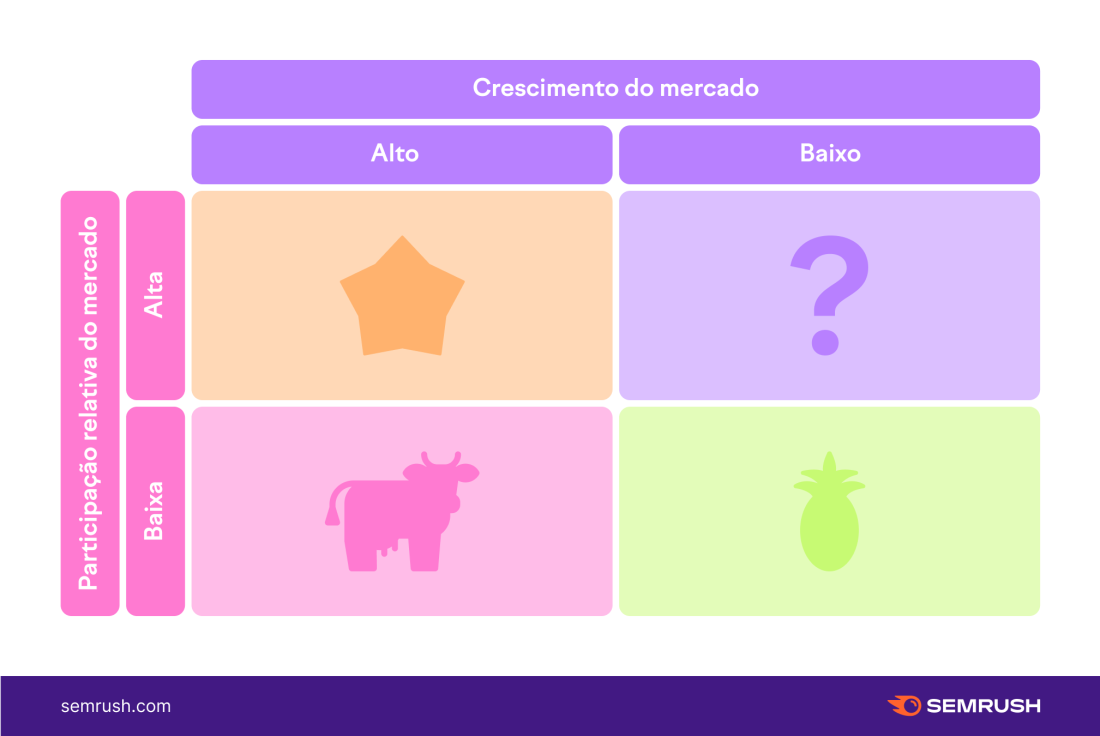
The BCG Matrix is a tool developed by Bruce Henderson for the American business consulting firm Boston Consulting Group. 

The objective of the BCG Matrix is to evaluate product portfolios or business units according to their life cycle. 

It is therefore used to allocate resources in brand and product management (marketing), strategic planning, and portfolio analysis activities. 

The BCG Matrix is one of the most widely used ways of representing the integration of the company in the external and internal environments, presenting a competitive advantage for the company as it makes it possible to better understand its products and where to invest.Source: SEMRUSH


There are four quadrants present in the BCG Matrix:

  • Star: high participation and high market growth;
  • Doubt: low participation and high market growth;
  • Dairy Cow: high participation and low market growth;
  • Pineapple: low participation and low market growth.
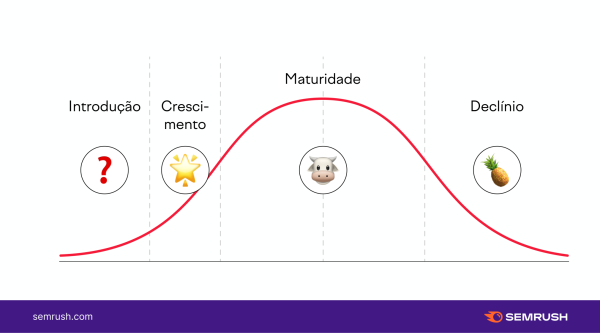
In general, this is the relationship between the BCG Matrix and the Product Life Cycle:Source: SEMRUSH

Marketing Objectives

Delimit your objectives using the SMART technique: Specific, Measurable, Attainable, Relevant, and Timely.

Timeline

Create a timeline of activities.

By completing these items of the Marketing Plan for your Business, you will be able to assess where your Brand stands.

How to define Marketing Objectives

Define and describe various types of objectives that are aligned with the reality and current strategy of your business.

Top-level

Objectives are more comprehensive to understand how your business can benefit the market.

Mid-long

Mid-long goals help you communicate the transformation needed in a large organization.

Specifics

For specific objectives, use the SMART technique, a term credited to Peter Drucker in his 1954 book, The Practice of Management.

Specific: Specify clearly what you want to do.

Measurable: quantify what you want.

Attainable: be realistic, and establish goals that can be reached in the current situation.

Realistic: Realistic: establish realistic goals according to the resources you have available.

Timely: Defined in Time: define the time interval for each objective

How to measure the performance of Tactics

Key Performance Indicators (KPIs) are indicators that help measure results.

KPIs make it possible to track and better manage the level of performance and success of your company’s strategies because:

  • They monitor the health of the business;
  • They measure progress;
  • Analyze patterns over time;
  • They help managers make adjustments and stay on track;
  • They help solve problems and seize opportunities.

To measure the performance of tactics, link the budget to the indicators and the time frame. 

The indicators must have a managerial vision, and be easy to understand, for decision-making.

Executive Summary

Write a one-page summary of your Marketing Plan and give it to your team to read for feedback.

This Marketing Plan Executive Summary should contain the analysis, goals, strategies, tools, budget, resources, and other elements you deem important.

There is no perfect Marketing Plan

The Marketing Plan is a powerful management tool that maintains the company’s competitiveness in its market.

Don’t wait for the perfect plan, because it doesn’t exist.

Do now what you can and implement it.

Learn and correct quickly, adjusting the Marketing Plan according to your reality.

Land, revise, and start over.

Be prepared to update the Marketing Plan whenever necessary.

The importance of Google My Business in your business

Sandra Caravana
Copywriter

For educational purposes, let’s imagine that we have a small business. 

Do you play any sports? Yes? Good! You have just created a sportswear brand. 

Your buyer persona is Ana, a 25-year-old woman, an account manager in an office in Parque das Nações, who goes to the gym at 7 am. 

What is Ana’s pain? She needs breathable, lightweight sportswear that doesn’t get ruined by daily washing. Ana walks around all day with her backpack packed. 

And so we have just created Super Legging.

Sandra Caravana
Copywriter

For educational purposes, let’s imagine that we have a small business. 

Do you play any sports? Yes? Good! You have just created a sportswear brand. 

Your buyer persona is Ana, a 25-year-old woman, an account manager in an office in Parque das Nações, who goes to the gym at 7 am. 

What is Ana’s pain? She needs breathable, lightweight sportswear that doesn’t get ruined by daily washing. Ana walks around all day with her backpack packed. 

And so we have just created Super Legging.

We decided to create an online store, hired an advertising and digital marketing agency, and… we are on!

On the web. On the web. On social networks.

Now we have to wait for you to enter our online store.

And we wait.

Enter our cousin the web designer. He’s not buying. He just wants to see if our site is optimized for mobile. 

Source: Pexels

Our aunt comes in. Several times in a short time. Someone told her that we would be more successful with several visits to the site. 

Where are our customers?

They exist and they are also on the web looking for us. They are right now in the Google search engine typing ‘gym leggings’. 

But Super Legging is without a Google My Business profile. Yet.

What is Google My Business?

Google My Business allows your business to reach the place where your customers are. 

It is another free platform from Google. 

With Google My Business, businesses can create informative profiles with:

  • Location
  • Business hours
  • Phone and email contacts
  • One-off promotions
  • Photographs

This is the help that Google will give our business to increase online visibility. 

When users search for local businesses or services on Google, businesses that are registered with Google My Business will appear in the SERPs (search results), providing important information about the business and its services.

Pause for…

Why appear on Google?

Google dominates with 94% of all organic traffic on the internet. It can provide 22 resources in addition to the original word. It tops the list – without much competition – of search engines, followed by Amazon and Yahoo!

Are there more search engines? Of course, there are. You can and should use them. DuckDuckGo, for example, is recognized for prioritizing user privacy.

Source: Wikipédia

In the case of our company, Super Legging, we are not looking for privacy, but for reach. And customers. And sales. 

And so we turn to Google My Business.

What do I need to have my online store in Google My Business?

  1. have a Google account: this is a must with any Google tool. 
  2. You will need to provide some basic information about your business, including the business name, address, and phone number.
  3. You will go through the increasingly important account verification. There are several options for doing this, such as receiving a verification code in your email or cell phone. Never skip step 3.
  4. Done. You can now access and manage your Google My Business profile.
Source: Google Support


Never forget to keep all the information up to date! It will help improve your company’s visibility in Google searches. Imagine what it’s like to think your favorite restaurant is open on the May 1 holiday. You go there and… closed restaurant. Knowing that many business owners do not communicate the exceptions to the rule, Google has already launched a warning, complete with red lettering, that there is a possibility that your search results for ‘Restaurants in Braga’ will be closed on May 1st.

How to optimize your Google My Business profile in 6 steps:

  1. Add complete and accurate information. Make sure that all information about your company, including company name, address, phone number, and hours of operation, is correct and up-to-date. Also include detailed information about your products and services.
  2. Add high-quality photos. Photos are a great way to highlight your company’s personality and show customers what they can expect when they visit your company. A good (quality, well-constructed) photo draws the audience in. It’s a returnable investment for companies like Super Legging, which sells products.
  3. Respond to customer reviews. They can significantly affect your company’s reputation. They should not be ignored or deleted. It is a communication factor. 
  4. Use the right business categories. It will help ensure that your company appears in the correct search results. 
  5. Add a link to your company’s website. It’s nice to have the information on the first page of Google, but the big goal is to get traffic to your site.
  6. Add information about events and promotions. Share this information with Uncle Google.
Source: Pixabay

I can see that you have some resistance to creating a profile on Google My Business because of the previous point 3: (public) customer/user reviews. Reviews from your customers can provide valuable feedback for your business. You can respond to the reviews, which can help you gain the trust of customers.

Let’s not be pessimistic: there won’t always be complaints. A 5-star rating, a positive and recommended review for Google users, can make a difference for your company. Ratings and reviews influence customer decisions, increase visibility, and are useful feedback. Encourage your customers/users to leave ratings and reviews on your Google My Business page. When you receive notifications of ratings posted on your profile, don’t panic!

  1. Respond to all the reviews. Positive or not. Show your customer that you listen to them. Always thank them for positive reviews, even if you have nothing to add. 
  2. Maintain professional communication, never taking reviews personally. 
  3. Offer solutions. Be available for more creative options. 
  4. Follow up on reviews regularly. Have an entrepreneurial spirit and take a course in conflict management and crisis communication.

Take advantage of the whole Google package, combining Google My Business with the new Google Analytics 4 (GA4). Remember to always keep up to date with the changes these tools undergo: all changes are there to better promote your business. Some of these changes are responsible for a long list of categories where you can include your business – something we have already seen in this article how important it is, especially when we are talking about a local service, such as pet care, plumbing, and electrical services and even painting services.

“Home service providers can earn a Google Guarantee badge, while non-home providers can earn a Google Screened or License Verified by Google badge to display on their ads. These badges help potential customers feel confident booking your services, knowing you’re a fully licensed and vetted, Google-backed business.” – Social Media Today, march 7, 2023. 


These are so-called Local Service Ads that appear prominently for your services at the top of the SERPs, to direct phone calls, messages, and appointments to the service in question. As a company, you only pay if the user makes contact with that ad.

Source: Pixabay


Google My Business is a powerful tool for local businesses that want to increase their online visibility and reach more customers. Having a profile on Google My Business isn’t enough to stand out in an increasingly competitive market. It is necessary to optimize the profile to ensure that it is displayed in relevant searches and attracts users’ attention.

How to adapt your writing to reach the right audience on different communication platforms

Catarina Alves de Sousa
Social Media Manager & Content Writer

If in a post, we found on social media, the image corresponded to a human face, the copy would correspond to its voice. Each copy – just like each human voice – is unique and art made up of 50% storytelling, and 50% sales ability. And as they say, “every monkey in its tree”, for each platform, a different strategy. Let’s look at how to adapt copy to each marketing channel.

Catarina Alves de Sousa
Social Media Manager & Content Writer

If in a post, we found on social media, the image corresponded to a human face, the copy would correspond to its voice. Each copy – just like each human voice – is unique and art made up of 50% storytelling, and 50% sales ability. And as they say, “every monkey in its tree”, for each platform, a different strategy. Let’s look at how to adapt copy to each marketing channel.

Romantically, we can describe copywriting as the art of masterfully weaving words into engaging and persuasive messages that capture the audience’s attention by evoking emotions, arousing desires, and leading readers to a specific action. The copywriter is a craftsman of letters, skillfully shaping sentences to tell stories, sell ideas, and create lasting connections between brands and their consumers.

More objectively, copywriting is the ability to create persuasive text that aims to convince the reader to take a specific action, such as buying a product, signing up for a mailing list, or downloading an app. It is a form of writing geared toward selling, but ideally without being too obvious.

“Copywriting is the art and science of writing words that sell.” – Joseph Sugarman

One of the keys to successful copywriting is adapting the tone and style of the speech for different mediums. What works well in an email marketing campaign may not be as effective in a Facebook ad, for example. Let’s explore some copywriting techniques for different platforms next.

Social Media Copywriting

Social media is one of the main communication channels used by brands to create a connection with their customers and potential consumers. This is why copywriting techniques are so important in this medium. Here are some tips for creating persuasive and engaging content for social media:

  • Know your target audience: before you start creating content for social media, it’s important to know who your target audience is. Research and understand your followers’ interests, habits, and needs to create content that resonates with them.
  • Respect brand tone of voice: a brand’s tone of voice is an essential component of its identity and personality, as it reinforces the brand’s personality, helping to communicate its values, mission, and purpose more effectively. Some brands will have a more fun and casual tone of voice, while others will have a more formal and distant tone. Understanding the tone of voice of the brand you are creating the copy for is essential to write it successfully.
  • Use clear, straightforward language: on social media (like almost everything these days, really), people have little time and many distractions, so it’s important to use clear, straightforward language that gets right to the point and captures the reader’s attention. Concise, non-extensive copy works best, especially on social media.
  • Storytelling: people love stories, so use the power of storytelling to engage your followers and establish an emotional connection between them and your brand. Tell stories that illustrate how the product or service in question can help solve your target audience’s problems.
  • Be creative: creative copywriting allows the brand to show its personality, which helps humanize it and establish emotional connections with the target audience. Moreover, extremely creative copy favors engagement and shares of the publications.

Romantically, we can describe copywriting as the art of masterfully weaving words into engaging and persuasive messages that capture the audience’s attention by evoking emotions, arousing desires, and leading readers to a specific action. The copywriter is a craftsman of letters, skillfully shaping sentences to tell stories, sell ideas, and create lasting connections between brands and their consumers.

More objectively, copywriting is the ability to create persuasive text that aims to convince the reader to take a specific action, such as buying a product, signing up for a mailing list, or downloading an app. It is a form of writing geared toward selling, but ideally without being too obvious.

“Coywriting is the art and science of writing words that sell.” – Joseph Sugarman

One of the keys to successful copywriting is adapting the tone and style of the speech for different mediums. What works well in an email marketing campaign may not be as effective in a Facebook ad, for example. Let’s explore some copywriting techniques for different platforms next.

Social Media Copywriting

Social media is one of the main communication channels used by brands to create a connection with their customers and potential consumers. This is why copywriting techniques are so important in this medium. Here are some tips for creating persuasive and engaging content for social media:

  • Know your target audience: before you start creating content for social media, it’s important to know who your target audience is. Research and understand your followers’ interests, habits, and needs to create content that resonates with them.
  • Respect brand tone of voice: a brand’s tone of voice is an essential component of its identity and personality, as it reinforces the brand’s personality, helping to communicate its values, mission, and purpose more effectively. Some brands will have a more fun and casual tone of voice, while others will have a more formal and distant tone. Understanding the tone of voice of the brand you are creating the copy for is essential to write it successfully.
  • Use clear, straightforward language: on social media (like almost everything these days, really), people have little time and many distractions, so it’s important to use clear, straightforward language that gets right to the point and captures the reader’s attention. Concise, non-extensive copy works best, especially on social media.
  • Storytelling: people love stories, so use the power of storytelling to engage your followers and establish an emotional connection between them and your brand. Tell stories that illustrate how the product or service in question can help solve your target audience’s problems.
  • Be creative: creative copywriting allows the brand to show its personality, which helps humanize it and establish emotional connections with the target audience. Moreover, extremely creative copy favors engagement and shares of the publications.

Source: Instagram Control Portugal, Instagram Super Bock


The images above are two good examples of the importance of copywriting in social media posts. In this case, both brands have a very young, relaxed, and humorous tone of voice, so they often use jokes and puns. In these two cases, without the copy, they would just be two banal images. With copy… the story is different, but the happy ending involved thousands of interactions.

Social media is a fertile ground for copywriting. The key is to understand the audience of each account or brand and adapt the discourse accordingly. 

And speaking of understanding the audience, we cannot forget that each social network has a different audience and identity.

On LinkedIn, for example, the audience is more professional and expects more serious and informative content. Instagram users, on the other hand, are more visually oriented and expect more creative and engaging content.

Some differences between copywriting for Instagram and for LinkedIn:

  • Audience: the Instagram audience is younger and more visually oriented than the LinkedIn audience, which is more professional and business oriented.
  • Language: copywriting for LinkedIn should be more formal and professional than copywriting for Instagram, which can be more informal and personal.
  • Content: content for LinkedIn should be informative and educational, while content for Instagram can be more inspirational and emotional. On Linkedin, it is also more usual for brands and companies to make posts that do not talk about their products and services but are more oriented toward company and team content.
  • Format: Instagram is a visual platform, which means that copywriting for Instagram should be tailored to accompany images and videos while copywriting for LinkedIn can be more text-focused.
  • Call to Action: CTAs for LinkedIn should be more business-oriented (“apply for our job opening,” “learn about our open positions,” while calls to action for Instagram can be more informal and personal.
  • Hashtags: hashtags are important for both Instagram and LinkedIn, but hashtags for LinkedIn should be more business-oriented, while hashtags for Instagram can be broader and more general.
  • Objectives: The goal of copywriting for LinkedIn is generally to generate leads, while the goal of copywriting for Instagram may be to build the brand and engage followers.

To summarize, copywriting in social media is all about understanding who we want to reach and impact, “speaking” simply and objectively, unleashing creativity, telling interesting stories, and always testing and adjusting our approach to the target audience and the predominant audience in that social network.

Email Marketing

Email marketing is one of the most powerful marketing tools. Here too, the key is to grab the reader’s attention right away. This can be done with a compelling subject and a catchy first paragraph. From there, the content should be concise and to the point, with a clear CTA for action at the end.

Here we list some copywriting techniques you can put into practice to create effective email marketing campaigns:

  • Create an interesting subject: the trick to increasing the open rate of an email message is to write a subject that arouses the desire to click. 

Keep a few factors in mind when selecting the subject of an email campaign:

  1. Length: Research indicates that short subject lines have the best open rate. This is probably because most people read emails on their mobile devices. If the subject line of your email is long, it may look great on a computer, but mobile device users won’t see the whole story – and most likely won’t click on it.
  2. Word choice: Use action verbs in your subject line. This will help subscribers understand what they should do even before they open the email.
  3. Keep it personal: By using real people’s names in the “to” and “from” fields, you will get higher open rates. Email is a personal medium, so treat it that way. It’s nicer for readers to see an email in their inbox with their name, and there are automatic ways to include your subscribers’ names in every email or campaign.
  • Don’t forget the text preview: when it comes to writing emails, the text preview is very similar to a tweet before Twitter increased the character limit. It had only a few characters to pique users’ interest and make them read beyond the subject line.
Source: Campaign Monitor


  • Make copy a conversation with the user: email writing needs to be personal if you want it to convert. That’s the bottom line. Instead of writing to hundreds, thousands, or millions of people, imagine you are writing the email to a single person. Pretend you are talking directly to a friend or a customer. Tell him or her about the exciting things you want to tell him or her and explain what you want him or her to do. Hold a conversation.
Source: Mint


  • Know your target audience: before creating an ad, it is important to know your target audience. Understand their desires, their “pains”, needs, and problems to create a message that resonates with them.
  • Use words that evoke action: use action words in your ad to encourage the audience to take action. However, try to focus on CTAs that reflect more of the users’ needs and fewer actions that are too direct in a commercial sense.
  • Make sure the content is relevant:  in the same “meetings that could be emails” saga, there are also emails that could be social media posts or blog articles. Whenever you consider setting up an email marketing campaign, make sure that the subject matter is relevant to those who will receive it, always keeping in mind that email is a mailbox, albeit a digital one, and no one likes to receive advertising in their inbox without some clear benefit coming with it.

“Copy is a direct conversation with the consumer.” – Shirley Polykoff

Copywriting for Ads

Advertisements are another area where copywriting can make a big difference. The key is to make the speech relevant to the target audience. This can be done with personalized messages that connect with the consumer’s wants and needs. Using storytelling techniques can also be effective in grabbing the user’s attention and making them want to know more.

  • Know your target audience: before creating an ad, it is important to know your target audience. Understand their desires, their “pains”, needs, and problems to create a message that resonates with them.
  • Create a clear and direct message: online ads have little time to capture the audience’s attention, so it is important to create a clear and direct message that gets to the point and shows the benefits of your product or service.
  • Use words that evoke action: use action words in your ad to encourage the audience to take action. However, try to focus on CTAs that reflect more of the users’ needs and fewer actions that are too direct in a commercial sense.
  • Offer a benefit: Consumers want to know what’s good for them, so it’s important to highlight the benefits of your product or service. Use words that highlight the value you are offering.

The example below is an ad from Doutor Finanças in which they chose to ask a common question to several Portuguese with the premise of an answer after the click. The goal of this ad is to capture leads by filling out a form that is inside the article to which this ad directs. In that article, they answer the question asked in the ad, creating a win-win moment, both for the user and for the company itself, in the case of a captured lead.

Source: Doutor Finanças


  • Use testimonials or testimonials: testimonials from satisfied customers can be a powerful tool to persuade other consumers to do business with a brand or to unlock a purchase pending doubts. Use quotes from satisfied customers or testimonials to reinforce brand credibility.

    The importance of not underestimating the power of the written word

    In conclusion, it is crucial to understand that images do not work alone, especially when it comes to copywriting for marketing channels. The written word has an undeniable power of persuasion and impact, capable of creating emotional connections with the target audience. By working in conjunction with images, a copy can help create a clearer and more consistent message, reinforcing brand identity and increasing the likelihood of conversion.

    Thus, it is essential to devote time and effort to creating copy that conveys the right message for each target audience, taking into consideration the marketing channel in which it will be aired. In addition, it is important to remember that the written word has immense power and can be the key to the success of an effective marketing campaign. Investing in well-designed copywriting can be an important difference to stand out in an increasingly competitive market.

    If you have reached the end of this article and are committed to learning more about how effective Copywriting can help elevate your brand or business, be sure to also read our article “How to create an audience through copy”.

Artificial Intelligence at the service of content creation

Sandra Caravana
Copywriter

Pros and Cons of 9 AI Tools in Content Creation

Content creators, copy and content writers, designers, musicians, and everything and everything and everything… the end is near!

Is it?

No. You can breathe.

Sandra Caravana
Copywriter

Pros and Cons of 9 AI Tools in Content Creation

Content creators, copy and content writers, designers, musicians, and everything and everything and everything… the end is near!

Is it?

No. You can breathe.

In recent years, Artificial Intelligence (AI) has been playing an increasingly important role in content creation for various platforms and channels. 

With the help of algorithms and machine learning, and deep learning, AI enables companies to produce personalized and relevant content on a large scale. 

Everything that is made/created/changed with the assumptions of AI is aimed at creating machines and/or software that could perform tasks that normally required human intelligence. 

In the 1960s and 1970s, AI experienced great progress, with the development of specialized programming languages for creating AI systems and the creation of programs that could play chess and solve complex mathematical problems. 

Changing century, we transcended from games to virtual assistants: Siri, Alexa, and Google Assistant (they just weren’t creative in choosing the name here).

Source: Tek4life

Hypocritical would be to say that we are against AI. 

How many options does your washing machine have? What about your vacuum cleaner? Does it already walk by itself? 

It is the natural evolution of the world, sometimes frightening, sometimes full of potential and hope. Especially in the world of medicine.

But in the world of content creators: is it creepy or promising?

Content creators: new profession?

Yes.

But then what is content? 

Content is king. 

Creating content for the digital world involves creating text, images, video, and audio, or putting all these forms of communication together. And this is all done for one purpose: advertising, information, and/or entertainment. 

These are the communication tools that make us buy an article, subscribe to a service, increase our knowledge (preferably a fact-checking platform, but that’s another matter), or make us laugh. 

Let’s take the example of podcasts:

By definition, a podcast is audio content, similar to a radio. The difference is that it is available for listening whenever the user wants since it does not require being life. We can say that they are based on the audio marketing concept. In Portugal, it is essentially used for interviews, but some use this platform for classes, to get things off their chest, and even for meditation aids. Whatever the objective, it is a success. What’s happening? Content creators have decided to transcend the podcast to the video platform. So, rarely is an interview podcast not filmed and viewable on YouTube.

But this journey is not a one-way street: there are radio stations and TV shows that make their content available for podcasts. 

It is also up to the content creators to figure out which platforms it makes sense to be on. And from a good analysis, the success of podcasts has grown. Not least because you can listen to them in your car, dare I say it’s a UX issue – you listen and you drive.

Source: Pixabay

And how do we promote a podcast of a one-hour interview, with a YouTube video, on social networks? By creating publications with short videos – when these are part of the strategy. But do you need a strategy to make a podcast? Yes, and a script too. Even if the questions are not agreed upon (as in a political interview), the thread of any conversation has to be stable so that no one starts rambling.

This is all content, including the script. Plus the editing of the audio and video. Well, that’s content and talent.

To get our one-hour episode ‘on the air’, it takes 24h of editing, filming, and writing. If only there was something that could optimize this time.

There is. It’s called Artificial Intelligence. The mission of AI is to save time. To get things done faster – not necessarily better. 

Yes, the talk of the moment, just not of the moment.

homem sem rosto Source: Pixabay

Who remembers Facebook? Yeah, it’s built on AI. 

Facebook revolutionized digital relationships because nothing as it existed. Neither did Mirc. Everything else, everything that came after Facebook, even Instagram, is based on the same digital strategy, something we are used to calling the algorithm – that demon! 

The notion of social media enabled a rebranding to marketing.publicidade antiga 7upSource: 7Up

Today, we advertise using #pub, with vertical videos with 15 seconds maximum. Leave in the comments the best sales post you’ve seen on Instagram. 

There are platforms/tools/websites/apps to help create any kind of content. 

The most famous content creation aids are:

ChatGTP 

Since its launch in late 2022, the most famous Chat has evolved a lot, and you can now create tables while chatting with us. Some ChatGPT courses are already available, so we can take advantage of all its features. The tool is highly intuitive (even WhatsApp can be more difficult to explain to our grandparents), but there is always that one trick or shortcut that justifies training. You can also already find prompts templates for sale, suitable for each goal: sales, written content creation… To learn more about this tool, link in the bio. Just kidding! ChatGPT uses the underlying technology of many of the tools in this article.

For content creators: they can copy 10 publications in less than 10 minutes. Very useful to sell some product or service, with or without #pub. 

Cool, but… Can we give the chat a name? Antonio Pedro, for example. Treat ChatGPT like a friend who just arrived from Luxembourg: you need to give context so that the ten publications are not the same. The most creative advertising agencies like… creative people. Word around is that there are already applications that detect AI-written texts. That is, an AI tool to detect an AI creation.

CANVA 

There is not a student in this country who uses PowerPoint anymore. Canva is the non-designer content creator’s best friend. And even for designers, it makes a point to have an account on the site – if only for inspiration. Many courses teach all of Canva’s tools and hardware, tricks, and tips. 

For content creators: you don’t need to have any background in design. 

Cool, but… Anyone who uses Canva recognizes templates. Sponsored posts without customization all look the same. It’s best to invest in a PRO plan. It’s well worth it when you have image editing to do.

STABLE DIFFUSION

Prompts for images. An evolved Pixabay. 

For content creators: when image banks don’t meet the goals, these AI platforms do. 

Cool, but… No intuitive usability.

DALL-E

An image that looks like a drawing, a work of art! It is amazing the quality of the images created by this tool. The new version changes the size and format of the images, so you can use the same image. You can use a square format and ask to expand to a rectangular format. Is there room to fill? Dall-E takes care of it. 

For content creators: enables automatic generation of highly customized and creative images based on text descriptions. These highly customized and creative images can be used for a variety of purposes, such as illustrating stories, creating ads, or generating marketing content.

Cool, but… It’s just cool. Will it be used to illustrate children’s books? To make movie posters? Maybe. 

Ever wish the “Mona Lisa” was a bit bigger? The image generator DALL-E can handle that. The outpainting feature expands images, using AI to expand the edges of an image. 

DRAW

Who says create images, says create music. 

For content creators: no more stories blocked because of copyrights. It can be a help for many musicians with fewer resources, just like YouTube. You can create your podcast jingle! 

Cool, but… Will it all get too computerized?

UNREALPERSON

What if non-real images created non-real people? What about cats? The internet loves cats. #thispersondoesnotexis 

The faces are the result of images created by AI, so you can be sure that this person does not exist. It is similar in functionality to a human brain trying to remember and imagine the girl or boy you saw last month.

For content creators: perfect for those who don’t want to expose themselves. Carlos, have you thought about this? 

Cool, but… Doesn’t it remind you of that movie?

Source: Filme Her

CapCut

Like Canva, this video editor looks basic, but… it creates automatic subtitles. Not perfect, but almost there. It does a thousand and one other things, but this very important feature is just a click away (pardon the cliché). It makes everything so much more inclusive. 

For content creators: it is the perfect video editor for dummies. 

Cool, but… Am I the only one who needs a lot more training for video editing than for using ChatGPT?

MURF

We already have artificial images and music, now we have voices. This sophisticated service can create very natural-sounding speech from the text in 120 voices and 20 languages. The latest update is Voice Cloning, where the service will attempt to clone human voices.

For content creators: a great help for video voiceovers. 

Cool, but… It must have quality. Otherwise, the feeling that a computer is talking to you can ruin your ad metrics.linguagem e comunicação inclusiva Source: Pexels

DeepL

It presents itself as the best translator in the world. Well… it is indeed better than Google Translate. 

For content creators: it makes it easier to access information.  

Cool, but… having a translator friend would be ideal.

To search later:

Analyzing hashtags on Instagram and Twitter: Hashtagify – but I’m just going to create a panic here with the idea that using # doesn’t affect reach. 

Testing and evaluating titles: Headline Studio 

Grammar and spelling correction: Grammarly 

On the inclusive communication side, we can use NaturalReader to read the text in photos, pdf, and even e-books.

What do all these tools have in common? They evolve through deep learning. 

Deep learning is an area of AI that focuses on developing algorithms that can learn from large data sets and then apply that knowledge to perform specific tasks.

These deep neural networks are designed to mimic the way the human brain works, learning and adjusting its parameters as large amounts of data are processed. Over time, the neural network can identify patterns and features in complex data, allowing it to make accurate predictions or classifications on new data.

We thank deep learning, or neutral networks, for Siri, voice recognition, facial recognition, and all the applications and tools mentioned in this article.

ligações do cérebroSource: TechTalks

Facebook was born to bring people together, bring students together, and improve human relations through a computer network. Nobody imagined, at the time of its creation, that it would be used as a disseminator of fake news. If we are not cautious when introducing inputs and prompts into translation and text creation systems, the result can be catastrophic. 

For an unsettling but comical reflection, I suggest you watch this video during your lunch break. 

Some paragraphs in this text were written by ChatGPT. I challenge you to find out which ones.

How to create and define your target audience on social networks?

Sandra Caravana
Copywriter

When we study marketing, there is one word present in every module: strategy.

Strategy, strategy, strategy. Keywords with more relevance and with more reach. At every point, on every front, digital or sales plate, you need a strategy. Which is like saying: you do nothing without well-defined goals. Nothing. 

But does strategy walk the streets of marketing alone? No. 

It walks, of course, hand in hand with the objectives and the target audience. 

Do we want to sell to all the people that exist on planet earth? 

We want to sell to our target audience. But who is the target audience?

Sandra Caravana
Copywriter

When we study marketing, there is one word present in every module: strategy.

Strategy, strategy, strategy. Keywords with more relevance and with more reach. At every point, on every front, digital or sales plate, you need a strategy. Which is like saying: you do nothing without well-defined goals. Nothing. 

But does strategy walk the streets of marketing alone? No. 

It walks, of course, hand in hand with the objectives and the target audience. 

Do we want to sell to all the people that exist on planet earth? 

We want to sell to our target audience. But who is the target audience?

Target VS Persona 

The target audience is the segment of users/consumers to whom you should direct your strategies. They are the people who are most likely to be interested in your product or services. They are the users/consumers who have something in common with your brand, and who identify with your voice. It is a group of potential customers. The definition of the target audience is the result of the market segmentation process, which identifies these groups of consumers with similar characteristics. 

A persona is the personification of the target audience. It is a fictional character that represents the ideal customer of your business. It is the avatar of your online store. It is Magdalena, 40 years old, mother of 4 children, and influencer by profession with a new house that needs a lot of construction.

Why is it important to distinguish between these two concepts?

Because when defining the strategy for the audience, we should not focus on the persona, although we cannot ignore it. The marketing strategy focuses on the target audience, whether we are talking about a physical store or social media, we are talking about sales, or building a community.

Take a sheet of paper, your physical or digital notepad, open an Excel… whatever you prefer. Write down the characteristics of your target audience. Write who you want to reach. Characterize your community. Talk about the people you would like to be your customers, and how you would like those customers to act in your store. 

To be even more specific: what is the ideal average cart size? Who will buy your store’s star product, or who will choose the basic service (the one that rarely makes a profit, but that you should always keep in mind to create a customer base)?

You can read more about persona here and here. Today, the focus is on the target audience and social media.

What social networks are we on?

All. Facebook, Youtube, WhatsApp, Instagram, LinkedIn, Pinterest, Twitter, Twitch, and TikTok. 

The We Are Social Digital 2023 Portugal study shows that the age group with the most social network users is 25-34 years old.

Source: We Are Social Digital 2023 Portugal 

What is the most used social network, right now, in Portugal? WhatsApp. It’s more of a platform than a network, but it fits well with the purpose of the social network: it’s not to share the newborn photo with the world but to get the photo to the family faster. WhatsApp has been able to update itself to the needs of the population by having a professional version. Recently, it made available the option to create communities, to have conversations with a larger number of users: good for businesses, and good for schools, and families. 

I was Fact: WhatsApp has the option to block sending messages – only the group administrator can write; the other members can view and react with emojis. Going back to the same example: great for when another baby is coming into the family.

Source: We Are Social Digital 2023 Portugal 

But is it the preferred social network? No. Here the winner is Instagram.

Source: We Are Social Digital 2023 Portugal 

Maybe because it has a nicer image? That’s subjective. Easy to use? Um… All networks invest in UX Design and Writing. Is it a matter of fashion? Is it a generational issue? I lean more toward the latter option. 

Facebook remains the social network with the most accounts in the world. The combined number of users of Meta products (Facebook, Messenger, Instagram, and WhatsApp) surpasses any other future combination. Facebook is not dead, especially for business. Proof of this was the rise of lives in times of confinement, causing many SMEs in the area of commerce to survive during the pandemic.

Why should you define your target audience?

The truth is that each network has a different audience with different objectives. And so, if having a social media presence is part of your business strategy, don’t waste time creating a profile on all the above-mentioned networks.

Lesson #1: Your business doesn’t need to be on every social network. 

CMTV Alert? No. Can it be controversial? Maybe. 

To the advocates of being everywhere: if you want to be everywhere, be creative in the content you post.

Content is king

Or queen. 

Content is everything in social media. It is the most important thing and without good content, there are no networks. But the same content does not fit all networks, even with the paradigm shift giving more emphasis and reach to video content. Content must be adjusted and adapted for each social network. 

Whether it is video content, image content, or text-only content, the choice of content also depends on the voice of your brand and your audience. And it doesn’t have to be linear and forever: you can change it over time, gradually, or by rebranding – an investment that has shown good results. It repositions your brand and brings it closer to your customers. Sometimes all it takes is a change of logo to get the update you wanted.

Source: Neil Patel Blog
Tell me what the Instagram logo was when you installed the app on your smartphone and I will tell you what generation you are from:Source: Walterman

Know your audience

Audience? Weren’t we talking about the audience?

Yes, but in digital marketing, we use the term audience: we are creating content for views, to create leads. Different nomenclature, but with logic.

Learn what works and what doesn’t

Never forget: it is adults who buy children’s toys. Your company’s social media content is not for children, they are not the ones with buying power. Advertising can be done for children, using the traditional strategy of viewing times: in the breaks of cartoons, for example. The same happens with YouTube advertising, at the beginning of videos. The times change, and the channel changes, but the winning strategy remains.

Use and abuse each social network’s tools to get to know your audience. Instagram questions were created with that same purpose. Basic, easy-to-answer, direct-response questions:

  • What age range
  • What is your work schedule (traditional or shifts)
  • Sex and gender
  • With or without children
  • Which social network do you use most
  • Do you prefer video or photos
  • What are your reading habits?
  • Have you ever bought our brand?
  • Do you usually read our newsletter? 
  • Do you usually buy online? 

Instagram, being very visual, allows you to quickly conclude from this. 

Cross-reference this data with the characterization you have made of your target audience. It’s a match?

Yes, this is why many brands use this strategy. And well. Just like the typical suggestion to show behind the scenes. 

Do you have a vegetarian recipe page? Don’t just post the recipe. Make a video on shopping, explaining how and where to choose the products you used or will use in a recipe. 

This kind of content will give you data from your audience and create a sense of community. Don’t ignore interactions: they give you even more visibility and customers.

How to increase your audience?

The practice of sweepstakes has been standardized. As a general rule, the rules for participation are:

Follow the page

Like the post 

Identify two/three different friends

… and you can participate as many times as you want, as long as you identify different friends. 

If your goal is to increase the number of followers just for the sake of it, then the way to go is to run various sweepstakes and giveaways recurrently. If your goal is to create a quality audience, the path is another, quite different one. 

Sweepstakes bring in lots of followers. In fairness, they bring in those followers who have been identified. And winning a bracelet, a book or an eco-friendly cream kit is always good, it’s always positive. Giving something away is a great way to show off your brand – why do you think merchandising is so important? Do you have a pen there? I bet it’s from an SME where you live. 

The bad thing about sweepstakes is fake followers and bots: those profiles that have no photo, no friends, no posts, with the name mikepotter734982. Who has a good number of followers because they think it gives them more credibility? You can buy these profiles. But you are not creating an audience.

How to use sweepstakes to create a good (and real) audience?

Turn the raffle into a contest.

Is your publisher releasing a new book? Promote the name of the book and ask your followers to create a 50-word synopsis, even if they don’t know what the story is about. 

You will only comment on who is on your side, who relates to your brand, and who wants your product. You will meet those who read, who write, who imagine, who create. Your community will comment and share, even if this last action is not in your CTA – call to action.

Be Inspiring

… or pay someone to be.

An influencer is a profession. And it is here to stay. 

The trick is to choose the right influencer for your brand. Even here you have to experiment and do A/B tests, taking some risks. 

Invest in myopic influencers and evaluate the content they publish. Here, building the persona can be a benefit. Choose an influencer as similar as possible to the persona of your business.

Be a spitfire

Follow your competition. Every day. Plus: find out what your followers are saying about your competitors. 

Do a SWOT analysis of your company. Having this analysis always updated will help you not to miss opportunities and to be aware of the updates you should make.

The 6 steps, in brief, to creating and defining your social media audience are:

  1. Write about your target audience. 
  2. Choose the social networks where you want to be present. Choose the ideal platform. 
  3. Know your audience. 
  4. Create interaction to increase your audience.  
  5. Invest in influencers. 
  6. Analyze the competition.

This is one of the investments brands make to maintain their digital presence and several tools can help you with this arduous digital task. Uncle Google is very generous: you can create search results alerts and you can analyze keywords. Google Analytics is very thorough at monitoring your website data and it’s free. 

As for social networks, you can manage everything in one place, like Swonkie or E-goi – Portuguese companies with excellent customer service. 

If you have reached the end of this text and think your brand needs an update, have no fear: you can count on Jelly for your brand’s rebranding.